


 Join on WhatsApp
  Join on Telegram
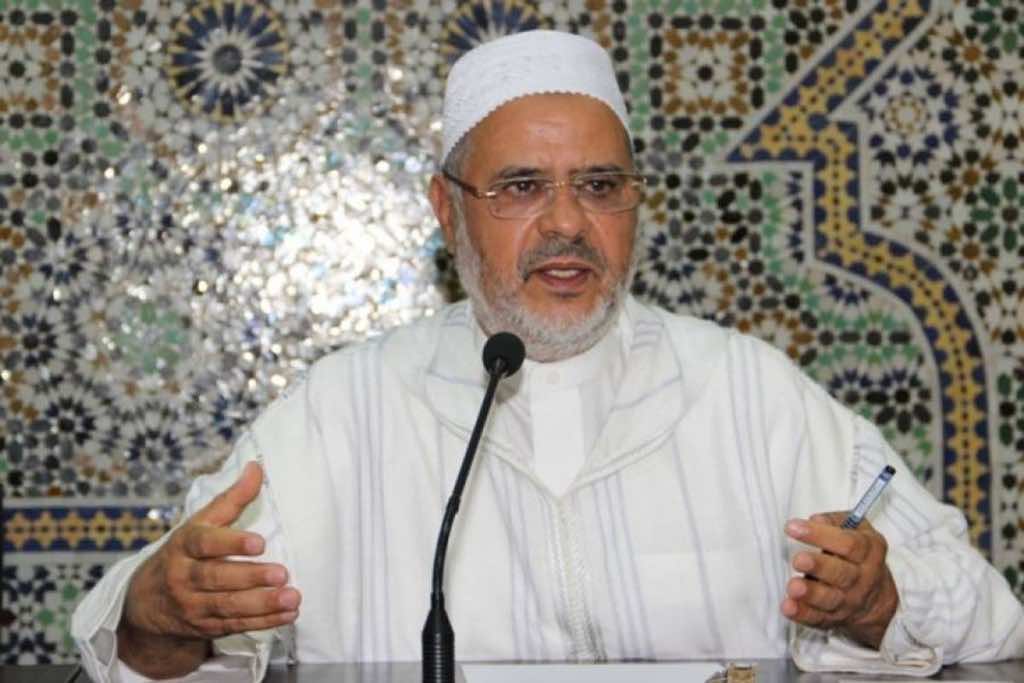
 Rabat – The prominent Moroccan Islamic scholar Ahmed Raissouni has reacted to the controversy surrounding his recent remarks about Mauritania being part of Morocco, taking issue with those he described as determined to sow division in the Maghreb or undermine Morocco’s territorial integrity.
“I have previously mentioned that even Mauritania’s existence is a mistake,” Raissouni had said in a recent televised interview, stressing the importance for Morocco to go back to “how it was before the European occupation.”
The remarks sparked a fierce backlash from activists and political organizations in Mauritania, who expressed astonishment and called on the Moroccan scholar to apologize.
In response to the criticism, Raissouni said that some of his “dear and close friends” have asked and convinced him to clarify his position following the short answers he gave during the now controversial interview.
‘All Muslims are my brothers’
“My remarks were spontaneous,” the scholar said, pointing out that Morocco had “objected” to Mauritania’s independence “for several years for historical reasons.”
However, he added, Morocco decided to recognize Mauritania’s independence and the country became one of the five members of the Arab Maghreb Union.
“This is the reality recognized globally and by the countries of the region,” Raissouni said.
As the president of the International Union of Muslim Scholars, the Moroccan cleric then went on to stress the importance of reviving the Arab Maghreb Union, underlining his rejection of discrimination and differences between the people of the region.
“I do not differentiate between a Moroccan and an Algerian, or a Moroccan and a Mauritanian, or a Moroccan and a Tunisian, or a Moroccan and a Libyan. All Muslims are my brothers,” he said.
Algerian interference in the Sahara dispute
Algeria’s Fatwa Commission of the Ministry of Religious Affairs had responded to Raissouni’s televised interview by condemning his “provocative remarks.”
The commission notably accused Raissouni of igniting “conflict” in the region and accused him of endorsing “extremist ideology.”
“Raissouni’s remarks carry a clear incitement and an explicit call to attack the sovereignty of states. It was bad for him to stir up hate in his speech and call for lightning the fires of conflict between peoples and the governments of the region,” the Commission said.
It also shared statements in line with the Algerian regime’s well-documented hostility toward Morocco and its territorial integrity, saying that Raissouni “appropriated the expansionist doctrine of the Makhzen.”
In response, the Moroccan scholar emphasized his position on the Western Sahara dispute by calling on the Algerian regime to refrain from interfering in Morocco’s internal affairs.
“I call on our brothers [Algerian officials] to let Morocco tackle this conflict as an internal issue,” he said, warning about the protracted and destructive crisis a war could cause in an already fragile region.
Recalling Algeria’s support for the Polisario Front, the separatist group claiming independence in the Western Sahara region in southern Morocco, Raissouni said that “war will never bring a solution but rather it brings destruction, devastation …. and foreign interventions.”
He concluded by urging authorities to allow Moroccan scholars to be able to visit the Tindouf camps to communicate and initiate dialogue with the “Sahrawi brothers” detained in the region and suffering a humanitarian crisis due to dire living conditions.


