


 Join on WhatsApp
 Join on Telegram
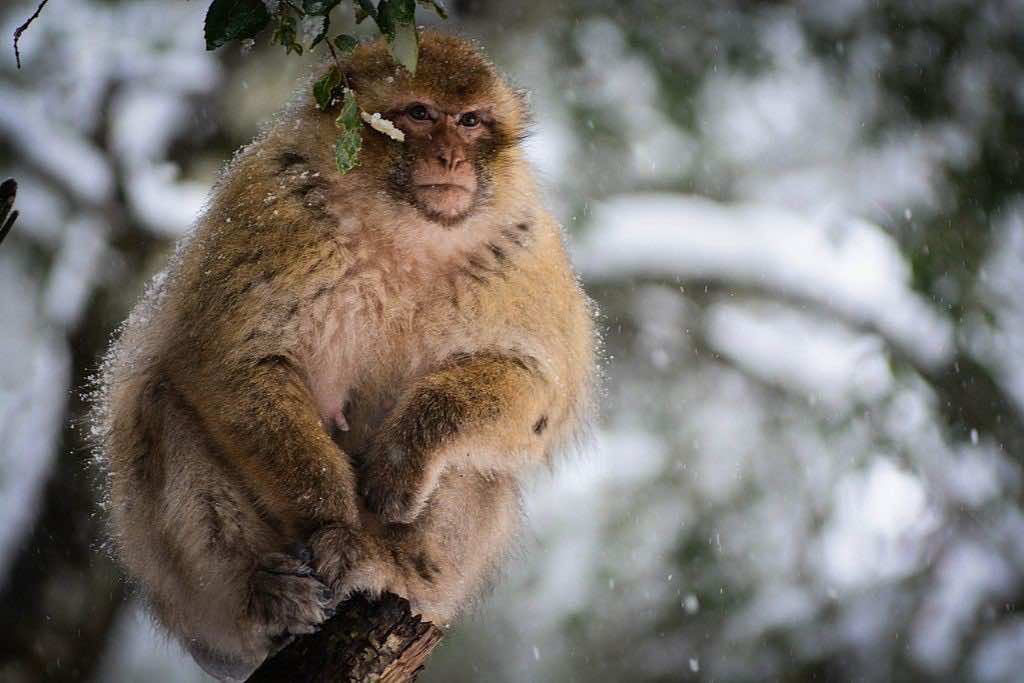
Rabat – Morocco’s National Agency for Water and Forests will resettle the iconic Barbary macaque monkeys in the national forests in the Taza province, in collaboration with Animal Advocacy and Protection (AAP).
AAP is an international organization dedicated to protecting wild and endangered species from being exploited as pets and traded illegally.
Thirty five monkeys will be released in the Taza forests, their natural habitat, to live and thrive in the wild instead of as pets or props for tourists.
Most of the monkeys in the operation were confiscated by customs authorities after people tried to smuggle them out of Morocco.
Before being released into the wild, the monkeys were first taken to an “acclimation station” near the forests on May 18 to get familiarized with each other and their new environments under expert supervision.
The operation is the first of its kind in Morocco, having been based on several studies, including one conducted in the forests of Ifrane to determine the viability of resettling the monkeys.
The resettlement aims to protect the endangered species, which has been used as photo props with tourists across Morocco and as pets, despite its protected status.
Officials are also planning to raise awareness in the city around the importance of letting the monkeys live in their natural habitat and the prevention of their capture.
Barbary macaques are native to the Atlas mountains of Algeria and Morocco, and have suffered a decline in population to the point of being declared an endangered species in 2008 by the International Union for Conservation of Nature (IUCN).
In addition to destroying their habitats during logging activities, local farmers have long viewed the monkeys as a threat to their crops and have killed them in retaliation before.
They are also vulnerable to illegal capture, which sees them being traded as pets, smuggled internationally, or used as photo props.
Experts recommend avoiding contact with the monkeys due to the stress that contact can cause them, which may lead them to act out and harm humans, not to mention the dangers of diseases being transmitted from animals to human hosts.
Read also: Discovery of 2.5 Million Year Old Macaque Fossil In Morocco


