


 Join on WhatsApp
  Join on Telegram
 By Rim El Belkacem
Rabat – The heated controversy surrounding Moroccans publicly breaking their fast during the day in the month of Ramadan is echoed in countries across the Maghreb region.
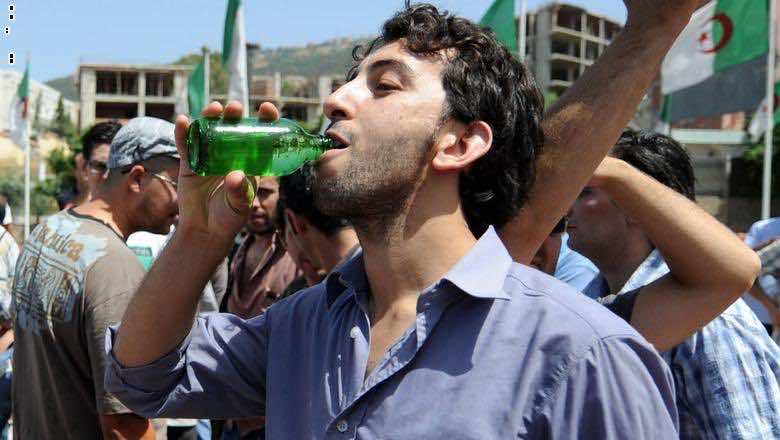
In Algeria, although there were no arrests made against public fast-breakers this year, many have expressed their concern regarding some hostile behaviors demonstrated not only by law enforcement agents, who seem to act solely based on their personal feelings on the matter, but also by Algerian citizens who take it upon themselves to “defend God’s word.”
Despite the fact that there are no laws which exclusively outlaw the public eating in Ramadan, opponents of breaking the fast cite Article 122 of the Algerian penal code, which sentences anyone who offends the Prophet or disparages the doctrines of Islam to 3 to 5 years in prison.
In a country where religious freedom is protected by the constitution, Tunisia nonetheless is still suffering from intolerant and violent behavior towards people who choose to not practice fasting during the month of Ramadan.
Following the Tunisian revolution in 2011, an unprecedented wave of conservative beliefs which condemn any kind of act that may contradict Islamic teachings including the act of public eating during the month of Ramadan, have spread over the country that still effects the political climate today. ”Le collectif tunisien pour les libertés individuelles” an organization for the defense of individual freedoms in Tunisia addressed a letter on June 3, 2016, to the authorities in hopes that the latter would take action in protecting the liberties of the Tunisian people who choose not to partake in Ramadan practices.
The letter urges law enforcement to set in place measures which will prevent violent and oppressive incidents such as the ones suffered last year.
“Given the history of atrocities and gross violations last year, in the month of Ramadan 2015, against individual freedoms, in particular, the closure of cafes and restaurants, intimidation and harassment of their owners or, in many cases, aggression and violence against clients and staff of these establishment by police officers,. Also, the arrests and judgments on grounds of morality and the smear campaigns and incitement to violence against individuals and groups who are committed to their rights to diversity and to freedom of choice,” the letter said.
Some Islamic conservative groups throughout the region came out to defend and support the laws which prohibit public eating, deeming the act as insensitive and disrespectful to the majority of the public that observe the fast.
This debate focuses largely on the balance between individual freedoms and religion, as the two sides focus on human rights and Islamic values. Due to its complex cultural nature, this issue will doubtlessly remain a topic of contention in regional and international circles in the years to come.


