


 Join on WhatsApp
  Join on Telegram
 I recently read the memoirs of former Nigerian President Ibrahim B. Babangida (Ibrahim B. Babangida (1985-1993) A Journey in Service, 2025), forwarded by former President Yakubu Gowon (1966-1970). The memoirs of African heads of state do not get the appreciation of African readers. However, one can get valuable information to deeply assess decisions they made during their tour of duty.
Nigeria is an exciting case study. An African giant that some describe as having feet of clay and that others consider to be a key player in African geopolitical equations. A fragile country, because it remains under a double threat. On the one hand, separatist tendencies that date back to the years 1967-1970, with the Biafra rebellion, and on the other hand, the threat of extremist groups such as Boko Haram since 2009 and Islamist networks in cahoots with foreign intelligence services.
The transformation of African geopolitics, in which some countries stand out from the crowd compared to others, gives me the opportunity to ink this paper. This is the case of Nigeria and Morocco. Both countries are aware of their respective status; that is the reason they are cooperating for the realization of the African-Atlantic gas pipeline project. Besides, they are moving towards the establishment of an even more ambitious partnership regardless of certain acts of obstruction and procrastination.
The history of relations between Morocco and Nigeria is as complex as it is fascinating. But before we weave into this chapter, let’s take a look at the memoirs of former President Ibrahim B. Babangida.
One of the things that attracts attention is that Babangida used restraint, not too much, without praising the military regimes of which he was one of the most influential actors. He even made sure not to exonerate certain excesses committed during their governance. And it is precisely this observation that underlies the entire reading of these memoirs.
Indeed, the time when Babangida was in power was characterized by several events in Africa, including the process that led to the end of apartheid and the emergence of intermediary African powers within an international system that had just emerged from three decades of the Cold War.
Babangida’s memoirs are full of useful information. Yet, for now, I am focusing on his chapter on Nigerian foreign policy. One of the things that struck me is the fact that the day after he came to power, he called on intellectuals to establish a kind of political planning of Nigerian diplomacy. Thus, professors Bolaji Akinyemi, Gabriel Olusanya, and George Obiozor were called to take the job.
Pan-Africanism and Intra-National Balance
The new diplomatic doctrine Babangida defended was based on four pillars. One, the anti-colonial struggle, which was the driving force behind his policy in the midst of negotiations on apartheid or the management of certain African conflicts in the neighborhood. Two, the struggle for the independence of the countries still under colonial domination. Three, the promotion of Nigeria as an emerging middle power. Fourth, the reinvention of the idea of non-alignment takes into account the changes that took place after the breakup of the Soviet Union.
The new diplomatic doctrine, developed in consultation with the three intellectuals, including Bolaji Akinyemi, who was chosen as Minister of Foreign Affairs, drew its strength from the central idea that Babangida had erected as a priesthood, namely, “participatory popular democracy.”
Babangida’s approach aimed not only to establish Nigeria as an African power economically but also as a key actor within regional and international organizations.
In 1989, Emeka Anyaoku, who had served as Under-Secretary-General of the Commonwealth for twelve years, was elected Secretary-General of this organization. Prior to that, Nigeria had to settle a political misunderstanding with the United Kingdom, where Margaret Thatcher, Prime Minister, had given Nigerian leaders a hard time.
However, Nigeria was unlucky in 1991. Indeed, Nigeria presented Olusegun Obasanjo as a candidate for the position of Secretary-General of the United Nations in 1991. But it will be Boutros Ghali, the Egyptian, who will be elected. In 1997, Kofi Annan, the Ghanaian, was elected, in turn, blocking the way to a potential new Nigerian candidacy.
Obasanjo, an emblematic figure on the Nigerian political chessboard, was president of Nigeria twice (1976-1979 and 1999-2007). It deserves special attention because it still nurtures latent political ambitions. His ideological preferences were well known and were inspired, among other things, by the determinants of Nigerian foreign policy, mainly by the fallout from the Nigerian civil war. For the record, Obasango was directly involved in the war.
The quest for strategic ascendancy at any cost
More pan-Africanist than many Nigerian political actors, Obasanjo returned to the political scene to exert pressure on the governments in place, but without getting sound dividends. At the same time, he played mediation roles in the Congo crisis as Special Envoy of the UN Secretary-General in 2009. He served on a side assignment as the African Union’s special envoy to the talks between the Ethiopian government and the Tigray People’s Liberation Front in 2022. He still prowls the winding alleys of Nigerian politics.
Nigeria is an essential gateway in the regional geopolitical chessboard. There was a time when the country was perceived as a pivotal state to which some world powers had entrusted the role of security barometer. Its economic weight had a lot to do with it. Some add to this the fact that it is a major producer of hydrocarbons. The country’s subsoil is full of other strategic resources that stir up the greed of foreign interests and revive the complicity of diffuse intra-national interests.
When it comes to strategic equations, Nigeria was chosen as one of the four so-called pivotal countries in Africa during the 1990s. The other countries were South Africa, Egypt, and Algeria. These countries used this strategic opening to promote their status for internal political purposes. Faced with political and social difficulties, they had found in this paradigm a relief valve while waiting for a better tomorrow.
Yet, if for Nigeria, South Africa, and, to a certain extent, Egypt, the arguments put forward by the designers of the above-mentioned paradigm could be understood, the same was not true for Algeria. This country was put on the list of pivotal states when it was going through a dark period in its history because of the civil war (1992-2002).
A de facto alliance was forged between these four countries during the 2000s. This alliance helped them to coordinate their positions on the eve of the establishment of the African Union (1991-2002), which, at the end, replaced the Organization of African Unity (1963). They did the same during the negotiations for the conclusion of the Treaty of Pelindaba (1996) on the nuclear-weapon-free zone in Africa. However, Nigeria, South Africa, and Algeria are still reluctant to join the Proliferation Security Initiative (PSI), adopted by the UN Security Council Resolution 1540 in 2004.
Another series of coordination policies was adopted for a short run. Nigeria, Egypt, and Algeria defended their bids to join the BRICS. However, the Johannesburg summit (2023) was a cold shower for Nigeria and Algeria. South Africa was unable to defend their case given the harsh rejection of India and Russia. On the contrary, six new members (Argentina, Egypt, Ethiopia, Iran, Saudi Arabia, and the United Arab Emirates) were invited to join the BRICS.
Some observers viewed the alliance of Nigeria, South Africa, Egypt, and Algeria as very opportunistic in that what they were primarily interested in was their future candidacies for permanent membership in the United Nations Security Council on behalf of Africa (Hami H. The BRICS and the Expansion of the UN Security Council, a Fierce Battle Ahead; Morocco World News, 06/9/2023). Although the reform of the UN system remains wishful thinking, these countries do not lose hope of being picked up as potential members of the UNSC, whatever formula may be (mandate with or without the right of veto).
Certainly, Nigeria has adopted a militant diplomacy and has engaged in a policy of mediation to resolve certain African conflicts in its immediate neighborhood, but, on the global level, it has sought to defend its own interests. Babangida spoke of his country’s mediation in Liberia, which ended in the Nigerian military intervention.
Babangida justified this intervention by the urgent need to “stabilize the immediate neighborhood of the nation,” and to put an end to the intransigence of President Samuel Doe, whose stubbornness would set the entire region ablaze. However, he remains silent on the fact that the United States, which participated in the creation of Liberia after a long process from 1822 to 1862, gave its green light. Neighbouring Ghana approved it.
Nevertheless, informed observers argue differently. Their argument is based on the fact that at the time Africa had witnessed the arrival of new regional hegemons that followed the collapse of the Soviet Union. They had been assigned with the task to monitor security in West Africa. Using the ECOWAS was only a nice pretext.
In his effort to set the scene for realistic and pragmatic diplomacy towards the end of his term, Babangida shared details of the ups and downs that led to the restoration of relations between Nigeria and Israel in 1992. At the same time, he made sure to reiterate his country’s support for the legitimate right of the Palestinian people.
Relations between Nigeria and Israel were suspended following the October war between Egypt and Israel. This happened as a result of a resolution adopted by the Organization of African Unity in 1973. However, security and business relations have been maintained. This wasn’t different from the case for several African countries that resorted to the banner of technical cooperation dating back to the 1960s. After the Camp David Agreement between Cairo and Tel Aviv was signed in 1978, each African country was left free to resume or postpone the normalization of its relations with Israel.
To argue about the decision to restore relations between Nigeria and Israel, Babangida resorted to a classic narrative in his country that Muslim Nigerians were closer to the Arabs and Christian Nigerians were closer to Israel. In reality, the process was more complex.
Nigeria was part of the wave of normalization of relations between Israel and several countries around the world in the aftermath of the 1991 Madrid Conference on the Middle East Peace Process. Countries like China have decided to have normal diplomatic relations with Israel. Nigeria itself has taken the lead in seeking membership in the Organization of the Islamic Conference. The conclusion of the Wadi Araba Agreement between Jordan and Israel (1994) made Nigeria feel politically and diplomatically ready to go ahead with its plans.
Then, the imperatives of the national interest prevailed over the third-world narrative Nigeria overwhelmingly advocated. As an exporter of hydrocarbons, it has not subscribed, as it did in 1973, to a policy of embargo against the West that some Arab-Muslim and Afro-African activists called for in the aftermath of the second Palestinian intifada in 2000.
I recall the reaction of the Nigerian ambassador to the United States, who was participating in a meeting of the heads of African diplomatic missions accredited to Washington. The Nigerian ambassador brushed aside a colleague’s suggestion that hydrocarbon-producing countries should impose an embargo similar to the one imposed in the aftermath of the 1973 Egyptian-Israeli war. Sarcastically, the Nigerian diplomat observes that if Nigeria does not sell its oil and gas to Western countries, it still cannot drink them anyway due to a lack of domestic and regional customers.
Interest above all is witnessed then in Nigeria’s propensity to have the upper hand over West Africa and to be the main decision-maker within the Economic Community of West African States (ECOWAS) created in 1970. An organization that is crumbling today, within which the balance of power has wavered in favor of Nigeria and led to the withdrawal of some founding members. Even the mediation initiatives Nigeria had undertaken had left no room for some of the parties in conflict to have their say.
Burkina Faso, Mali, and Niger are no longer part of the ECOWAS as a result of military coups in these countries. The three countries created the Alliance of Sahel Countries in 2023 to deal with the dual threat of their neighbors, Nigeria and Algeria, and organized crime networks. France, which had pledged to help them defend themselves through Operation Barkhane (2014-2022), withdrew its forces as these countries requested.
Tomorrow is another day
However, Nigeria skillfully plays the game of narrowing the gap and tearing the fabric with respect to its relationship with state actors in direct or indirect competition with it. This leads me to elaborate on the relations between Nigeria and Morocco.
King Mohammed VI paid an official visit to Nigeria in 2016. It took place on the eve of Morocco’s return to the African Union. A visit that was part of Morocco’s new African policy. For the record, King Mohammed VI made 26 visits to sub-Saharan Africa since his enthronement in 1999.
Several strategic agreements were signed, including. One: the signing of an agreement between the Office Chérifien des phosphates (OCP) and Dangote Group for the construction of an integrated fertilizer production plant in Nigeria. Two: the signing of a cooperation agreement for the strengthening of local blending capacities and the agricultural ecosystem.
The cooperation between OCP and Dangote Group attests to a visionary strategy on the part of Morocco. Indeed, Dangote Group is the owner of the refinery with the same name. It was built in 2023 thanks to billionaire Aliko Dangote with an investment of $23.5 billion. The refinery has a refining capacity of 650,000 barrels of crude oil per day. It is a groundbreaking investment that ends Nigeria’s dependence on refined oil in Europe. Since the inauguration of the Dangote refinery, most European refineries are about to shut down.
In addition, Morocco and Nigeria agreed on the following: One: the acceleration of the implementation of the Tangier-Lagos trans-African highway. Two: the announcement of the construction of the Nigeria-Morocco gas pipeline. Three: cooperation in the fight against terrorism in the Lake Chad Basin and the Sahel. Four: the signing of several agreements in the fields of agriculture, transport, ports, energy, finance, banking and insurance, culture, tourism, and visa exemption for diplomatic, official, and service passports.
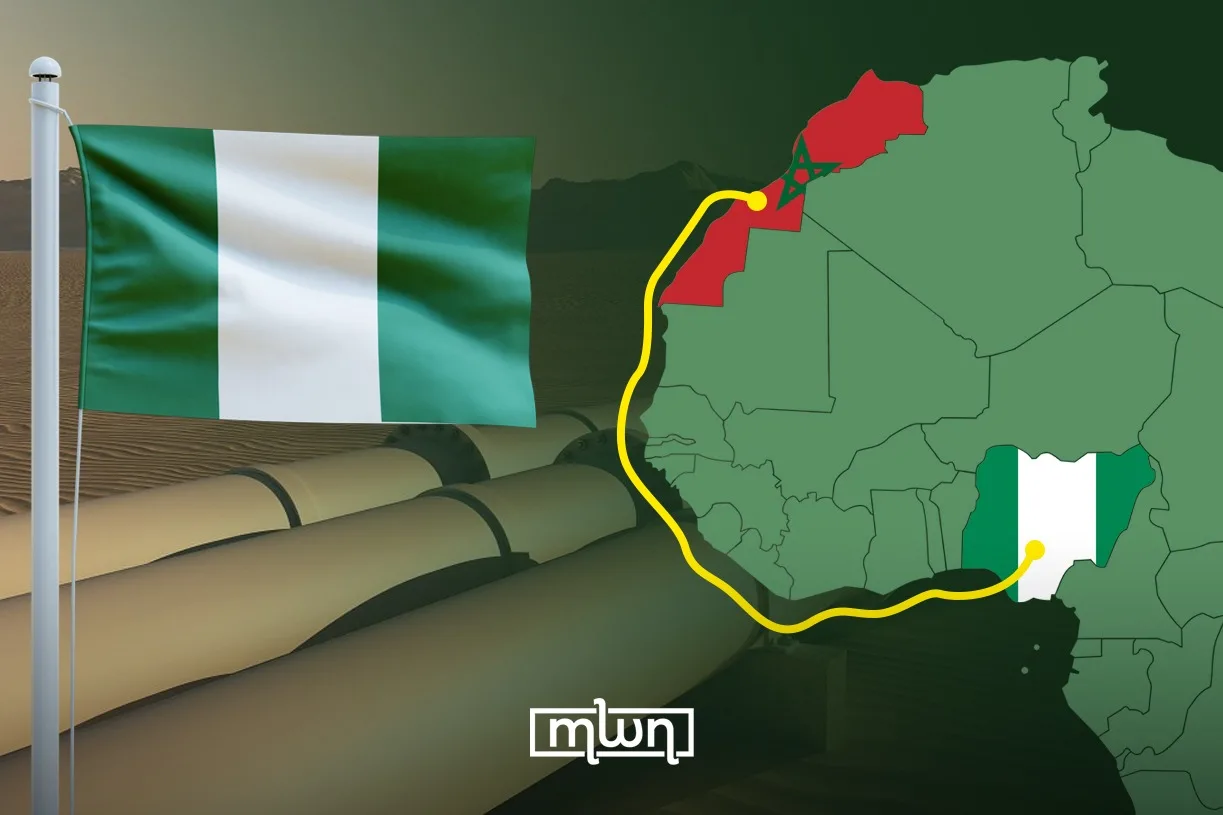
However, one of the strategic projects that has been attracting attention since 2016 is the African-Atlantic gas pipeline initially called the Nigeria-Morocco gas pipeline. However, the idea of this project had been touched upon years before. Already, in 2009, in the aftermath of the international financial crisis (2008) and the multiplication of European players to take advantage of the benefits of Azerbaijani and Turkmen gas, the idea of a Nigeria-Europe gas pipeline transiting through African countries had already gained ground. The Europeans, under pressure from the Americans, were looking for ways to limit their dependence on Russian gas.
Among the transit routes considered were Libya and Morocco. At the time, Nigerian decision-makers realized that the trans-Saharan gas pipeline project could not be implemented as expected, due, among other things, to security issues (proliferation of organized crime networks and religious extremist movements) and the nonchalance, or even procrastination, of the Algerian authorities. At the end, following King Mohammed VI’s visit to Nigeria, the Africa-Atlantic gas pipeline project took precedence. Saying that, it’s worth emphasizing that the trans-Saharan gas pipeline project is still on the table provided the challenging issues and financial requirements are dealt with accordingly.
Nigerian decision-makers remain cautious not to incur the wrath of their Algerian counterparts and, above all, to keep an option on the future in any case. They are aware that Algeria’s gas reserves are no longer at the same level as they used to be. To keep a place on the world gas market, Algeria will need substantial flows. Nigeria can offer Algeria this opportunity.
This is all the more understandable as hydrocarbons are at the crux of tensions in the region, mainly the conflictual relations between Algeria and Mali, which share a very large oil basin. Algeria and Mali signed an agreement in 2007 in order to manage the exploitation of hydrocarbons in the region. However, the agreement was put on hold in 2012. The ongoing state of instability in the north and the Algerian support for the Tuareg dissident movement explain why the relations between Mali and Algeria wouldn’t improve real soon.
Strategic projects such as the Atlantic Initiative, the African-Atlantic gas pipeline, and the access of the Sahel countries to the Atlantic Ocean as the King of Morocco has proposed (2016-2023) are changing the rules of the game.
Janus-faced Behavior: Fighting Separatism, Supporting Separatism
It will be up to Nigerian decision-makers to make the appropriate reading of the new geopolitics in the region. This is what leads me to epilogue on one of the key options of Nigerian foreign policy, namely “participatory people’s democracy.” Indeed, in President Babangida’s memoirs, a note of realism ends the chapter he dedicated to Nigeria’s foreign policy.
Babangida states that Nigeria’s foreign policy has been oriented towards a perspective of national interest. The conviction was made that this policy, as activist and pro-African as it was, was too idealistic and disinterested from the point of view of concrete and tangible gains for Nigeria.
Never mind, but Nigeria’s diplomatic behavior has been pretty confusing. Indeed, outside its borders, Nigeria recognizes separatist movements that undermine the integrity of sovereign states. This is the case with respect to the Moroccan Sahara. To date, Nigeria maintains its recognition of pseudo-SADR, a recognition that dates back to 1984.
Nigeria boasted that it had always upheld the principle of the right of peoples to self-determination. Of course, the country is a federal state; this is a feat in institutional matters, but the country is not immune to dissent movements. Indeed, the country accounts for more than two hundred and fifty ethnic groups whose profession of faith is divided between Christianity, animism, and Islam.
The country was on the verge of being fragmented during the years 1966-1970 when the Biafra secession attempted to create an independent state, “the Republic of Biafra,” under the leadership of Chukwuemeka Odumegwu Ojukwu. For the record, Yakubu Gowon, who wrote the preface to Babangida’s Memoirs, was president of Nigeria while the latter was commander of the 44th infantry battalion engaged in the fight against the Biafra rebellion (1968-1969).
The risk of dissent is omnipresent. Indeed, the Movement for the Actualization of the Sovereign State of Biafra has recently surfaced. In addition, in 2012 a separatist movement under the name of the Indigenous People of Biafra (IPB) was created by Nnamdi Kanu. Clashes took place between IPB and the Nigerian army in 2021.
In terms of establishing a credible and mutually beneficial partnership, to use the usual expression, Nigeria gives the impression of marking time. The conclusions of the Nigeria-Morocco Joint Economic Forum of Economic Actors, held in Lagos in November 2016, are being painstakingly implemented. In addition, Morocco applied to ECOWAS in 2017 in the wake of its return to the African Union and its effort to revive CEN-SAD (created in 1998).
Nigeria would not have been keen to endorse the Moroccan candidacy under pressure from a good part of the Nigerian employers’ organization, which saw it as a threat to Nigeria’s interests in the region. Nigeria was not the only country to oppose Moroccan membership; other countries had something to do with it.
They feared that the arrival of Morocco, which is a signatory to several free trade agreements, could break the balance of power within ECOWAS. The establishment of an African Continental Free Trade Area (AfCFTA) in 2018 (which came into force in 2019) should, in principle, dispel the fears of Nigerian employers’ organizations.
The religious dimension, a card depending on the political time
The religious dimension plays an important role in the domestic political chessboard of many West African countries. This is the case with Nigeria. Experts on African affairs may recall the publication by the Nigerian media of a report saying that outgoing Nigerian President Goodluck Ebele Jonathan (2010-2015) had a phone conversation with King Mohammed VI of Morocco on the eve of Nigeria’s presidential elections in 2015.
Morocco denied this information and, in the process, recalled its ambassador for consultation. Morocco issued a statement in which it distanced itself from the Nigerian candidate by reiterating its doctrine of non-intervention in the internal affairs of states.
It’s worth mentioning that at the time, Nigeria, like many countries in West Africa, had become a realm of messianic and religious competition led by Middle Eastern countries under the banner of Shiism and Sunnism. This is the case with Iran, which promotes its own Shiism through branches of Al-Mustafa International University. This university has trained more than 50,000 Islamic scholars and students since 2007. The university is very active with the Shia minorities in Kano, Kaduna, Osun, Kwara, Yobe, Kaduna and Katsina.
Relations between Nigeria and Iran came close to irreparable in 2015, following the arrest of Shiite Sheikh Ibrahim Zarkazy, leader of the Islamic Movement of Nigeria (NMI). The latter was established in the aftermath of the Islamic revolution in Iran in 1979. Some reports assume that NMI would be financed by Iran. Clashes took place between the Nigerian army and the NMI elements and resulted in several dozen casualties.
This is an important breakthrough insofar as Islam, widespread in West Africa, is of Maliki obedience. Moreover, the religious brotherhoods play an important role. Most of them are of Moroccan origin. And this is one of the reasons that brings about the ire of proselytizers from the Middle East, whether Shiite or Sunni.
Sunni Islam is predominant in Nigeria. It plays as important a role as in a country like Senegal thanks to the religious relay or religious brotherhoods. It advocates an Islam based on Salafiya that rejects Sufism (or the mystical exaggerated approach of it) and Shiism as well as Ahmadiyya, which is developing at a fast pace.
A few political scientists who deal with Islam in West Africa and Nigeria in particular have stressed the impact of the Wahhabism Saudi Arabia preaches. They highlighted that some jihadist movements, lacking the appropriate knowledge, identify themselves with it.
Salafiya-Wahhabi emerged during the 1960s and 1970s as part of the rush of many students from Sub-Saharan Africa and North Africa to Saudi Arabia, at a time when other political currents chose Egypt (and sometimes Syria) to improve their political activism in the name of pan-Africanism or pan-Arabism.
These two approaches contrast with the less interventionist Moroccan approach, which derives its legitimacy from the presence of the Maliki School and the role of the Moroccan religious brotherhoods, thanks to which Islam was introduced in West Africa.
By way of illustration, we can mention the establishment of the Zawiya Tijaniyya and the Zawiya Ainiyya in addition to certain factions that are inspired by the teaching of the Shadilia that they learned about in Egypt, where Abul-hassan Shadili is buried.
By the same token, Morocco is introducing progressive reforms in the religious field, taking into account the evolution of society and international commitments it made. The objective is to enshrine the idea of a tolerant Islam, open to the world and respectful of the values of peace, coexistence, and an Islam of the golden mean. This was the case in 2004. This approach has been broadened to include continuing education and the correct teaching of the precepts of Islam in a world in perpetual motion.
The creation of the Mohammed VI Foundation of African Oulema in 2015 is part of these ongoing reforms. The Foundation, whose headquarters are in Fez, is composed of forty-six sections throughout the African continent, including, of course, in Nigeria. The religious respect that Morocco enjoys explains President Goodluck Jonathan’s misguided attempt to use the Moroccan card to influence the Muslim electorate.
Babangida did not dwell too much on some border conflicts between Nigeria and its neighbors. There was the conflict over the Bakassi Peninsula (1690 km²) between Nigeria and Cameroon. A dispute dating back to 1913, which was the subject of settlements and denunciations by Germany and the United Kingdom, which respectively colonized the two countries. The peninsula, which has significant hydrocarbon reserves, was returned to Cameroon in 2008 following a ruling by the International Court of Justice in 2002. The same fate was reserved for the dispute over Lake Chad. The dispute was sealed by the ICJ on the basis of the Franco-German declaration in 1919.
Similarly, Babangida was less prolific on the civil war the Biafra rebellion triggered during the 1960s. He was an important player there. If the Biafra rebellion had succeeded, the federal system that the country boasts of would have been shattered. Although the situation is relatively under control, the separatist trends have not disappeared. In addition to the proliferation of organized crime networks, a state of permanent vulnerability is witnessed in the neighboring countries.
Babangida’s memoirs deserve to be read because they reveal the propensity of certain political actors to clear themselves or to take justice into their own hands for decisions they took when they were in power. A mea culpa for some and a justification for others (Hami H. Des mémoires plaidoiries ou mea culpa des politiciens à la retraite, MEDIAS 24, le 19/02/2025).
These memoirs have the merit of projecting the end of the geopolitical configurations that made the ideological credo and behavior prevail in all cases. It seems that Nigeria is moving towards a more rational reading of its diplomatic choices. It still needs to take the next step to be in tune with the new geopolitical challenges around the Atlantic. This applies to the Afro-Atlantic gas pipeline, the Atlantic initiative, and the access of the Sahel countries to the Atlantic Ocean.
This also requires the intelligibility of the existential dimension that should be taken into account in relations between sovereign states. The basis of this is the respect for the territorial integrity of all UN member states. Nigeria itself is not yet out of the woods of separatism and extremism. It is in this perspective that Babangida’s most eloquent conclusion in the foreign policy chapter was his belief that activism and pan-Africanism are too steeped in idealism.
Already, the actors pampered by the paradigm of pivotal states (and hegemonic actors) promoted in the United States during the 1990s and 2000s are going through difficult times. South Africa is entering a direct collision with the United States and is experiencing a critical situation pertaining to the ANC’s ascendancy on the intranational political chessboard. Egypt too, because of its refusal to take in Palestinians from Gaza, which is threatened with a reduction in US military aid.
Algeria is in a situation of strategic balloting and no longer knows which saint to turn to. It is seeking to sell off its wealth to get closer to the United States. Fair enough, but Algeria’s decision-makers suffer from an amnesiac memory, losing records about their statements against Donald Trump between 2020 and 2024.
The security situation in the Sahel, which is becoming increasingly dangerous, is affecting strategic projects aimed at developing the sub-region. Only the Atlantic coast currently offers an opportunity for African countries, including those in the Sahel and West Africa, to make up for lost time.
This is why African intelligence services are trying to stop this unifying process by creating a climate of insecurity on the Atlantic coast. Proof of this is the climate of instability that they have installed in West Africa and are trying to duplicate in North Africa thanks to their extremist and terrorist relays. The dismantling of a terrorist cell in Morocco last January confirms this strategy of undermining.
This also means taking a bold step to question asymmetrical bilateral relations and the sterile, selfish stands within regional organizations. The reform and clarification of relations between the member states is a prerequisite for the success of the various integration policies that all, hypothetically, aim for.
On this note, it’s worth noting that the individual race to win a seat in a multipolar world that is still being laboriously built led nowhere. This also means that the ambitions of some African countries to become permanent members of the United Nations Security Council will soon be cooled.
These ambitions will undoubtedly be history if they take the time to reflect on the decision taken by the G20 in 2024 to admit the African Union as a permanent member. The same approach will be made with regard to the League of Arab States, the Gulf Cooperation Council, ASEAN, and MERCOSUR. Two birds with one stone, and the mass will be said.


