By Faten Bouraoui
April 8, 2012 (Tunisialive)
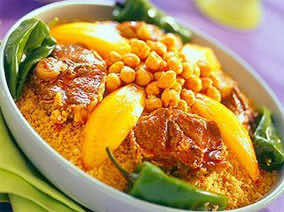
Couscous is a North African dish traditionally served with meat, vegetables, and spices. It’s a staple dish in Tunisia, Algeria, Morocco, and Libya, having Amazigh (Berber) origins. Its popularity stretches into Europe as well.
Couscous is Tunisia’s official national dish. But it’s more than just a staple food: for many families preparing and eating couscous is a ritual and a tradition that binds the generations together. In many ways, couscous is to Tunisia what pasta is to Italy – it’s not just food to put on the table, it’s a centerpiece of family life.
The basic ingredient in couscous dishes is semolina. This is mixed with water and rolled, originally by hand, to make small grains of various grades. These grains are then steamed over a boiling sauce in a two-chambered pot called a keskes. Once the couscous grains are fluffy and the sauce is cooked, the two are mixed together and served, often with meat or grilled fish on top.
In Tunisia there are thousands of ways to cook couscous and thousands of places where you can eat it. In the coastal areas and in particular Tunisia’s second largest city Sfax, fish couscous is especially popular – for obvious reasons. In the interior it is more often eaten with lamb and dried fruit. The most famous Tunisian couscous is made with lamb stomach filled with herbs and spices, and is usually prepared after the Eid el Kabir, when lambs are slaughtered.
Everyone has their own favorite type of couscous and everyone has their own favorite recipe. While there are some amazing couscous restaurants in Tunisia (and abroad), if you’re looking for authenticity the best thing to do is to get yourself invited for Sunday lunch with a Tunisian family. If you can’t do that then the second best thing is to make it yourself.
Couscous with lamb and vegetables:
for the red sauce
– 700g chopped lambs meat – one large onion diced into small pieces – 3-4 carrots, quartered (200g) – 200g cabbage, roughly chopped – 2-3 zucchini, quartered (200g) – 2-4 green peppers, whole – two potatoes, peeled and sliced in half -150g soaked chickpeas – 1½ cups of extra virgin olive oil – 1 teaspoon of harissa (or more if you are feeling adventurous) – 2 tablespoons of concentrated tomato paste – ½ teaspoon salt and black pepper for seasoning Optional: – 75g dried raisins or other fruit (not strictly traditional but tasty)To make this couscous it’s best to use a steamer known as a keskes in Tunisian or acouscousière in French. This is a two-part pot that allows the couscous to sit above the sauce as it cooks, steaming the grains and infusing them with flavor. You don’t need akeskes to cook couscous, but you get better results if you use one.
Method:
To prepare the sauce, put the meat with the onion and the olive oil in some water in the lower part of the keskes for a few minutes. Then, add the chickpeas, salt and black pepper, tomato paste, harissa, and carrots. Add 500mls of water, bring to the boil and simmer for 10 minutes. Add the remaining vegetables and continue to cook.
Once the sauce is preparing, put the couscous in the upper pot of the steamer and place over the sauce. Leave for 20 minutes to allow the couscous to absorb the steam. The couscous should be sprinkled with water and fluffed up (by hand if it is not too hot) every few minutes, to remove any clumps. Return the couscous to steam for a further 5 minutes. If using raisins or other dried fruit add 5 minutes before the end.
Once the couscous and the vegetables are cooked, put the couscous in a large bowl and blend it with a tablespoon of olive oil or butter. Mix the sauce with the couscous to get a nice red combination. Season and serve in a large communal bowl.
Chehya tayba,
Bon appétit