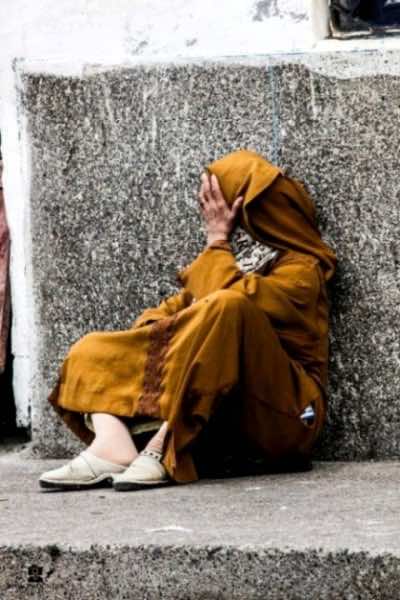
Casablanca – “In solitude, where we are least alone.” Lord Byron.
Multitudinous are the occurrences and scenarios that induce loneliness in one’s life. These scenarios might range from ending an intimate relationship with someone; to committing a socially inacceptable act that subjects one to social severance; to being different in so far that one is deemed extraneous to a close-knit and homogeneous community; to being refused friendship(s), or losing a friend, or a cherished being; to no longer identifying oneself with a particular community; all the way to no longer being understood in one’s community.
The scenarios listed above are but a few among numberless others. What is common among these occurrences is that they all induce an undesirable state of mind, which is loneliness, a frame of mind that is inflicted on a person, something that this person does not stomach and would strain, in his or her utmost, to get rid of. But if loneliness is an unwanted state of mind that is the backwash of an unpleasant event or scenario, then where can we situate solitude? Is it a mere word synonymous of the former, or a degree that has a place somewhere on a scale that ramifies or categorizes loneliness into levels? If none of those is the answer, then what could solitude be? Does it feel different from loneliness?
Lord Byron’s statement above answers it all: solitude, unlike the signification that has long been tagged to it, as nothing but loneliness itself, is contrariwise antonymous to it, in the sense that it is not the backwash of any of the scenarios listed above, nor is it an unwanted, unpleasant sensation that one would endeavor desperately to rid himself or herself of. I say solitude is a choice, whereas loneliness is an infliction.
Sometimes, when you are in solitude, you happen to be in need of self-contemplation, of urgent and intimate introspection. Solitude can be translated into an urgent reunion wherein only you and yourself are rounding the table, negotiating and agreeing over particular matters, setting up projects and carpentering dreams, changing ideals and adding principles, debating or even, at times, arguing and disputing, and so forth.
As we at times happen to lose ourselves in the crowd, we feel an urgent need to reinter the sphere of solitude in hopes to find ‘our selves’ there. In most cases, we leave the sphere with ‘our selves’ to reinter the crowd more surefooted, more cautious and more optimistic. Thus, loneliness, now that solitude has been hopefully delineated, is nothing but solitude’s scenario read backward: We strive hard to conflate in the sphere of the crowd, of the community, of the people, of heterogeneity and difference, till something atypically unpredictable detaches us from the crowd. We are immersed into loneliness, whereas invited into solitude. For solitude, we stand out of the crowd, whereas in loneliness, we strive hard to re-access the crowd, but, to our constant dismay, vainly.
Now that the painting is finished, now that you can clearly see in which colors solitude was painted and in which ones loneliness was portrayed, which one is your state of mind at this moment, loneliness, or solitude?
If you happen to identify yourself with those under the umbrella of loneliness, then know that you can, right after gearing yourself up with a bit of willpower and determination, turn your frame of mind from loneliness to solitude, thus rendering it pleasurable and serviceable to your case. Once this achieved, find your ‘self’ in solitude, then get back to coalesce in the crowd again, and be wary of those scenarios that might project you back into the unwanted sphere of loneliness, where you will need at that time greater willpower to change it into solitude once again.