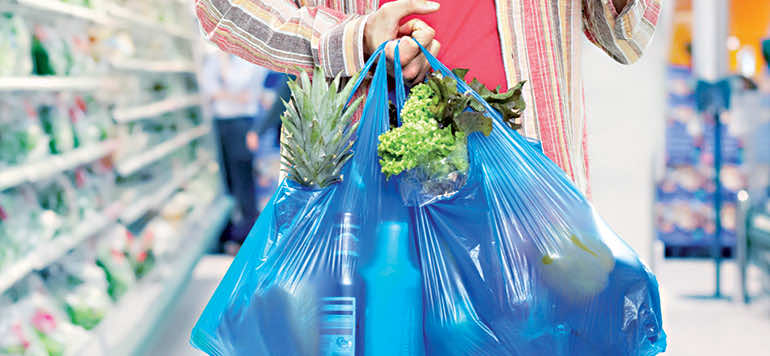
Rabat – The “Zero Mika” innitiative, beginning July 1 under the law 77-15, could bring about consequences unseen beyond initial planning as change will be evident in the daily lives of many Moroccans following the national prohibition of producing, importing, and commercializing plastic bag.
Carrying the daily dose of bread home from the bakery each morning will feel absolutely different after July 1, but the plastic ban significantly impacts larger aspects of life that affects national environmental and economic policies that might lead to a setback if not controlled and regulated properly.
In pushing forward this legal initiative, the Ministry of Environment planned to collect and burn approximately 11 tons of plastic bags in Fqih Ben Salah and four tons in Fes as well as other cities since the beginning of June as one of the measures taken to eliminate any long term trace of plastic bags. However, that approach might in fact bring about equal if not more environmental harm than it would benefit.
On the brighter side, it’s not all about incineration and air pollution;the Elhaité Department started an awareness campaign that targeted Moroccan population in hopes of spreading information on more environment-friendly options that would replace the widespread use of plastic bags.
“The distribution of cloth bags is one of the viable options in this initiative,” Mohamed Benyahia, director of the communication and cooperation department at the Ministry of Environment told Telquel. “There are many other environment-friendly traditional options that are forgotten and should be revived.”
These options, according to Mr. Benyahia, include the traditional use of bags made of wicker, cloth, or woven using palmetto branches.
The newly adopted prohibition furhter encouraged the Ministry of Industry to take on an inter-ministerial project that linked the Ministry of Environment, Commerce, Interior and Agriculture. Such a program will take on a plan of economic conversion.
The Minister of Industry, Trade, and New Technologies Moulay Hafid Elalamy has promised a total of MAD 200 million to all workers in the plastic bag production industry. The proposed funding aimed to help workers accommodate the curtailing of the plastic bag industry.
Under Elelamy’s policy, registered enterprises that make more than 30 percent of their turnover would be offered 50 percent of industrial investment linked to the economic conversion project, according to Usine Nouvelle, a website specialized in this sector.
For smaller enterprises, the state will support required training for employees to work in other economic sectors. However, these small companies will not be able to benefit from any public aid unless they “engage in complete fiscal and social transparency and destroy or sell all machinery linked to the production of plastic bags,” declared the Ministry of Industry
Wholesale dealers across Morocco have, nonetheless, voiced their discontent. Many of them are willing to keep selling their plastic bags despite the risk of getting fined for a sum of MAD 10,000 to MAD 500,000.
The repercussions stated above questioned whether banning plastic bags is really a risk worth taking, only to be answered by the progress of time.