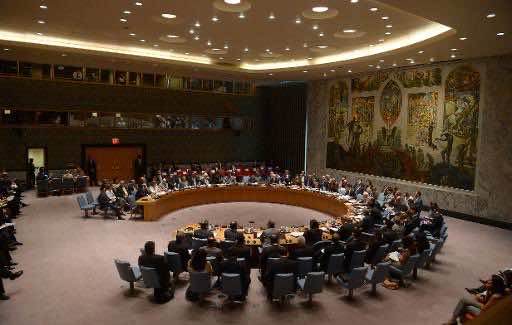
New York – A United Nations Security Council resolution passed today with 14 votes in favor and one U.S. abstention, calling for an end to Israeli settlements.
The Egyptian-drafted resolution, reports the Associated Press, “said Israel’s settlements in lands the Palestinians want to include in their future state have ‘no legal validity.’”
“It demanded a halt to such activities for the sake of ‘salvaging the two-state solution,” the AP report continued.
Since the 1967 Six-Day War, Israel has always stood by its decision to build its settlements in the West Bank and East Jerusalem, despite many considering them illegal under international law.
In a surprisingly bold move, the U.S. chose to abstain from the vote on the resolution, rather than veto it, despite pressure from President-elect Trump and Israel. This abstention allowed the resolution to be adopted.
Israel Ambassador Danny Danon denounced the vote, saying, “Would you ban the French from building in Paris?”
Meanwhile, Israeli Prime Minister Benjamin Netanyahu released a statement following the vote, saying:
“Israel rejects this shameful anti-Israel resolution at the U.N. and will not abide by its terms. At a time when the Security Council does nothing to stop the slaughter of half a million people in Syria, it disgracefully gangs up on the one true democracy in the Middle East, Israel, and calls the Western Wall ‘occupied territory.’”
After U.N. Security Council President Roman Oyarzun announced the vote results on Friday, U.S. Ambassador to the U.N. Samantha Power commented on the United States’ position, saying, “It is because this forum too often continues to be biased against Israel, because there are important issues that are not sufficiently addressed in this resolution, and because the United States does not agree with every word in this text that the United States did not vote in favor of the resolution.”
“But it is because this resolution reflects the facts on the ground and is consistent with U.S. policy across Republican and Democratic administrations throughout the history of the state of Israel that the U.S. did not veto it,” she continued.
Though many don’t expect this resolution to have a substantial effect on the conflict, the United States’ abstention makes a strong statement to the President-elect and indicates the country’s discontent with Israel.
In response to the resolution, U.S. President-elect Donald Trump, who had tried to prevent the vote from going through in solidarity with Israel, tweeted the following:
As to the U.N., things will be different after Jan. 20th.
— Donald J. Trump (@realDonaldTrump) December 23, 2016