 Join on WhatsApp
 Join on Telegram
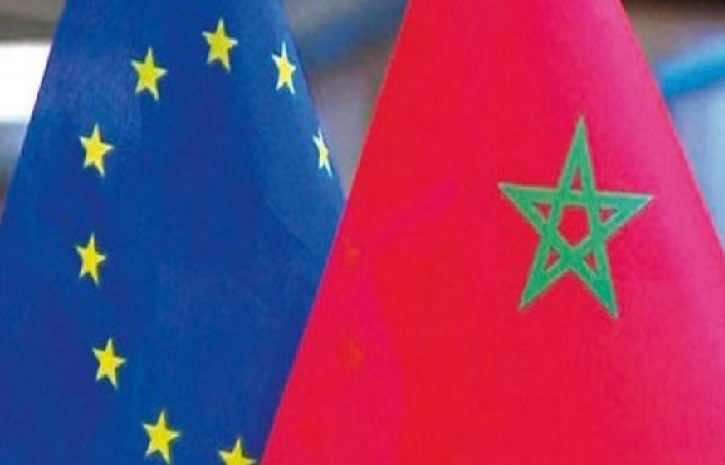
Rabat – Morocco enjoys proximity to Europe and is at an advantage of being favoured by the European Union as a close partner on political, economic, and cultural levels.
Historical archives and political legacies tie Morocco directly with at least three influential European countries: France, Spain, and England.
Demography, kinship, and immigration compel other EU members, such as Germany, Belgium, the Netherlands, and Italy, to take into consideration the homeland culture that transits and dissipates by the day into the fabric of western societies by means of thousands of Moroccans who have chosen to migrate to Europe and seek opportunities in free, democratic, and prosperous countries.
Nowadays, it is clear that political decisions and public orientations in Europe cannot be adequately formulated and defined in the total disregard of the opinions and attitudes related the North African communities as scattered in the cities and metropolises of Europe. In other words, Morocco is inextricably present in Europe.
What follows is that strategic relations between Morocco and the EU are inevitably imperative and must not be reduced to pure diplomatic protocols and mercantile portfolios. The complex reality of the current geopolitical situation that brings Morocco and the EU together gradually grows and evolves into far more irreducible contexts of mutual influence and multifaceted trans-cultural preponderance. Neither Morocco nor Europe can ignore or exclude each other in the future.
The EU is, in fact, increasingly required to revise and devise novel options for securing even closer and tighter relations with Morocco. Morocco, in like manner, must find the ingenuity and courage to appeal to the people of the EU who are brought up with the inveterate belief in cultural multiplicity, freedom, and democracy. Lasting relations between the two sides will be determined by the urgency to adapt to the mutations and exigencies of a world becoming alarmingly less secure.
Morocco has a strong interest in contributing to the prosperity and unity of the EU with the agency of an exemplary community of Moroccans–skilled, tolerant, and ambitious but proudly attached to its homeland culture. The Moroccan community in Europe is dynamic and perhaps one of the fastest-growing among other communities. However, the recent wave of the terrorist acts perpetuated in Paris, Nice, Brussels, Stockholm, Manchester, and London has put many of the European nationals of Moroccan origin under mounting psychological and social pressure.
The entanglement of some individuals of North African descent, such as Khalid Zekrani, in terrorism has led to serious and often exaggerated reactions steeped in prejudice, hostility and xenophobia. Europe has clearly failed to come out with sophisticated and subtle strategies to ensure the full and productive assimilation of its young citizens of North African origin within Western culture. While this community is expanding and experiencing increasing social malaise, the risks are that hundreds or thousands will feel they belong nowhere, disenfranchised and as such can only affiliate with the radical dogmas and ideologies made amply available to them via social media and hate-infested sermons. Terrorism for such marginalised groups of wayward individuals is technically a deadly instrument by means of which they seek to assert themselves and gain massive media attention.
Terrorism, as I define it today within the context of the recent assaults on European cities, is for the most part the product of lone assailants operating with a collective mind-set prone to radicalisation, extreme violence and self destruction. Europe has in fact to reinvent its security measures in accordance with the range and density of the threats simmering primarily within its borders. The EU states have continually and blindly concentrated on the false claim that Europe is safe as long as its borders are secure and that the scourge of terrorism is an external threat that infiltrates via clandestine pathways.
Acts and figures prove this xenophobic assessment wrong. Most terrorist attacks in Europe have recently been perpetuated by individuals born and raised in Europe. Some of these attackers have probably very little knowledge of the Arabic language and less to do with the cultural and social dynamics of the territories beyond Europe. What actually must be emphasised is that Europe now with its impaired and parochial security policy regarding the plague of terrorism puts its neighbouring states at risk–including Morocco, a country that welcomes thousands of immigrants of Moroccan origin every summer.
Cooperation, strong, continuous, open, and strategic, between the EU and Morocco is imperative to safeguard peace and stability within the Mediterranean. The well educated Moroccans who are born and raised in Morocco pose very little threat to Europe, and they are nowadays for the most part showing less interest in migration with their home conditions being improved by the day. Europe must understand that the social security and political stability of a long-standing partner as Morocco are fundamental to security and peace within a prosperous and a welcoming Europe.
Therefore, the EU has to play a role ( a direct role) in backing Morocco’s strategic political and economic interests by sustaining reciprocal investments and cultural exchanges. Morocco is a bastion of peace, and its destiny and internal stability is in all cases partially determined by close, productive, and healthy relations with its European partners. The recent social unrest in the Rif has partly been fuelled from outside of Morocco through the active manoeuvres of Europe-based associations openly hostile to Morocco’s political sovereignty and territorial unity. It is also in Morocco’s best interest to maintain solid and privileged ties with the EU, which stands not only for an impressive post-War organisation of states but also for much of the values on which modern democracies are based.
The views and opinions expressed in this article are those of the author and do not represent any institution or entity.
© Morocco World News. All Rights Reserved. This material may not be published, rewritten or redistributed without permissi