


 Join on WhatsApp
  Join on Telegram
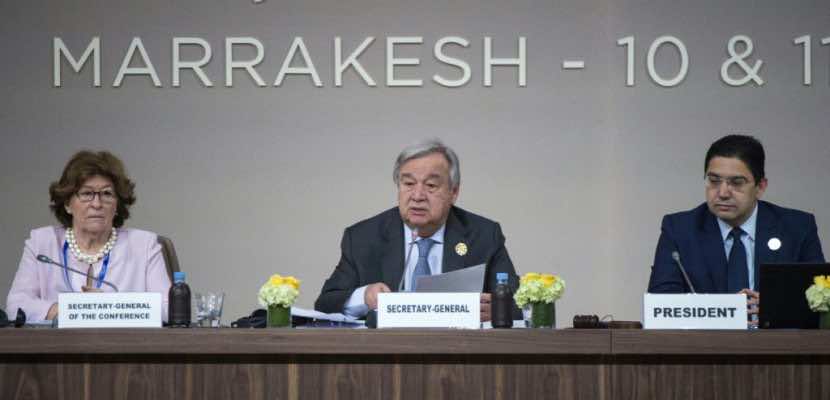
 Rabat – Having arrived in Morocco on Sunday, UN chief Antonio Guterres expressed gratitude, “in particular,” to the Moroccan government “for their welcome and the fantastic miracle of the conference center,” according to UN.org.
About 150 countries have confirmed their intention to vote for the Global Compact for Safe, Orderly and Regular Migration today in Marrakech.
Pressing support for the pact, Guterres said that the countries’ participation “is a clear demonstration of the importance our global community places on the pursuit of the better management of international migration, through a cooperative approach that is grounded in the principles of state sovereignty, responsibility-sharing, non-discrimination and human rights.”
Read Also: The Sign of Things Seen’: Lessons from the Marrakech Migration Forum
The UN migration document aims to fulfill 23 objectives, including providing basic services for migrants, eliminating all forms of discrimination against migrants, and sustainable reintegration.
The accord also aims to ease the regular migration process and to solidify international cooperation and efforts to save migrants’ lives, and reduce environmental and other factors that force people to flee their countries of origin.
Guterres also urged leaders of the countries participating in the conference to “breathe life,” calling on them to “demonstrate the compact’s utility: to Governments as they establish and implement their own migration policies,” as well as “to communities of origin, transit, and destination; and to migrants themselves.”
The UN said that the migration compact meets all standards to cover “all dimensions of international migration in a holistic and comprehensive manner.”
The compact came out of the New York Declaration for Refugees and Migrants, which was adopted in 2016. It was developed after 18 months of discussions, according to the UN.
Morocco’s Representative to the United Nations Omar Hilale said it was a “historic moment for two reasons.” He explained that the conference is the first of its kind that tackles migration issues. The second reason, according to Hilale, is that the “Marrakech document will be the first document in UN history that will address the rights of migrants and defend it.”
He added that “Marrakech will lend its name to this document.”


