


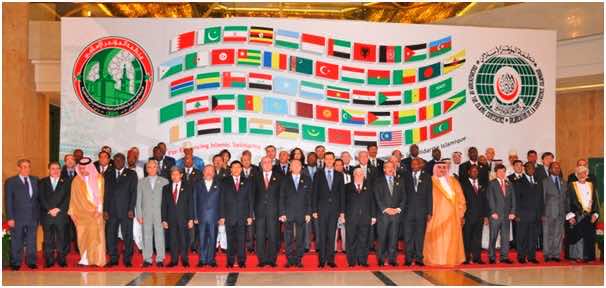
Rabat – The two-day 46th session of the Council of Foreign Ministers (CFM) of the Organization of Islamic Cooperation (OIC) opened on Friday in Abu Dhabi, the UAE. Saudi Arabia is hosting the OIC, headquartered in the kingdom.
Ministers and officials representing the OIC member states met Friday at the symposium themed “50 Years of Islamic Cooperation: Road Map for Prosperity and Development,” celebrating the coinciding of CFM with the celebration of OIC’s 50th anniversary.
The four-member Moroccan delegation is headed by the secretary of state to the minister of foreign affairs and international cooperation, Mounia Boucetta.
The other delegates are Fouad Akhrif, head of the Directorate for the Mashrek, Arabian Gulf, and the Arab and Islamic Organizations at the Moroccan foreign ministry; Abdullah Rabah, permanent representative to the OIC; and Abdul Rahim Muziane, head of the Department of the Islamic Organizations at the same ministry.
Morocco decided to reduce the number of its representatives at the event after a month of tension between Morocco and Saudi Arabia over the Western Sahara issue.
The Palestinian and Arab-Israeli conflict issues are at the heart of the meeting.
Read Also: Timeline: All You Should Know About Morocco-Saudi Arabia Friction
Ministers will discuss developments in Palestine, Islamophobia, terrorism, defamation of religions, the peace process in the Middle East, and the status of Muslims in non-OIC countries.
Discussions of economy, trade, agriculture, education, and technology are also within the agenda of the symposium.
Foreign ministers will also address ways to promote science and higher education in OIC countries and curb climate change.
Morocco and Saudi Arabia are giving each other the cold shoulder after the North African country was reported to have recalled its ambassador to Saudi Arabia for consultation in early February.
Foreign minister Nasser Bourita denied the news of Morocco recalling its ambassadors to Saudi Arabia and the UAE, emphasizing that Morocco has its own channels to announce such news if it were true.
The spat between the two allies reached a new level after Saudi television channel Al Arabiya aired a controversial documentary about the Western Sahara conflict, claiming that Morocco “occupied” the Western Sahara and presenting Polisario as the “legitimate representative of the Saharawi people.”
The report was broadcast a few weeks after Morocco’s Minister of Foreign Affairs Nasser Bourita told Al Jazeera that Morocco’s participation in the Yemen war has “changed” for humanitarian reasons.




