


 Join on WhatsApp
  Join on Telegram
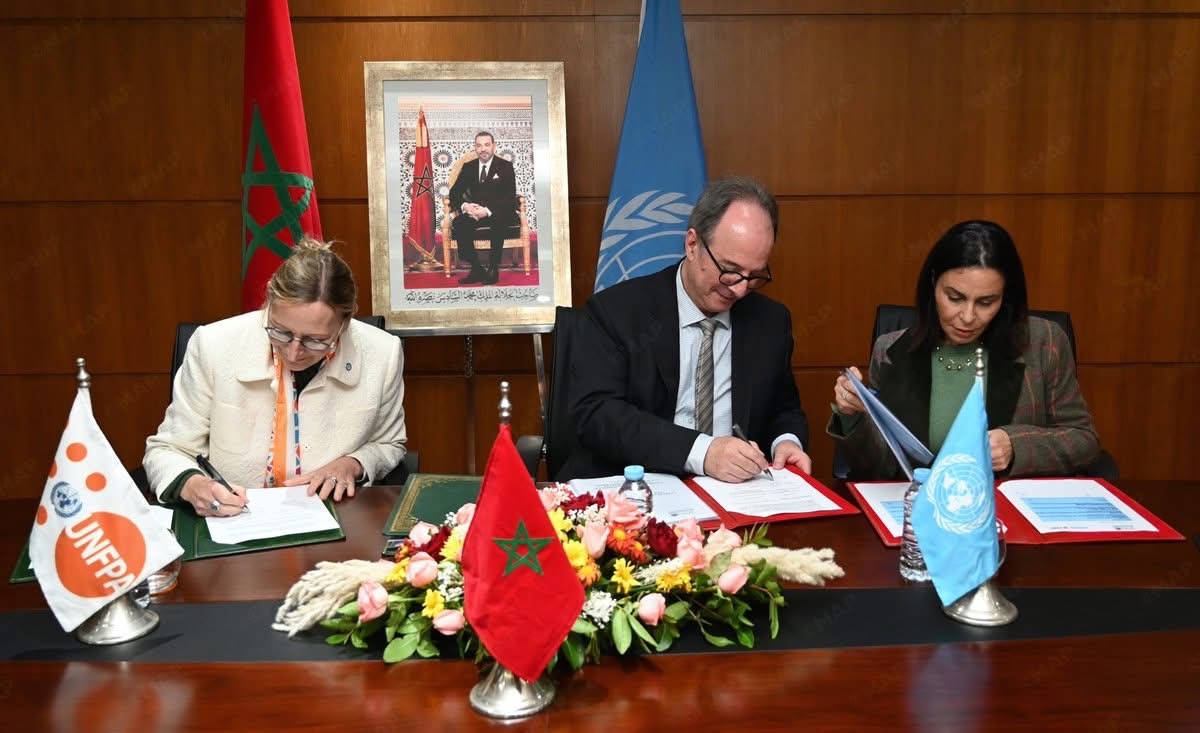
 Rabat – The Interministerial Delegation for Human Rights (DIDH) signed two cooperation agreements on Thursday in Rabat with the UN Population Fund (UNFPA) and UN Women.
The partnerships seek to reinforce Morocco’s interaction with international human rights mechanisms and support efforts to embed gender equality across national policies.
The first agreement, signed by Interministerial Delegate for Human Rights Mohammed El Habib Belkouch and UNFPA Representative in Morocco Marielle Sander, focuses on implementing a project designed to strengthen Morocco’s engagement with international human rights bodies.
Targeting all social groups, particularly the most vulnerable, the initiative builds on national efforts to advance good governance and promote a rights-based institutional culture.
The partnership also seeks to support Morocco’s implementation of recommendations issued by UN human rights mechanisms, ensuring that they are reflected in national planning and strategic policies.
It further includes measures to reinforce the capacities of governmental and civil society actors working on international human rights processes.
New gender equality agreement
A second agreement, signed by Belkouch and UN Women Representative in Morocco Myriem Ouchen Noussairi, concerns the implementation of a program dedicated to advancing Morocco’s international commitments related to the rights of women and girls.
It establishes a cooperation framework to integrate gender-sensitive approaches into policies and protection programs, improve institutional coordination, and promote a culture of gender equality through training and awareness initiatives.
Speaking to the press, Belkouch said the agreements reflect the DIDH’s renewed orientation, with a stronger emphasis on developing expertise in research, monitoring, and international engagement.
He noted that the partnerships will equip the DIDH and its partners with tools to produce studies, strengthen dialogue, and reflect on emerging global challenges to inform timely decision-making.
Sander commended Morocco’s progress in aligning its national legislation with international human rights standards, describing the initiative as a strong signal of the country’s leadership.
She said the cooperation will ensure full coherence between national frameworks and international norms, marking an important step in consolidating Morocco’s commitments.
For her part, Ouchen Noussairi said the three-year agreement with UN Women is designed to integrate gender equality within programs under the National Initiative for Human Development (INDH), strengthen institutional coordination, and anchor women’s rights in public policy.
She added that the partnership will also support training, capacity-building, and advocacy to advance gender equality nationwide.
Steps taken, much still needed
Morocco’s efforts to advance human rights and promote women’s rights are commendable, particularly as the country continues to update its legal frameworks and strengthen cooperation with international partners.
Yet many observers note that significant gaps remain, especially in areas affecting women’s daily lives, from protection against violence to equal access to economic opportunities and stronger institutional mechanisms.
While recent initiatives signal a willingness to move forward, activists and specialists argue that sustained implementation, broader social engagement, and more consistent enforcement are still needed to ensure that progress translates into concrete change for women across the country.


