


 Join on WhatsApp
  Join on Telegram
 Rabat – Morocco’s publishing sector threads on a measured upward path. New data from the National Library of the Kingdom of Morocco shows that 7,143 titles were published in 2025, a figure that reflects a modest yet consistent increase compared to the previous year.
The data was presented during a press briefing organized by the national library today, in Rabat. The session outlined the 2025 national publishing and book report, covering key indicators of intellectual output, the evolution of publication trends, and shifts in the sector amid ongoing digital transformation.
The figures rely on legal deposit records and bibliographic tracking, two tools that offer one of the most reliable snapshots of the country’s intellectual output. The total includes books, collective works, and academic theses adapted for publication, which together outline the contours of Morocco’s editorial landscape.
The rise, estimated between 4% and 6%, does not suggest a surge. Instead, it points to continuity. Moroccan publishing advances at a steady pace, with no abrupt shifts but no signs of decline either. In a sector often shaped by structural constraints, this form of stability carries weight.
Language distribution reveals a familiar hierarchy. Arabic accounts for close to two-thirds of all published titles, which confirms its central role in the national literary and academic scene. French follows at around a quarter of total output, maintaining a strong foothold, particularly in specialized and academic fields. Amazigh, English, and other languages share the remaining portion, a reminder of the country’s layered linguistic reality.
Literature stands at the forefront of production. Novels, poetry, and short stories represent nearly 30% of all publications, a sign that creative writing continues to draw both writers and readers.
Humanities and social sciences come close behind with 28%, while religious studies hold 12%. Books for children and young readers account for about 10%, a segment that reflects ongoing attention to younger audiences. Other works extend across academic research, translation, and technical subjects.
The report also points to shifts in how books reach the public. Self-publishing now represents roughly 18% of total output, a figure that suggests more authors choose independence over traditional editorial routes.
Digital publishing remains limited but shows gradual progress, with e-books accounting for around 7%. Print still dominates, yet the presence of digital formats signals the early stages of change rather than a completed transition.
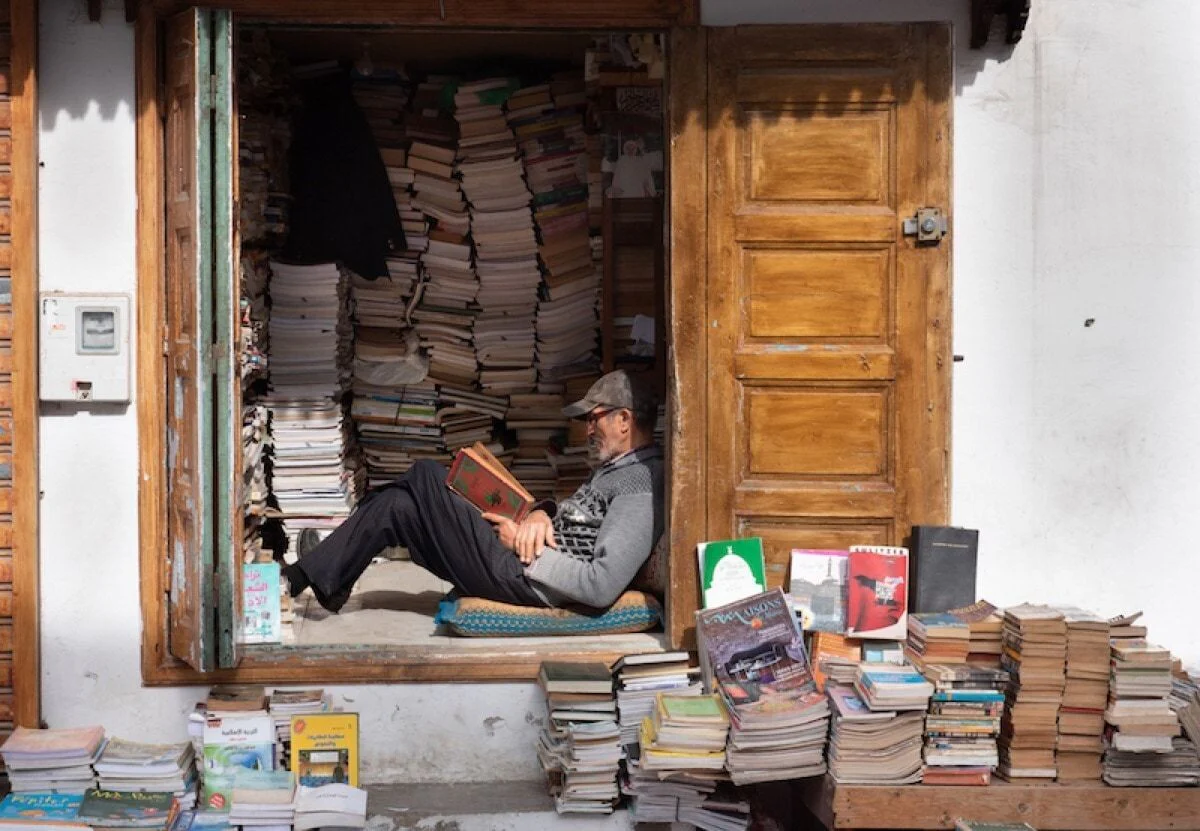
Morocco writes more than it reads
These figures outline a sector that evolves without rupture, guided less by acceleration than by accumulation. Morocco’s publishing landscape does not expand in sudden leaps; it advances through layered growth, thematic diversification, and a gradual accommodation of new editorial practices and formats. The overall trajectory suggests continuity, yet it also reveals an enduring asymmetry between production and reception.
The increase in titles does not, in itself, resolve the question of readership. The circulation of books remains uneven, and reading continues to occupy a restricted place within broader social practices. This gap, long observed within the cultural field, situates publishing within the wider structural tension of a steady expansion where output coexists with a more fragile ecosystem of consumption and access.
Seen from this perspective, further institutional and cultural efforts appear necessary to consolidate the sector’s foundations. Expanded distribution circuits, stronger reinforcement of publishing houses, and sustained cultural mediation could contribute to narrowing the distance between the book as production and the book as lived practice.
It is within this framework that the International Publishing and Book Fair (SIEL), scheduled to open in Rabat on May 1, acquires particular significance. As an annual fixture in the national cultural calendar, the fair situates publishing houses at its core while offering a rare public space where editorial production encounters readers at scale.
The fair also functions as a site of symbolic visibility for the book industry, and as a cultural moment through which reading is reintroduced into public discourse, in a context where it remains only partially embedded in everyday social habits.


