
 Join on WhatsApp
 Join on Telegram
Rabat – Today, the National Human Rights Council (CNDH) hosted a seminar as part of its program at the International Publishing and Book Fair (SIEL), bringing together academics, activists, and experts to explore the link between cultural representation and inclusive development for persons with disabilities.
Held under the theme “Cultural Representations of Persons with Disabilities and the Question of Inclusive Development,” the discussion examined how cultural narratives, media, and public discourse continue to shape both societal perceptions and the lived realities of persons with disabilities.
The session formed part of the CNDH’s broader efforts to promote rights-based approaches in public policy and cultural production, with a focus on advancing inclusion through more equitable representation.
A discussion at the crossroads of culture and rights

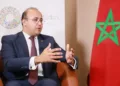
Opening the seminar, professor of public law and disability rights expert Abdelmalek Asrih stressed that inclusion cannot be reduced to accessibility measures or institutional integration alone, but must also address symbolic representation and visibility in cultural spaces.
He defined cultural representations of disability as the way society collectively perceives and portrays persons with disabilities through language, media, education, traditions, and everyday social attitudes. These perceptions, he noted, directly influence real-life treatment and opportunities.
“The danger in policies that involve discrimination lies in what is known as indirect discrimination. This occurs when laws, policies, or programs appear neutral and inclusive but in practice fail to account for the specific realities of certain groups. They are designed as if they apply to everyone equally, without recognizing particular needs,” he said.
Asrih further emphasized that when disability is associated with pity or dependence, it reinforces exclusion and limits opportunities. By contrast, representations that reflect disability as part of human diversity can support inclusion, equality, and participation.
From an academic and socio-economic perspective, Idir Ougandi examined how inclusive development policies intersect with disability rights, stressing that inclusion must go beyond social discourse to engage education systems, labor markets, and urban planning, while also addressing cultural barriers that restrict participation.
Cultural perceptions and institutional challenges
In statements to Morocco World News (MWN), Asrih reiterated that cultural representations remain a major obstacle to social inclusion, noting that they are shaped by socially constructed perceptions rather than lived realities. These narratives, he said, extend across all segments of society, including policymakers, resulting in public policies that often overlook the needs of persons with disabilities.
“This makes the issue particularly significant. Its seriousness lies in the fact that cultural representations and behaviors permeate all social layers. They are not limited to less educated or vulnerable groups but extend across all segments of society, including the political class,” he told MWN.

He stressed that these representations cut across social classes and institutions alike, influencing decision-making processes at the highest levels. This, Asrihadded, contributes to indirect discrimination, where persons with disabilities are treated as recipients of assistance rather than as full citizens and active contributors to development.
Similarly, Ougandi pointed tothe importance of culture as a driver of inclusion, describing the seminar’s theme as particularly relevant. He underlined that culture should serve as a foundation for breaking stereotypes and advancing social integration.
“The choice of the theme—cultural representations of persons with disabilities—is a strong one. Culture should serve as a fundamental pillar and a key driver for the inclusion of persons with disabilities, as well as a means to break stereotypes about them,” he told MWN.
Referring to Morocco’s diverse cultural heritage—Amazigh, Hassani, and Arab-Islamic—he noted that it contains both empowering and exclusionary elements. While some cultural expressions support the participation of persons with disabilities, others continue to reproduce marginalizing images.
The seminar reflected that cultural representation is not a secondary issue, but a central dimension of inclusive development. It highlighted how narratives, visibility, and institutional responsibility intersect in shaping public attitudes and in building a more equitable and inclusive society for persons with disabilities.