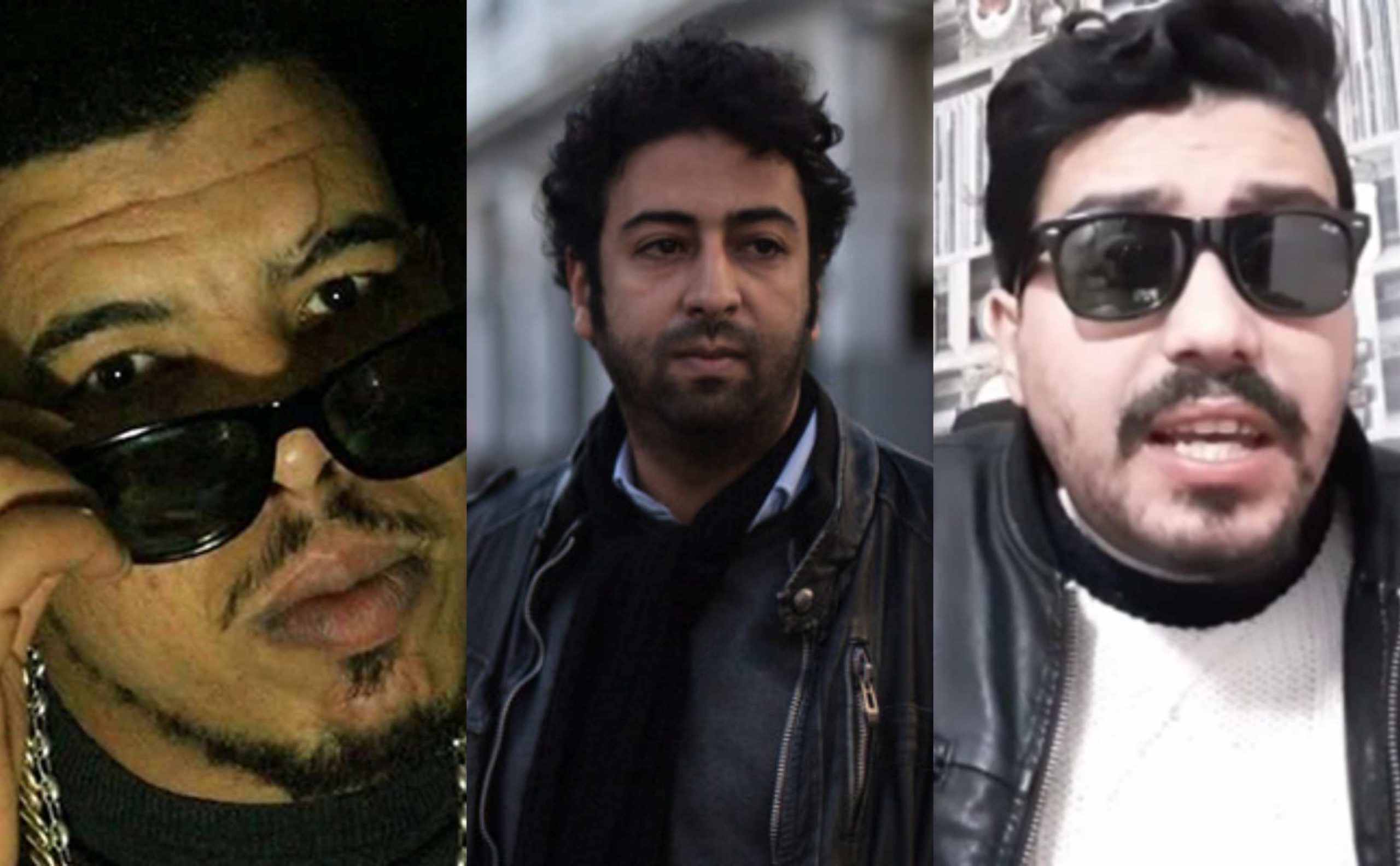
Rabat – Human Rights Watch (HRW) has called for Moroccan authorities to immediately free activists, artists, and other citizens who are serving prison terms as punishment for comments made online.
“Moroccan authorities have, since September 2019, arrested and prosecuted at least 10 activists, artists, or other citizens who did nothing but peacefully express critical opinions via Facebook posts, YouTube videos, or rap songs,” the international NGO stated yesterday.
“The authorities should immediately free those who are being detained for exercising their right to freedom of expression and drop the charges.”
The charges include showing a “lack of due respect for the king,” “defaming state institutions,” and “offending public officials.”
The imprisoned Moroccans in question were all prosecuted under the Penal Code rather than the Press and Publications Code, HRW continued.
Morocco’s 2016 Press and Publications Code does not punish speech offenses with prison terms.
However, HRW argues that Moroccan authorities use the Penal Code to impose prison terms on citizens for a range of nonviolent speech offenses.
“An increasing number of Moroccans are taking to social media to express bold political opinions, including about the king, as is their right,” said the communications director for the Middle East and North Africa at HRW, Ahmed Benchemsi.
“As self-censorship erodes, the authorities have stepped in to frantically try to reinstate the red lines.”
Read also: UN Says Morocco in Top 5 Countries Implementing Human Rights Proposals
Morocco ratified the International Covenant on Civil and Political Rights (ICCPR) in 1979. The covenant protects nonviolent criticism of state officials and policies under international law.
However, officials such as government spokesperson Hassan Abyaba, have maintained that “there is a difference between freedom of expression and opinion, and committing a crime sanctioned by the law.”
“A country that takes seriously the international human rights treaties it signed should abolish its domestic speech-muzzling laws or at least stop enforcing them,” argues secretary-general of the Moroccan Association for Human Rights Youssef Raissouni.
HRW and the Moroccan Association for Human Rights published a case listing of Moroccan citizens who were imprisoned for critical commentary on Moroccan authorities.
Those prosecuted include students, artists, citizen journalists, and social media commentators.
Soufain Al-Nguad: Served a one-year prison sentence for encouraging protests. After his release, he and his wife crossed the border to Ceuta, a Spanish enclave in northern Morocco, and filed for asylum in Spain on grounds of political persecution.
Mohamed Mounir: Sentenced to one year in prison after performing a song called “3ach cha3b” (Long Live the People) that criticized the King and the Moroccan government.
Mohamed Sekkaki: Sentenced to four years in prison and a fine of MAD 40,000 ($4,000) after posting a video on YouTube criticizing the King. He has appealed the verdict.
Mohamed Ben Boudouh: Sentenced to three years in prison after publishing videos on Facebook criticizing governance in Morocco and King Mohammed VI’s lifestyle. He appealed the decision and is currently in Tiflet prison.
Youssef Moujahid: Sentenced Moujahid to three years in prison after he published a video on YouTube criticizing the King’s policies and lifestyle. He appealed the decision and remains in Tiflet prison, pending appeal.
Hamza Sabbaar: Sentenced him to 4 years in prison and a fine of MAD 10,000 ($1,000) for chanting anti-government slogans and for releasing a rap song critical of Moroccan authorities. On January 16, 2020, an appeals court reduced the sentence to eight months. He is currently in Bouizakarn prison.
Said Chakour: Sentenced to two years in prison for insulting Moroccan officials and the King in a YouTube video. He appealed the verdict.
Abdelali Bahmad: Sentenced to 2 years in prison and a fine of MAD 10,000 ($1,000) for “insulting the national flag and symbols of the nation.” He is in Khenifra prison, waiting for the appeals trial to start.
Ayoub Mahfoud: Sentenced to three years in prison over a Facebook post that included a lyric from a controversial rap song critical of the King. The court provisionally released him on January 16 while judging his appeal.
Omar Radi: Charged with “insulting a magistrate” after he tweeted a comment about a judge in Casablanca. He faces up to a year in prison.
Adnan Ahmadoun: Charged with “incitement to rebellion” after sharing a Facebook post and sentenced to 4 months of suspended prison. He will appeal the verdict.
Read also: Editorial: Morocco Shouldn’t Let Omar Radi’s Case Erase Years of Progress