

Read on app Read on app
✕
Prayer Times
  • Morocco
  • Lifestyle
  • Western Sahara
  • Login
Morocco World News
  • Home
  • Culture
  • Politics
  • Society
  • Economy
  • Opinion
  • Education
  • Sustainability
  • Tech
  • Sport
  • GITEX 2026
No Result
View All Result
Morocco World News
  • Home
  • Culture
  • Politics
  • Society
  • Economy
  • Opinion
  • Education
  • Sustainability
  • Tech
  • Sport
  • GITEX 2026
No Result
View All Result
Morocco World News

Home > Society > History > Paleontologists: Eastern Morocco Once ‘Most Dangerous’ Region on Earth

Paleontologists: Eastern Morocco Once ‘Most Dangerous’ Region on Earth

Adnane BennisbyAdnane Bennis
Apr, 27, 2020
0 0
A A
Paleontologists: Eastern Morocco Once ‘Most Dangerous’ Region on Earth

Paleontologists: Eastern Morocco Once ‘Most Dangerous’ Region on Earth

Follow the latest news from Morocco World News

Join on WhatsApp Join on Telegram

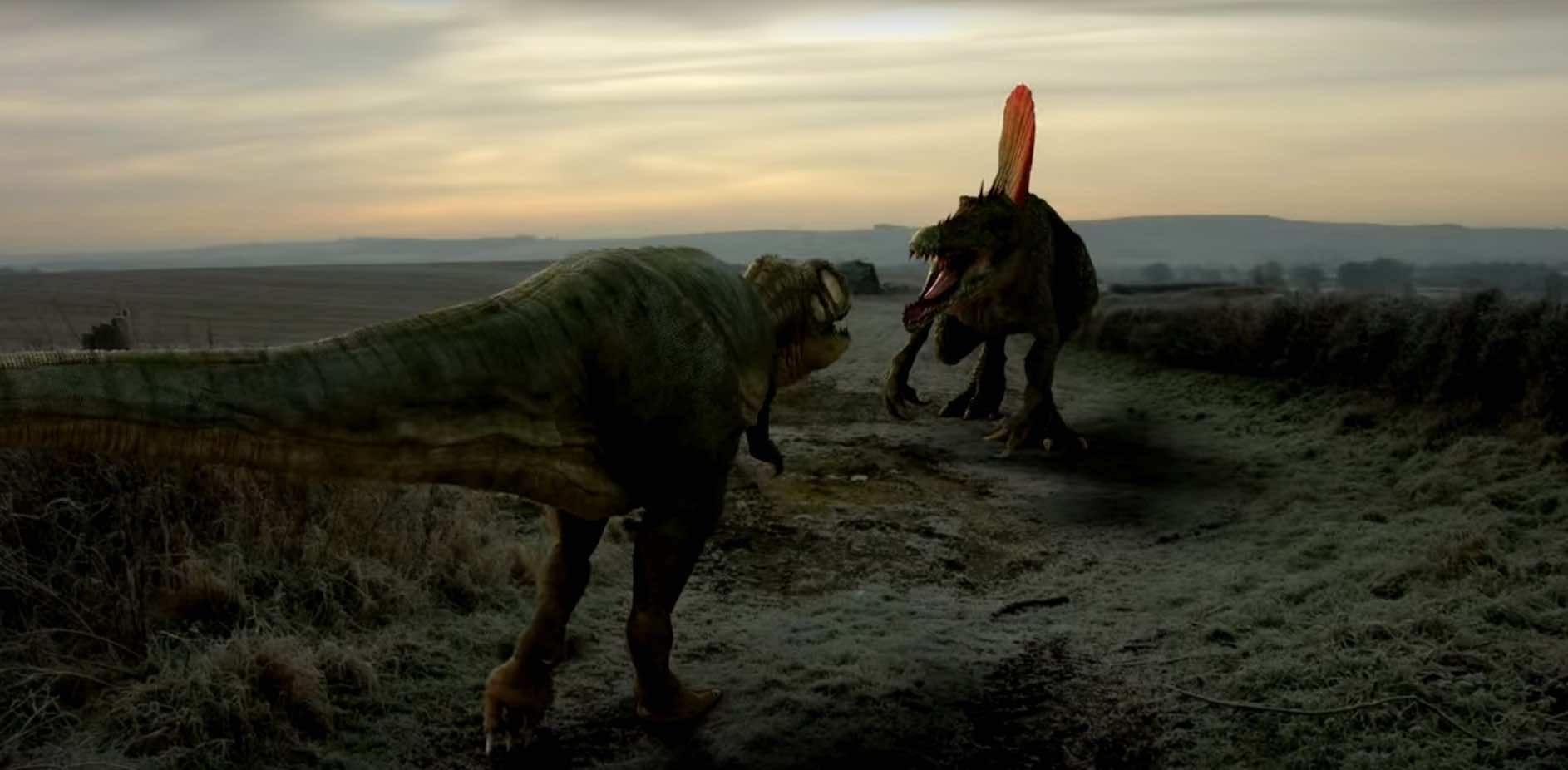
Paleontologists uncovered fossils of various carnivorous dinosaurs in southeast Morocco’s Kem Kem beds, meaning that the region, which borders Algeria, was once home to some of the most dangerous dinosaur species in the world.

“This was arguably the most dangerous place in the history of planet Earth, a place where a human time-traveller would not last very long,” said the monograph’s lead author, Dr. Nizar Ibrahim of the University of Detroit Mercy.

The ZooKeys journal published the paleontology and geology monograph on April 21, co-authored by scholars from the United States, Europe, and Morocco. The researchers stressed that “no comparable modern terrestrial ecosystem exists with similar bias toward large-bodied carnivores.”

The newly-discovered dinosaurs highlighted in the paleontologists’ recent monograph were all large-species theropods, a group that includes all vertebrate and invertebrate meat-eaters.

Species such as the sail-backed Spinosaurus and the saber-toothed Carcharodontosaurus ruled over the area 100 million years ago, according to the researchers. The Carcharodontosaurus, a carnivore that somewhat resembles a giant crocodile, is unlike any reptiles we see today. The species had giant teeth measuring up to 8 inches and a body length of up to 12 meters.

Scientists believe that these huge reptilian predators fed on large supplies of fish in the vast river systems encompassing the Kem Kem Group, which is located in modern-day Morocco. Remains found in the region indicate the dinosaurs were some of the largest and most dangerous species in the history of the world.

Expeditions to uncover the mysteries of the Kem Kem region began in 1995 and continue today. The publication follows a March discovery by a team of Moroccan and American researchers. The paleontologists uncovered fossils of three previously-undiscovered flying reptile species, confirming the existence of a community of pterosaurs, during the Cretaceous period, in Morocco’s modern-day Western Sahara.

Scientists involved in the March discovery believe there are still many species to unearth in the region, calling the plethora of possibilities a new “golden age” for discoveries.

Tags: Africa’s last dinosaursdinosaur bonesdinosaur in MoroccoDinosaur SkeletonMoroccan dinosaur fossil
TweetShareShareSendShareScan

Recent News

24 Killed, 2,861 Injured in Morocco Urban Traffic Accidents in One Week

24 Killed, 2,861 Injured in Morocco Urban Traffic Accidents in One Week

June 9, 2026
Marhaba 2026 Begins June 10 With 26 Reception Centers in Morocco and Europe

Marhaba 2026 Begins June 10 With 26 Reception Centers in Morocco and Europe

June 9, 2026
Real Madrid have officially announced the departure of head coach Alvaro Arbeloa after agreeing to terminate his contract with the first team.

Real Madrid Part Ways with Alvaro Arbeloa After Trophyless Season

June 9, 2026
The Senegal Football Federation (FSF) has issued an official statement to clarify a viral video showing members of the national team undergoing a security check at an airport in the United States ahead of the 2026 FIFA World Cup.

Senegal FA Clarifies Viral Airport Security Check Ahead of 2026 World Cup

June 9, 2026
Morocco Opens Hajj 1448 Fee Payments from June 29 to July 10

Morocco Opens Hajj 1448 Fee Payments from June 29 to July 10

June 9, 2026

USEFUL LINKS

  • About
  • Privacy Policy
  • Contact
  • Careers
  • Terms Of Use
  • Cookies Policy

TOPICS

  • Mawazine 2025
  • Environment
  • Politics
  • Lifestyle
  • Sports
  • Western Sahara

REGIONS

  • International
  • Maghreb
  • Middle East
  • Africa

Download our App


Download the Morocco World News app on Google Play for Android

Download the Morocco World News app on the Apple App Store for iPhone and iPad

Copyright 2026 Morocco World News. All rights reserved. Morocco World News is not responsible for the content of external sites.
Read about our approach to external linking.

Welcome Back!

Login to your account below

Forgotten Password?

Retrieve your password

Please enter your username or email address to reset your password.

Log In
  • Login
No Result
View All Result
  • Home
  • Culture
  • Politics
  • Society
  • Economy
  • Opinion
  • Education
  • Sustainability
  • Tech
  • Sport
  • GITEX 2026

Useful Links

  • Prayer Times

Useful Links:

  • Prayer Times

All Right Reserved © 2025 Morocco World News .

Contact us
Are you sure want to unlock this post?
Unlock left : 0
Are you sure want to cancel subscription?
