
 Join on WhatsApp
 Join on Telegram
Fez – The global fashion industry may be entering a new phase as robotics companies develop machines capable of producing clothing faster, closer to consumers, and with a smaller environmental footprint.
For decades, automation has transformed industries such as automotive manufacturing, logistics, and healthcare.
But clothing production remained largely dependent on human labour because handling soft fabrics with precision is far more difficult for machines than working withrigid materials.
Today, several technology firms believe that challenges can finally be solved.
California-based company CreateMe is among the firms trying to change how garments are made.
Instead of relying on traditional stitching, the company developed robots that glue pieces of fabric together using industrial adhesives.
The system is already being used to manufacture women’s underwear, while t-shirt production is expected to begin in the coming months.
According to the company’s founder and chief executive, Cam Myers, sewing remains one of the biggest obstacles for robotics because fabrics constantly shift during movement.
By replacing stitching with adhesive bonding, the process becomes easier to automate.
The technology could help bring part of the apparel industry back to Western countries such as the US and the UK, where only a small percentage of clothing is currently produced domestically.
Companies are increasingly interested in selling garments labeled as locally made, especially as consumers pay more attention to supply chains and sustainability.
CreateMe says its adhesive-based method can work with materials including cotton, wool, and leather.
The company also argues that garments produced without seams can offer smoother finishes and better body fitting.
Still, experts say large-scale automation in fashion remains far from complete.
Clothing production is highly dependent on variety, design changes, and consumer trends, making full automation more complex than in many other industries.
US-based Softwear Automation believes sewing itself will remain important, especially for garments where visible stitching is part of the design, such as jeans.
The company says it is preparing to launch a new generation of sewing robots designed to compete with the cost of imported clothing.
At the same time, textile workers across Asia continue to face mounting pressure.
The industry has already been affected by factory closures during the COVID-19 pandemic and recent supply chain disruptions linked to regional conflicts and rising material costs.
Supporters of automation argue that robotics could also reduce the environmental impact of fashion, one of the world’s most polluting industries.
Every year, millions of tons of textile waste are generated globally, while huge quantities of unsold clothing are destroyed.
Researchers at the Technical University of Leoben recently studied the environmental impact of automated local manufacturing.
Their findings suggest that producing garments closer to consumers and only when needed could significantly reduce overproduction and transportation emissions.
The study estimated that carbon emissions linked to producing a t-shirt could fall by nearly 45 percent if the garment were manufactured in Europe or the United States using robotic systems.
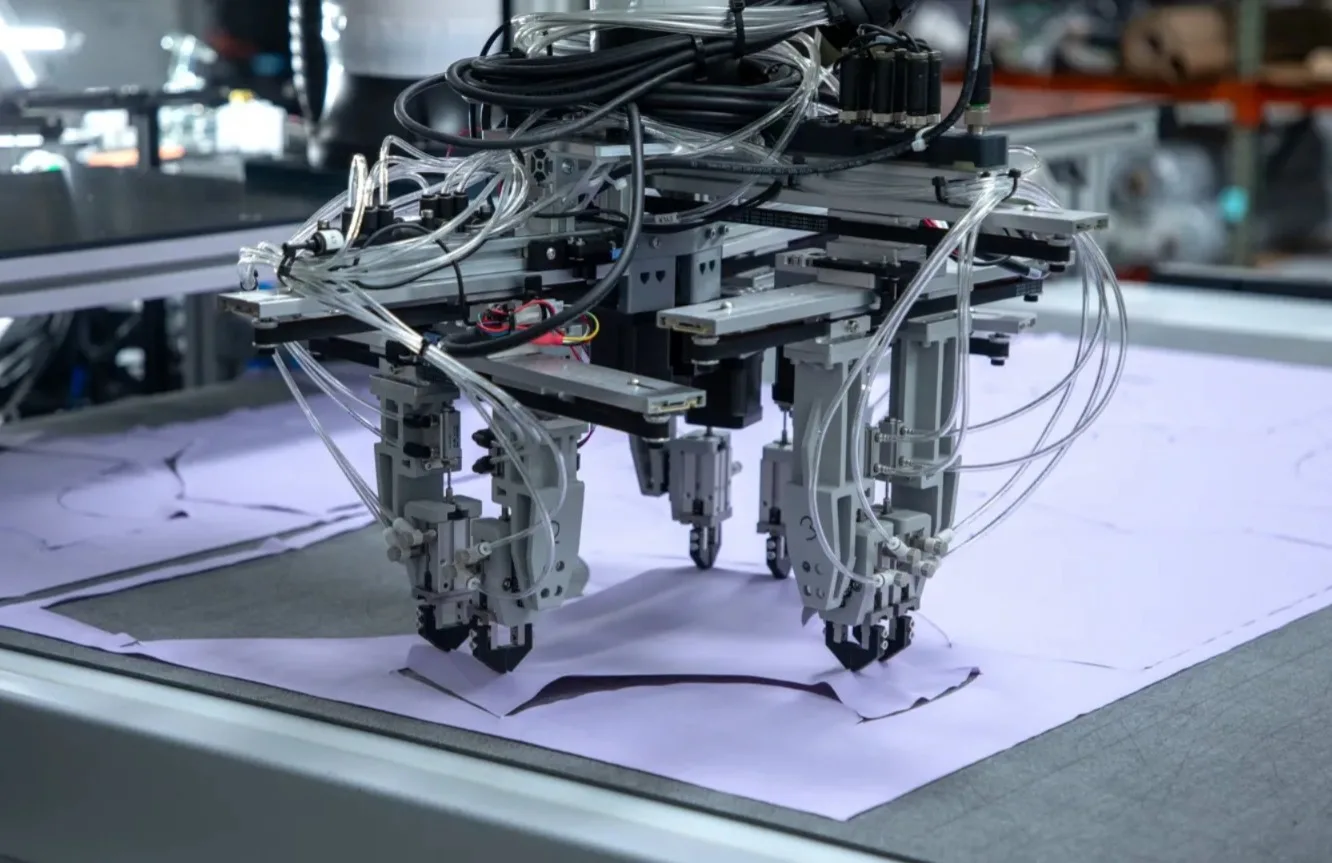
German company Robotextile is also developing robotic grippers capable of handling delicate fabrics.
Some of its systems use airflow technology to gently lift and position textiles before robotic arms process them.
Despite the progress, many industry specialists believe automation will develop gradually rather than replace traditional manufacturing overnight.
High-volume production in Asia still offers major cost advantages that are difficult for Western factories to match.
According to Lauren Junestrand from the UK Fashion and Textile Association, robotics will likely become part of a broader coexistence between automated production and traditional garment manufacturing.
As technology advances, the future of fashion manufacturing may depend not on replacing workers entirely, but on finding a balance between automation, sustainability, and the global workforce.