


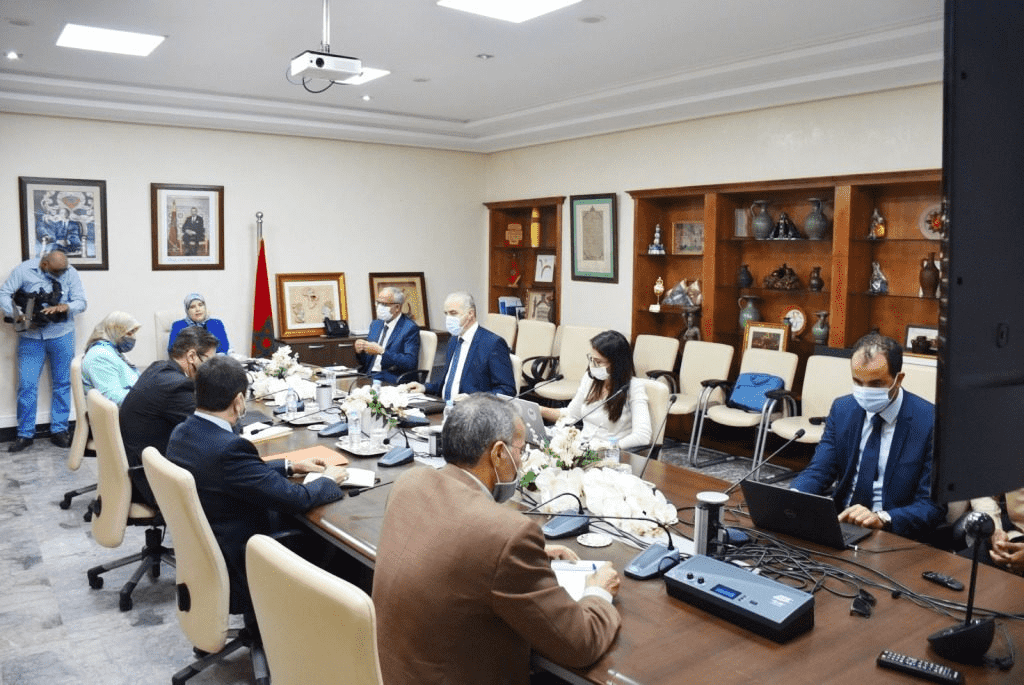
Rabat – Morocco’s Ministry of Solidarity, Social Development, Equality and Family launched on Tuesday in Rabat its “Social Mediation” training program to support young adults who leave social welfare institutions at the age of 18.
The integration accompaniment program aims to offer Morocco’s social welfare workers and those they assist with practical tools, according to the ministry.
As young people leaving social welfare centers transition to independent adult life, Morocco seeks to institutionalize services that support their general, successful integration. These services relate to capacities in securing housing, establishing a social network, and finding employment, among others.
At the launch of the program, Minister of Solidarity Jamila Moussali stressed that the success of young individuals who leave welfare centers is the culmination of sustained efforts from them and from all the administrative and educational operators who worked with them throughout the years.
Moussali considers the number of children who succeed in integrating into society and becoming independent as a reliable index for the success of Morocco’s social welfare centers.
Read also: France, Morocco to Discuss Issue of Unaccompanied Minors in Europe
Launching the social mediation program enabled the ministry to benefit from international experiences, as well as enhance the capacities of Morocco’s social workers and social welfare centers in supporting disadvantaged youth.
The minister also stressed the importance of social mediation workers as multi-knowledge operators with backgrounds in sociology, psychology, and economy, allowing them to follow up with young adults during their departure from social welfare centers.
The Ministry of Solidarity signed a partnership agreement with a Moroccan NGO to implement a project to offer technical support to 25 social welfare centers out of 97 centers in Morocco.
The agreement also comes with an assessment showing that 2,071 children are about to leave their centers. It highlighted challenges such as the fact that 68% are older than 19, and 48% did not finish primary school.
Meanwhile, 22% of these young adults have a high school or college diploma, 56% have a basic professional qualification, and only 6% have a specialized technical qualification.
Mossali also announced that the ministry launched a process with UNICEF for modeling the experience of the accompaniment program. This involves setting up a strategic framework in Morocco to promote social support for young people leaving social welfare centers.
The framework and its coordination mechanisms center on five axes: Health, education and training, social assistance, social participation, and employment.
The launch of the “Social Mediation” program follows another program that the ministry launched in June. It extends over six months under the supervision of eight experts from Morocco, Europe, and UNICEF, who specialize in legal, medical, psychological, and educational sciences.
The initiative aims to facilitate their exchange of experiences and to enhance knowledge.




