 Join on WhatsApp
 Join on Telegram
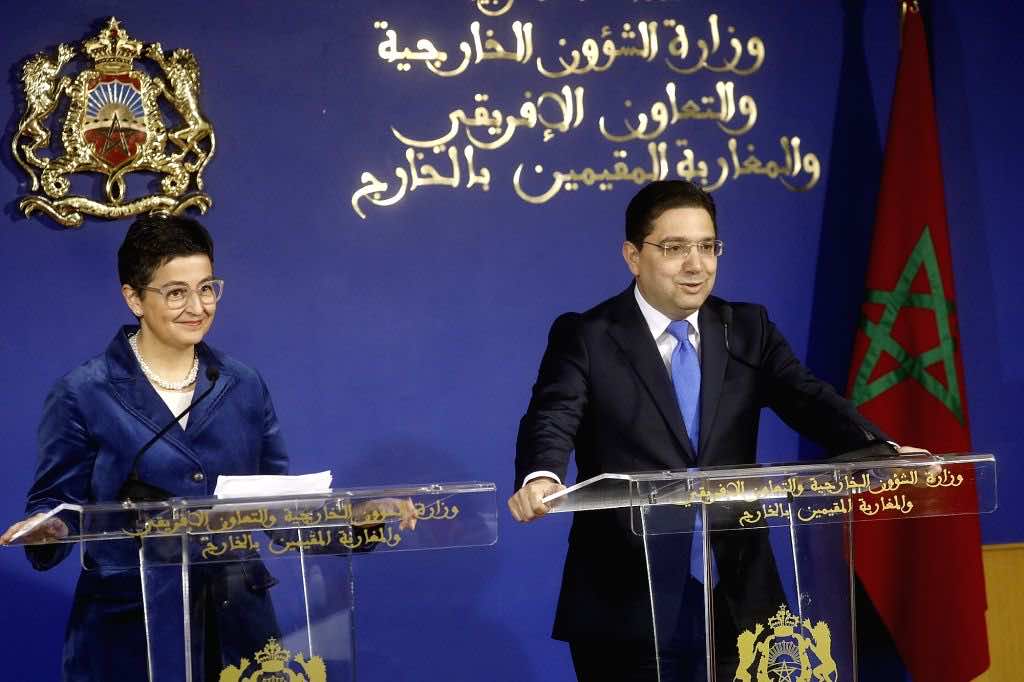
Rabat – Spanish Minister of Foreign Affairs Arancha Gonzalez Laya said today that her country is committed to continuing to build bridges with Morocco. Gonzalez, however, continues to reduce the severity of hosting Polisario leader Brahim Ghali despite Morocco’s repeated protests.
She said her country is “not going to enter into an exercise to feed escalation of tension with Morocco.”
Appearing to refer to the migration crisis in the Spanish enclave of Ceuta, she said Spainwill be “firm in defense of its territorial integrity and its borders,” she said.
Gonzalez Laya’s statement comes as tensions are growing between Morocco and Spain regarding migratory challenges and Madrid’s decision to arrange for the hospitalization of Polisario leader Brahim Ghali.
Laya said that Spain agreed to the hospitalization of Ghali for hospitalization for “humanitarian reasons,” adding that the act did not intend “any aggression against anyone.”
She acknowledged the decision took into account the fact that the Western Sahara conflict is an “issue of enormous sensitivity for Morocco.”
Despite Laya’s professed commitment to dialogue with Morocco, her comments are likely to cause more alarm in Rabat.
Internet users in Morocco are using several hashtags to defend Morocco’s territorial integrity. Hashtags like “Ceuta and Melilla are Moroccan” are viral in all languages, including Spanish and Arabic.
The hashtag comes in response to Spanish security approach against irregular migrants in the Spanish enclave of Ceuta.
Spanish police used tear gas and other means to disperse migrants, whose number reached over 8,000 in the past few days.
Spain said that it has deported over 4,000 of the migrants back to Morocco.
Tensions between the two countries are simmering due to Spain’s reluctance to engage Morocco’s demands on the Brahim Ghali case.
Read also: Morocco’s Ambassador to Spain: There Are Attitudes That Cannot Be Accepted
Spain admitted Ghali, Polisario leader, for hospitalization after he tested positive for COVID-19 in April. The Spanish government arranged his trip to Spain despite the multiple charges facing the Polisario chief. But the ensuing popular backlash has led Spanish authorities to announce that Ghali will stand trial for his alleged crimes, including rape, torture, and forced disapperances, after his medical discharge next month.
Morocco, meanwhile, has expressed both astonishment and anger at Spain’s decision to welcome Ghali in defiance of Morocco-Spain ties and in utter disregard for his criminal record.
“Why has the Spanish justice [system] not yet reacted to the many complaints filed by the victims?” the Moroccan Ministry of Foreign Affairs said in April.
The ministry also deplored Spain’s stance on the Ghali incident, saying that Spain’s dismissal of Morocco’s legitimate concerns has resulted in “great incomprehension.”
Spain’s decision to welcome Ghali is against “the spirit of partnership and good neighborliness and which concerns a fundamental issue for the Moroccan people and its vital forces,” it concluded.