


 Join on WhatsApp
  Join on Telegram
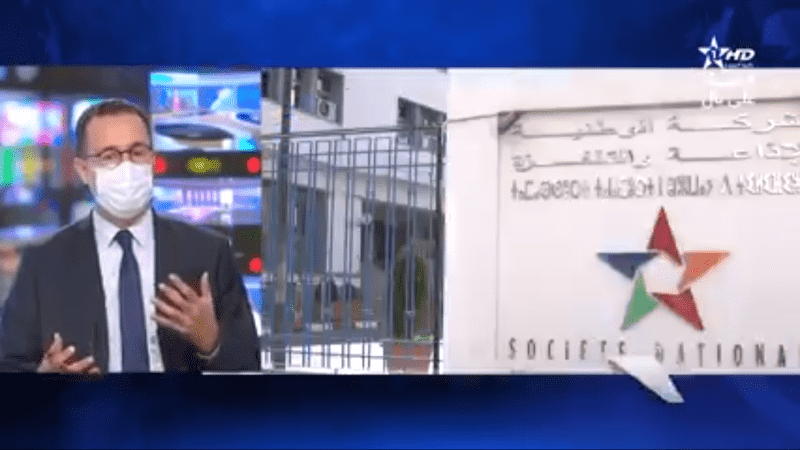
 Rabat – On Tuesday, Minister of Culture Othman El Ferdaous announced that SNRT, Morocco’s national television and audiovisual operator, will take over to control both 2M and Medi1 TV.
El Ferdaous announced the creation of a “Public Media Holding,” which will make both 2M and Medi1 TV work under the aegis of the SNRT.
The minister presented the project to the Education, Culture, and Communication Committee at the House of Representatives.
El Ferdaous said the restructuring of the public audiovisual pole involves the regrouping of SNRT, 2M, and Medi1 TV. The merger is set to allow the state to manage its assets according to a strategic and integrated vision.
Introducing the project, El Ferdaous said the process will go through different phrases.
He said the project mainly seeks to improve the quality of product and to accelerate the digital transformation as well as to preserve public funding.
In his presentation, El Ferdaouss emphasized the importance of acknowledging the efforts by the audiovisual public sector and its employees to meet their audiences’ expectations and needs.
“It is a stressful domain,” the minister said.
He said that the project does not only concern only the sector but all Moroccans, emphasizing the importance of satisfying youth.
“They [youth] are the audience for the future. If they open up to other platforms then it is challenging.”
Nearly 100% of Moroccans have between them over 1,200 television channels. He said competitiveness is pressuring and will continue, which will need mobilization from Morocco’s audiovisual sector.
El Ferdaous also acknowledged a shift in consumption among youth and families.
He said that 84% of Moroccans use WhatsApp and numbers of watchers and users on Instagram, YouTube, and other online platforms are increasing rapidly.
He said Morocco now has two million users on YouTube.
Read also:Morocco Invests in Sports, Culture Development in Fez-Meknes Region
Moroccans do not search for “more than 75% of the videos” they watch on Youtube, the minister said, suggesting YouTube algorithms propose the vast number of the content Moroccans decide to view on the platform. For the minister, this reality is one example of how foreign entities such as YouTube can control markets.
Such a shift requires reforms in the audiovisual sector in Morocco, he said.
Strengthening the public audiovisual sector is crucial for Morocco, El Ferdaous argued.
But the minister also shared some positive statistics. He especially emphasized the early days of the COVID-19 brought a sort of “reconciliation” between the audiovisual sector and its audience.
Citing statistics from Morocco’s High Commission For Planning (HCP), he noted that 90% of the Moroccan audience believe that the public sector in Morocco is a reliable source of information.
The official emphasized that the plan to restructure Morocco’s public audiovisual companies is not necessarily bad news for the private sector. The two should complement each other, he suggested, saying: “There is no strong public pole without a strong private sector.”
El Ferdaous also said that the new structure will help 2M tackle dept issues. He revealed that the bank debt of 2M television channel stands at MAD 190 million ($21 million).
The number represents an increase of MAD 56 million ($6.35 million)in the past year.
Meanwhile, the transaction number of Medi 1 TV also decreased by 63%.
As the restructuring plan also involves the acquisition and introduction of state-of-the art technologies, Ferdaous expects the public media experience to drastically improve. Among the expectations is that the use of drones and sophisticated cameras will aid in the process of increasing viewership and spending on ads.
The minister announced that the main focus of the government is to offer media that is closer to the Moroccan people. Personalized marketing is beneficial for both parties as the public receives more relevant information while the provider receives more funding, he suggested.


