 Join on WhatsApp
 Join on Telegram
Rabat – The president and the members of the bureau of the Chamber of Councillors, the upper house of Morocco’s parliament, have condemned a recent EU draft resolution that accuses Morocco of using minors in the migration crisis in the Spanish enclave of Ceuta.
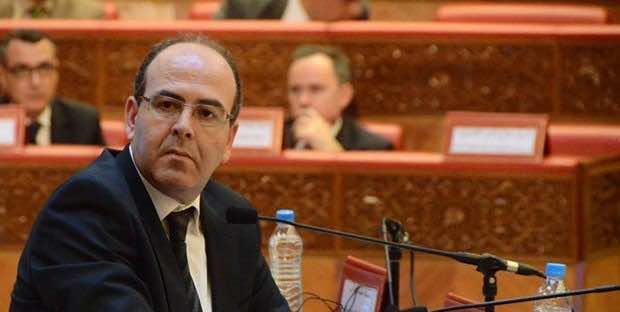
The speaker of the chamber, Hakim Benchamach, and other members of the upper house argued on Monday that the EU draft resolution is a denial of the “common gains” of the EU-Morocco partnership.
“This human tragedy cannot be the subject of political escalation,” the House of Councillors said, arguing that the Ceuta crisis is not the main source of the ongoing diplomatic rift between Rabat and Madrid.
The statement added that the draft resolution is in “contradiction” with the positions taken by senior European officials and other institutions that consider Morocco as a “key partner and strategic ally” for the EU.
Emphasizing Morocco’s long-standing efforts in curbing EU-bound irregular migration, members of the Moroccan parliament’s upper house said they were astonished by some EU circles’ insistence on downplaying the country’s role and undermining some of its strategic interests.
Morocco’s House of Representatives, the lower chamber of the country’s parliament, made a similar statement on Monday following the inclusion of a draft resolution in the EU Parliament.
The speaker of the house, Habib El Malki, said that the move was “totally out of step with the quality of cooperation between the Moroccan Parliament and the European Parliament.”
Urging the EU not to interfere in the bilateral crisis between Madrid and Rabat, El Malki noted the ongoing crisis between the two countries is not due to irregular migration.
He went on to reference Spain’s sheltering of Brahim Ghali and described the draft resolution as being “part of an attempt to distract attention from a purely bilateral political crisis between Morocco and Spain.”
Ghali was hospitalized in Spain from April 18 until last week, when Spain’s highest court controversially dismissed several high-profile criminal charges against the separatist leader and allowed him to travel back to Algeria.