
 Join on WhatsApp
 Join on Telegram
Rabat – A controversial new bill regulating Morocco’s legal profession has been referred to the Constitutional Court, delaying its entry into force after months of debate and protests from lawyers.
Speaker of the House of Representatives Rachid Talbi Alami referred alwNo. 66.23 on the legal profession to the Constitutional Court to determine whether its provisions comply with the Moroccan Constitution.
The move comes after the bill completed all stages of the legislative process and was only awaiting publication in the Official Gazette to become law.
The referral was made as the House of Representatives concluded its final legislative session of the current term, putting the implementation of the law on hold until the Constitutional Court issues its decision.
The House of Councillors recently approved the bill in a second reading. The chamber’s Justice, Legislation, and Human Rights Committee approved the draft on Tuesday with six members voting in favor and one abstaining, in the presence of Justice Minister Abdellatif Ouahbi.
During the committee meeting, lawmakers again debated several amendments to the bill, particularly a provision that places lawyers’ deposit and payment accounts under the oversight of Morocco’s Court of Auditors. However, Ouahbi maintained the government’s position in support of the measure.
Earlier this week, the House of Representatives also approved the bill during a second reading after revising several of its articles.
Opposition parties had called for the vote to be postponed and for the bill to be sent back to the Justice Committee for further discussion. The request was rejected after 85 lawmakers voted against it, while 35 supported it.
Read also: Morocco’s Lower House Passes Legal Profession Bill Despite Lawyers’ Protests
The proposed law introduces several changes to the regulation of the legal profession. Among its most debated provisions is a maximum age limit of 45 years for candidates seeking to take the entrance exam for the profession. The bill also keeps the right of graduates from Sharia faculties to become lawyers.
Another key measure gives the Court of Auditors authority to oversee lawyers’ deposit and payment accounts. The oversight would allow the institution to verify the legality and accuracy of financial operations, including deposits, withdrawals, transfers, payments, account balances, interest, and expenses.
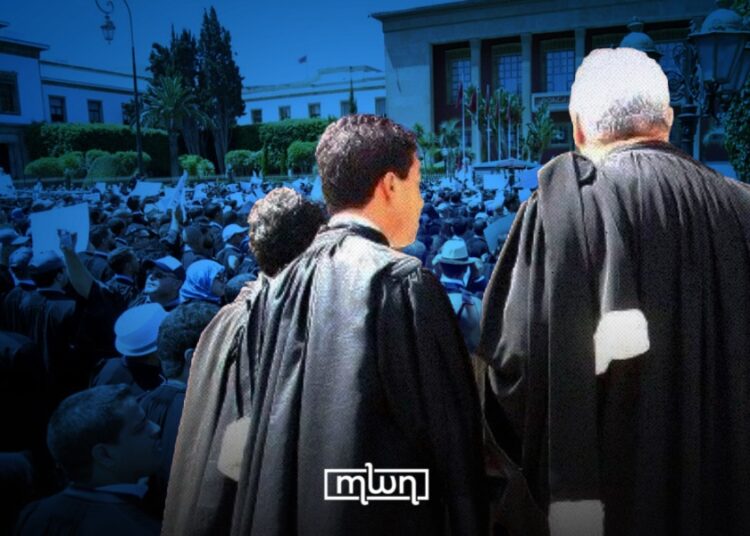
The bill has sparked strong opposition from lawyers across Morocco. Lawyers have organized nationwide strikes, suspending work in courts and halting legal aid services in protest against several of the bill’s provisions.
Bar associations argue that the legislation threatens the independence of the legal profession, weakens lawyers’ self-governance, and was pushed through without meaningful consultation with the profession.
They have called for the bill to be withdrawn and for negotiations to resume, warning they will continue escalating their protests if the law moves forward in its current form.