 Join on WhatsApp
 Join on Telegram
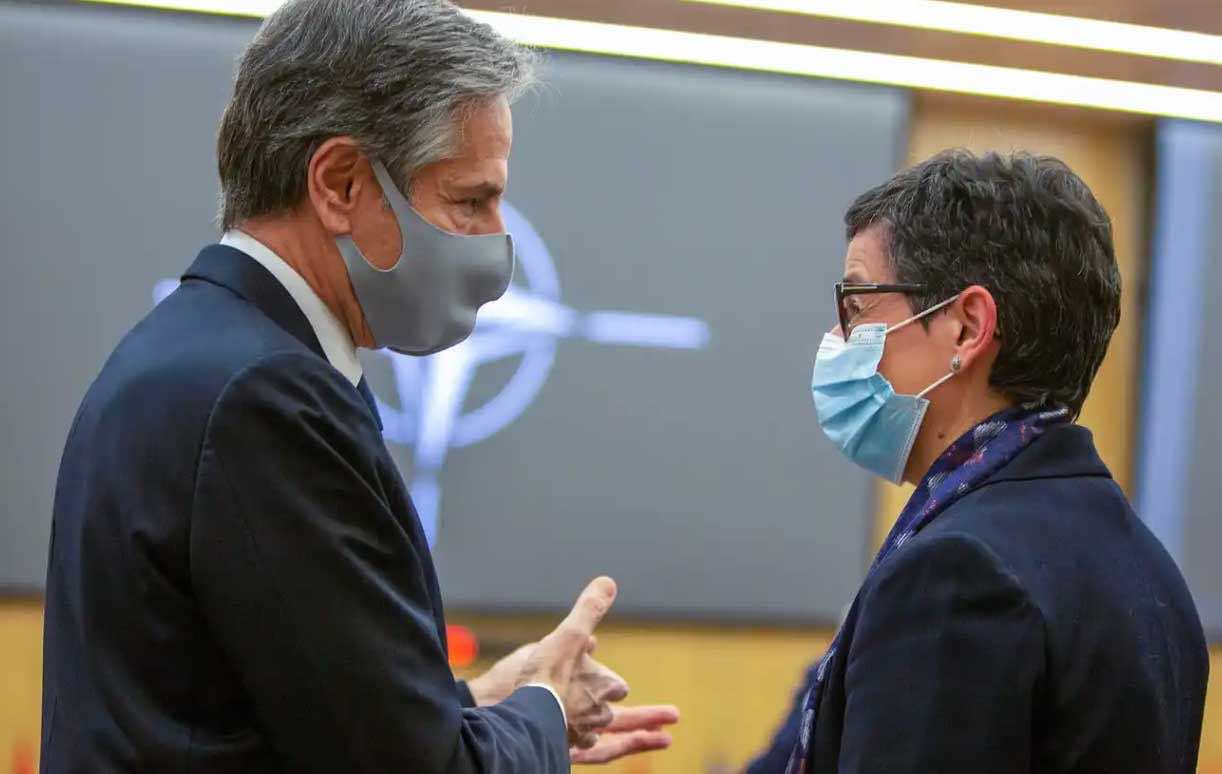
Rabat – Spanish Foreign Minister Arancha González Laya asked US Secretary of State Antony Blinken to reverse the US position on Western Sahara. In a phone call on Friday, June 11, Laya blamed former US president Donald Trump for Spain’s current diplomatic standoff with Morocco.
Following a week of political drama triggered by Spain’s decision to draw the EU into its bilateral crisis with Morocco, now the Iberian nation is asking the administration of US President Joe Biden to become involved.
Even as Morocco’s officials repeatedly made clear the sacred status of Western Sahara in Moroccan foreign policy, Spanish officials are asking Washington DC to reverse Morocco’s hard-won diplomatic gains on the issue.
The move by the Spanish foreign ministry appears to reveal that Spain sees no bilateral solution to its crisis with Morocco. Instead, Madrid is asking Biden to “help solve the problem,” by annulling the US commitment to both Morocco and Israel.
Laya blamed the US for her country’s current crisis, especially taking issue with Trump’s decision to recognize Morocco’s sovereignty over Western Sahara following years of positive diplomacy by Morocco’s diplomatic corps in Africa and across the world.
How Spain thinks it can resolve its bilateral standoff by directly undermining Morocco’s most important foreign policy priority remains unclear.
Laya is not the only Spanish official that aims to make the controversial request of the US. Spanish Prime Minister Pedro Sanchez is set to meet Biden at a NATO summit on Monday, where the two have planned a brief meeting.
“If the duration of the conversation allows it, it will insist, in turn, that the United States must be involved in solving the Spanish-Moroccan dispute,” writes Spanish newspaper El Confidential. The outlet further implied that Spain will pressure both Washington and Paris on its bilateral crisis as the “two capitals that exert the greatest influence over Rabat.”
Spain appears to be hoping that the US becomes an active partner in its dispute with Morocco, similar to US involvement in the 2002 Perejil Island crisis.
At the time, Spain and Morocco experienced a diplomatic conflict over the uninhabited Perejil island, located 250 meters off the Moroccan coast in the strait of Gibraltar. Mediation by the US eventually led to both countries withdrawing from the disputed rocky isle.
Whether the US is again willing to enter a regional diplomatic spat is unclear as US spokesperson Jalina Porter on May 19 called for a bilateral resolution to the current tension.
Similarly, whether Morocco will respond with forceful measures, for instance by reducing cooperation on Spanish and EU priorities on immigration, will likely become clear in the following days.
But the fact remains that, from the Moroccan perspective, Madrid’s determination to drag the EU into its bilateral issues with Rabat and convince the US to reverse its newfound position on Western Sahara shows that Spain can no longer be regarded as a privileged partner or trusted ally, but as a foe.