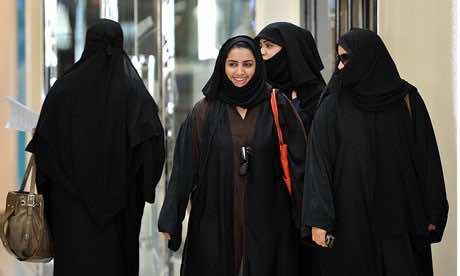
Rabat – Saudi courts introduced a legal amendment that will grant adult women the right to live alone without needing permission from a male guardian.
According to Saudi newspaper Makkah, the amendment of Paragraph B under Article No. 169 stipulates that adult women who are unwed, divorced, or widowed, can now live independently without permission from a protector, also known as a “mahram.”
Until recently, unmarried Saudi women were required by law to either live with their male guardian, or solicit their approval to live alone. The historic decision will now see Saudi women enjoy greater freedom and autonomy.
Saudi judicial authorities have officially removed Paragraph B under article No. 169 of the “Law of Procedure before Sharia Courts,” which until recently, stated that unwed, divorced, or widowed women were to be under the supervision of her mahram.
In place of the ousted Paragraph B, the law now reads that “An adult woman has the right to choose where to live,” and that “A woman’s guardian can report her only if he has evidence proving she committed a crime.”
Read also: Saudi Arabia Allows Hajj 2021 Under Strict Health Conditions
The removal of Paragraph B “gives an indication that the courts will not recognize such cases in the future, which were previously covered by expedited enforcement,”, according to the lawyer and former deputy of the Public Prosecution of Jeddah Nayef Al-Mansi.
“Families can no longer file lawsuits against their daughters who choose to live alone,” Al-Mansi told Makkah.
Despite the Saudi government’s efforts to present itself as a reformed and progressive country, international human rights organizations are still fighting to highlight the country’s repressive and discriminatory judicial system.
The 2020 G20 Riyadh summit, which took place in the Saudi capital late last year, was a chance for the Saudi monarchy to present its reformist agenda to the world.
But the reality is that “Saudi Arabia’s real reformers are behind bars,” said Lynn Maalouf, Amnesty International’s deputy regional director for the Middle East and North Africa.