 Join on WhatsApp
 Join on Telegram
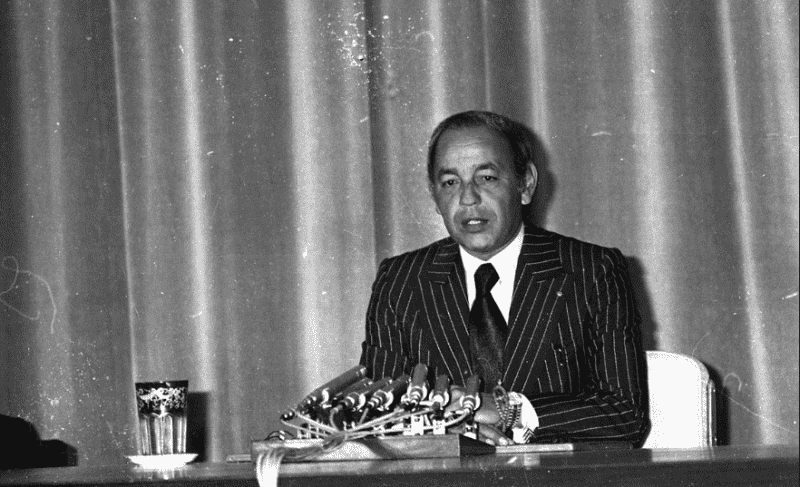
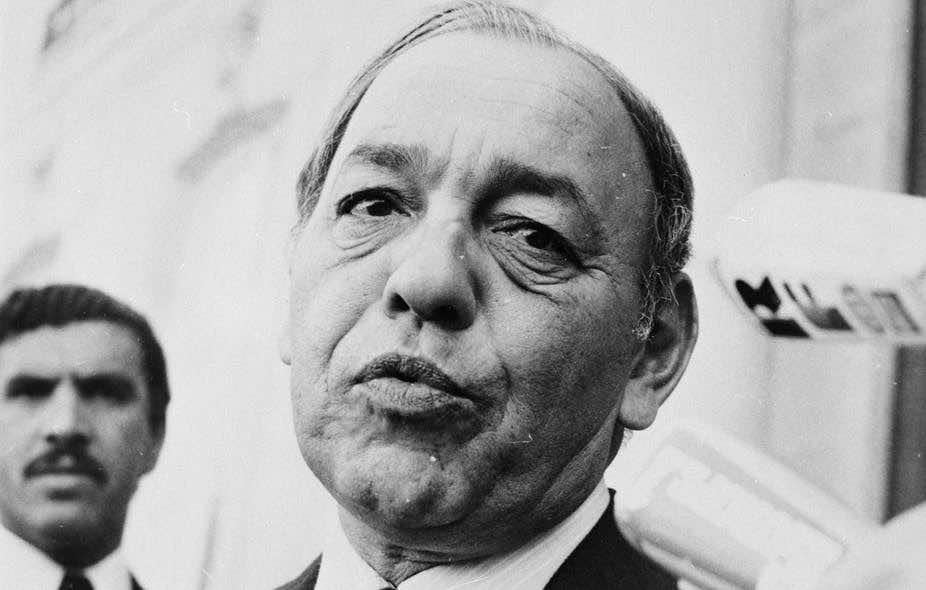
Rabat – Today’s date marks the 22nd anniversary of King Hassan II’s death.
The Moroccan monarch was in power from 1961 until his death in 1999.
The late King was seen by many in Morocco as a celebrated diplomat, a charismatic Moroccan figure and an unforgiving patriot.
King Hassan II was 32 years old when he acceded to the throne following the untimely death of his father King Mohammed V at 51 years of age.
Before he ascended to the throne Hassan II had been meticulously prepared for his future role by his father who involved him in diplomacy and politics early on.
Hassan II made his first diplomatic steps in January 1943, during the Anfa Conference in the residential suburb of Casablanca, alongside Churchill and Franklin Roosvelt . He was thirteen at the time.
Hassan II’s 38 year reign over the Kingdom still shapes facets of Moroccan politics and society today. He adapted Morocco to the harsh realities of the post-colonial modern world, while preserving the country’s traditions and roots.
“If I were to worship someone other than Allah, it could only be my country.”
Hassan II was driven by the dream of recovering Moroccan territories lost during the colonial era. A quest he undertook as soon as he got to power. Morocco’s territorial integrity was strengthened during his reign, thanks to the recovery of three Moroccan territories taken away during colonization: Sidi Ifni in 1969, Saquia el Hamra in 1975 and finally Oued ed Dahab in 1979.
On November 6, 1975, King Hassan II of Morocco made a historic speech calling on the Moroccan people to undertake a long peaceful march south to liberate the Western Sahara from Spanish occupation.
The Green March was an unprecedented event in the history of the 20th century, which gathered 3.5 million volunteers from all over the country and put an end to Spanish colonial rule in the Sahara without the use of violence.
Hassan II also led Morocco through a ruthless global cold war. The Moroccan monarch took advantage of a series of regional and international crises to embolden the country’s strategic role in the region, as well as on the international scene.
Morocco became a bulwark against communism in the Maghreb and Arab World, as most countries in Africa were leaning towards the left after gaining independence from western empires.
“Politics is like the weather, you make progress on a clear day or an overcast day, each time you have to break through the clouds towards the future.”
King Hassan II also helped bring about the 1979 peace treaty between Israel and Egypt. He was involved in the subsequent agreements between the Palestine Liberation Organization, Jordan, and Israel.
Morocco’s current political stability is also a part of Hassan II’s legacy. As his reign coincided with the decolonization era in southern countries, most African neighbors did not stand the test of the skillfully orchestrated power vacuum left by their former colonizers.
The Moroccan monarch solidified the country’s chosen political system against all odds, by gathering the people around what unites them, and disregarding seperatist ideologies based on ethnicity and sectarianism. He focusing on the creation of a homogeneous society united under the Moroccan banner of moderate islam, monarchy and unforgiving sovereigny.
The late king’s often heavy-handed response to his domestic opposition resulted in much of his reign becoming known as the “years of lead.” His son, now King Mohammed VI, chose a different path that has resulted in building democratic institutions and broadening the political dialogue.
The late king’s road to a united Morocco, was filled with challenges. During his lifetime, Morocco’s Hassan II survived assasination attempts as well as unsuccessful coups, successively orchestrated by some of his closest allies and friends.
On the matter, he said that “friendship is a necessary thing, a man who has no friends is not a man, and I personally still prefer to be the victim of a friendship than to be the murderer of a friendship, I prefer it to be said, that I was betrayed rather than that I betrayed a friendship.”
“In Morocco, we are traditionalists, but, precisely, traditionalism forbids us from fundamentalism.”
King Hassan II’s funeral brought important delegations from all continents. World leaders, including former president of the US Bill Clinton, attended the funeral.