 Join on WhatsApp
 Join on Telegram
Rabat – Moroccan authorities announced a series of restrictive measures in response to an increase in COVID-19 cases, reminiscent of the outbreak at the start of the pandemic.
The new restrictive measures, which came into effect this Tuesday August 3, are once again leaving people worried about their financial situation.
As a result of persistent economic losses across all sectors, the tourism industry is particularly vulnerable. Following a loosening of restrictions in time for the summer season, workers in the industry were hoping to make up for 2020’s losses.
However, it has become apparent that the relaunch will have to be halted again because of recent developments in the pandemic.
Professionals from the sector reached out to the Minister of Tourism, Nadia Fettah Alaoui, requesting for the implementation of a series of measures to curb their losses.
In a recent letter addressed to the official, the National Confederation of Tourism (CNT) requested that accompanying measures be introduced to alleviate the crisis the industry is experiencing.
The benefits allocated to tourism workers from the national social security fund (CNSS) expired at the end of June 2020. The CNT is requesting its renewal, until December 31, 2021.
The sector professionals are also asking for a revision of the schedule for payments is also requested for 2020 and 2021, to be spread over a period of 24 months, until 2022.
The CNT requested a reprofiling of the banking schedule from the Professional Group of Banks of Morocco (GPBM), and the reinforcement of the intervention of the Central Guarantee Fund (CCG).
Companies in the tourism sector are hoping to delay lease payments, especially for car rentals, which has suffered from a halt in activity for 18 months.
Additionally, professionals are requesting for the night curfew to be extended to 10 PM.
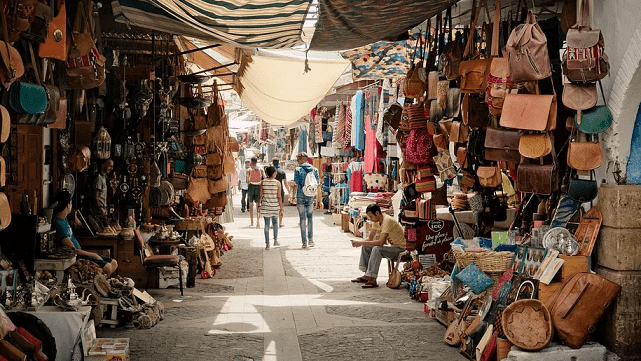
Top tourist destinations in Morocco such as Marrakech, may be adversely affected as a result of the latest restrictive measures.
In Marrakesh, only club hotels – those that have attractions – are doing well.
Normal residency hotels are running on a 15% or 10% capacity.
Hotels in the city are now aiming for a 50% capacity rate, in order to stay afloat.
With constant updates to travel and movement restrictions, Marrakech and the national tourism industry has plunged into an unprecedented crisis.
A pillar of the Moroccan economy, revenues from the tourism sector have fallen by 65% in early 2021, according to the Ministry of Finance.
The country recorded the arrival of only 142,000 tourists this summer, reflecting a drop of 82% compared to the same period last year. The majority of travellers were Moroccans living abroad (MRE), prompted to venture back into the country after the royal initiative of the Operation Marhaba relaunch this June.
During the peak summer season, foreign visitors dropped by 98%, while local tourists dropped by 56%.
Following the inclusion of France, Spain, and Portugal on the B list, requiring unvaccinated foreigners from the European countries to observe a 10-day quarantine at their expense, thousands of hotel reservations have been cancelled, particularly by French clients.
The industry also experienced a significant loss of employment, with more than 35% of tourism employees losing their jobs.
Statistics have shown that incomes have fallen by an average of 80% within Moroccan tourism companies and businesses.
As one of the main providers of the national economy, with about 2 million direct and indirect jobs, contributes to 11% of the national GDP and mobilizes nearly MAD 80 billion of foreign currency travel receipts per year.