 Join on WhatsApp
 Join on Telegram
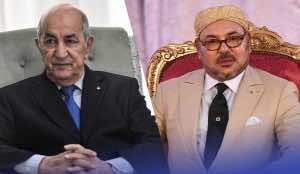
Rabat – On Tuesday, Algeria’s decision to cut diplomatic ties with Morocco made international headlines.
Algeria’s Foreign Affairs Minister Ramtane Lamamra announced his country’s decision and cited Morocco’s alleged involvement in the wildfires that the Kabylia region suffered earlier this month.
Observers, however, saw the Algerian government’s decision as predictable and a pretext to divert public outrage from the government’s failure to effectively tackle the series of crises facing the country. Many had predicted the move, especially after the Algerian government said it would reconsider relations with Morocco during a high council meeting last week.
The following timeline documents how the Algerian government was maneuvering to find a way to make the move while projecting its decision on supposed attacks from Morocco.
For one thing, the sudden announcement of its decision to cut ties with Morocco made Algeria the subject of a wave of criticism and ridicule not only from Moroccans but also Algerian citizens eager to see the two neighbors bury the hatchet and live up to their professed – and shared – ambitions of promoting political stability, prosperity, and economic integration in the Maghreb.
The hostile remarks marked in the timeline below are just an extract from a long history of attempts by the Algerian politico-military establishment to pour cold water on the postcolonial Algerian-Moroccan dream of a united Maghreb.
February 8
Ammar Belhimer, Algeria’s communication minister, attacked Morocco in an interview with Al Massa. In the interview, the Algerian official accused Morocco of launching a “misleading and hostile campaign” against Algeria.
Belhimer went as far as claiming – without proof – that Morocco “recruited hundreds of clients” to attack and undermine Algeria’s “supreme interests.”.
“We know very well the source of their presence through what modern technology provides us,” he argued.
February 21
Algeria’s Ministry of National Defense accuses Morocco and its media class of spreading fake news about the participation of the Algerian army in the French-led takuba task force in the Sahel.
“Some parties and spokespersons of the discord have relayed, through their pages and subversive accounts on social networks, unfounded allegations uttering that […] the National People’s Army is preparing to send troops to participate in military missions outside our national borders under the leadership of foreign powers, within the framework of the G5 Sahel,” said the defense ministry in a statement published on February 21.
But it later turned out that it was French President Emmanuel Macron who had told the press about French-Algerian talks concerning a potential deployment of troops in the Sahel.
February 27
The leader of Algeria’s Movement of Society for Peace party (MSP), Abderazak Makri, calls for excluding Morocco from the Arab Maghreb Union (UMA) project.
March 1
The President of Algeria says that 97% of fake news about Algeria comes from Moroccan and Israeli sources.
“I went through a very critical time and there were those who were spreading rumors about my condition. But we know where it comes from,” President Tebboune noted. He stressed that “97% of these fake news [about Algeria] come from abroad.”
He hinted at the Morocco-Israel rapprochement as an existential threat for Algeria, claiming – again without proof – that the two countries “reconnected” only to conspire against Algeria. “You know where they [the fake news] come from,” President Tebboune proclaimed, adding that “it is especially after the two [countries] have reconnected” that the misinformation campaign has intensified against Algeria.
March 7
Algeria’s Foreign Affairs Ministry notifies the Ministry of Higher Education about the urgency of countering Morocco’s “strategy.”
The idea was to mobilize Algerian diplomats and all other government operatives, especially the education ministry, to intensify their anti-Morocco rhetoric or activism.
While attending international events, added the notification, Algerian diplomats and other public officials are urged to request the withdrawal of all documents and maps that show an integral map of Morocco.
April 10
Algeria’s communication minister Ammar Belhimer attacks Morocco in an interview with Arabi Post.
As has become customary for high-ranking Algerian officials, Belhimer accused Morocco – of course without bothering to show the evidence – of flooding Algeria with illicit drugs and arms.
Morocco’s officials must “show good intentions and take the necessary measures to end the attacks and crimes directed against Algeria through border crossings, foremost among which is the smuggling of weapons and drugs,” he claimed.
May 9
The Algerian President orders Algeria’s government and private economic companies to terminate their contracts with Moroccan companies.
He singled out the Algerian Insurance and Reinsurance Company (CAAR) and the Algerian Insurance Company (SAA), giving the two companies a period of 10 days to end all collaboration with Moroccan firms.
Tebboune said cooperation with Moroccan businesses comes with the high risks of putting sensitive information at the disposal of “foreign entities” harboring a visceral hatred of Algeria and eager to undermine its security and stability.
June 2-3
French news outlet Le Point features an interview with Tebboune. In the interview, the Algerian president argued that, given the choice between independence and integration within Morocco, Moroccans living in Western Sahara will vote for “independence because they will no longer want to be the subjects of Morocco’s King.”
“It is paradoxical to have a Moroccan majority and to refuse the self-determination vote,” he said. Tebboune also spoke about “a break” between Algeria and “the monarch,” referring to King Mohammed VI.
June 8
In an interview with Al Jazeera, Algerian President Abdelmadjid Tebboune says his country has no problems with Morocco.
“It is Morocco which has a problem with us,” he argued.
He claimed that Algeria has “good relations with Morocco and the borders were open despite the Western Sahara issue.”
June 23
Said Chengriha, the Algerian military’s influential chief of staff, attacked Morocco in a speech and expressed traditional support for the Polisario Front.
“Western Sahara is the last colonized territory in Africa and its people aspire to self-determination in complete freedom,” the Algerian general claimed.
He also accused Morocco of “violating [the UN-brokered] ceasefire” in Western Sahara on November 13, despite evidence that it was Polisario that breached the ceasefire.” Chengriha went on to attack the UN, claiming it has been deliberately delaying the appointment of a new personal envoy for Western Sahara.
July 31
King Mohammed VI called on Algeria to engage in a political dialogue to end decades of tensions and lay the groundwork for the reopening of Algeria-Morocco borders. He also denounced the lack of cooperation between both countries, reassuring the Algerian leadership and people that Morocco will never undermine Algerian interests.
August 8
President Abdelmadjid Tebboune says his country has no answer to King Mohammed VI dialogue initiative.
“For the moment, there is no answer,” Tebboune said, suggesting that Algeria considered Morocco’s UN representative’s remarks on the question of Kabyle self-determination as a declaration of war.
Tebboune said: “We recalled our ambassador to Rabat and asked for explanations from Morocco, but there was no response from them on this subject.”
August 11
The Moroccan Foreign Affairs Ministry issued a communique to announce Morocco’s readiness to offer help to Algeria as a wave of lethal wildfires surged through northern Algeria.
The statement said that King Mohammed VI had ordered the foreign and interior ministries to assist Algeria in relief efforts.
August 18
Algeria’s High Council of Security held a meeting that concluded by accusing Morocco of causing the recent wildfires in Algeria’s kabylia region. After the council’s meeting, the Algerian presidency issued a statement which upheld the council’s conclusions and promised to “reconsider” relations with Morocco.
August 24
Algeria’s Foreign Affairs Minister, Ramtane Lamamra, announced his country’s decision to sever ties with Morocco, citing – without evidence, as usual – Morocco’s role in the tragic wildfires.
Later on the same day, Morocco issued a fairly measured response, rebuking Algeria’s “unilateral and unexplained” decision to cut diplomatic relations and yet emphasizing its determination to remain a loyal partner for the Algerian people.
August 27
Quoting an unnamed “diplomatic sources,” Moroccan outlet Le360 that reports Morocco’s deicsion to close its embasy in Algiers. The report noted that Lahcen Abdelkhalek, the Moroccan ambassador to Algeria, and the rest of the embassy staff were already being repatriated to Rabat by chartered Royal Air Maroc plane. The source added, however, that the closing of the Algiers embassy would not derail the work of the Moroccan consulates in Oran and Sidi Belabbès, which will “continue to operate normally.”