


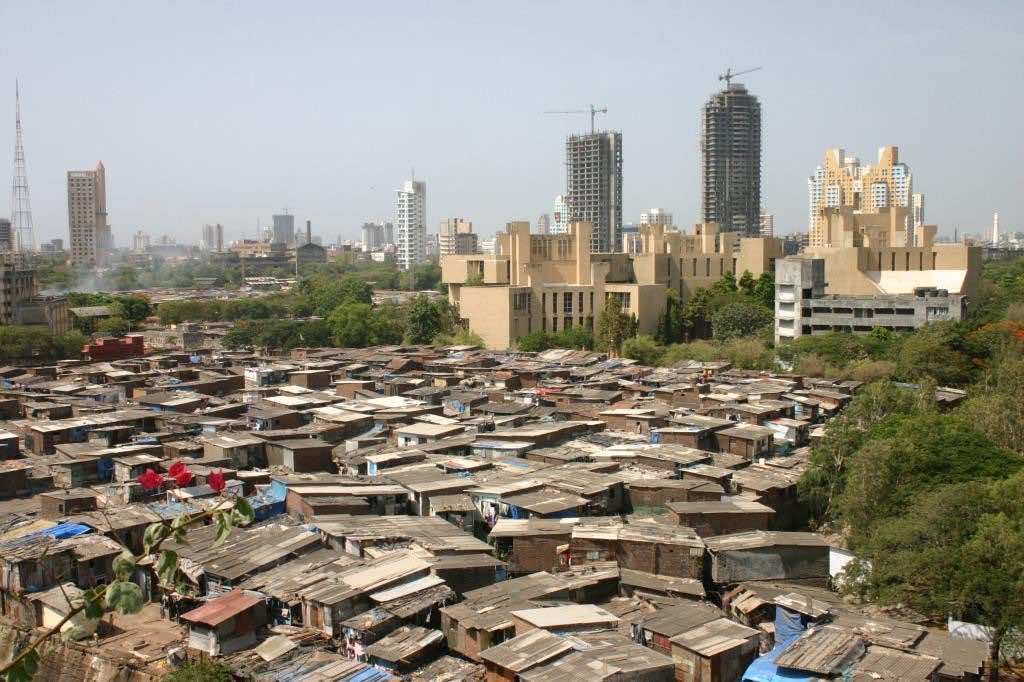
Rabat – After decades of considering some countries as “developed” while others remain “developing,” the myth of development is coming undone as previously poor countries increasingly claim their stake.
For decades, the prevailing narrative for the disparity between rich and poor countries has been explained by the concept that the less-fortunate countries are on an inevitable path to eventually become “developed” nations themselves.
The global pandemic has shown that the majority of the world has been left to fend for itself in order to protect the profits of Western multinationals. Western nations have used their centuries-old economic advantage to spend trillions on their own economies while curbing foreign assistance.
The WHO’s COVAX initiative has been shown to be more Western window-dressing than a genuine effort to realize global vaccine equality. Citizens of formerly colonized countries are again facing the stark reality of being at the back of the line when it comes to medical and financial support.
The myth of perpetual development as a means to reaching equality has survived for years, but it is now falling apart before our eyes as the contrast between the strong and the weak appears to be as stark as it was a century ago.
The myth of “developed” and “developing” nations
Measuring countries simply by their state of development neatly ignores the history of colonialism, resource extraction, and transcontinental slavery that created the starting point for an alleged race towards equality.
Not only are nations expected to develop, they are to do so in a “sustainable” way, despite the world’s leading economies never having faced this additional barrier during their phases of industrial development. The world’s former colonial powers have created a global climate catastrophe, and the formerly colonized are expected to be the primary victims while being urged to help clean up the mess.
Prevailing “development” measures conveniently ignore the fact that most developed nations have reached their current state of development by conquering and subsequently exploiting resources from countries that are now considered to be “developing” or “underdeveloped.”
As the path to becoming a “developed nation” is long and arduous, this narrative has been able to sustain itself throughout the years, backed by the world’s most prominent international institutions like the UN, the World Bank and the IMF.
Yet, the long-entrenched narrative is now rapidly unravelling as some of the former colonized nations are asserting themselves on the global stage..
The path to development
According to the official story, accepted by most nations and their leaders, any country can become an equal to the former empires and colonial powers who “lead the way” in showing the world how to develop an economy.
The lack of progress in most nations is attributed to endemic corruption, instability and internal divisions. While the historic sources of these issues, rooted in colonial and post-colonial practices, are ignored, the world’s developed nations freely give their unsolicited advice to those who are yet to “catch up” with them economically.
Every month, Western credit-rating agencies evaluate the domestic policies of developing nations, rewarding or punishing them for their policies through adjustments in their international credit rating, which can either boost or cripple a country’s ability to have access to foreign credit.
In effect, developing nations have very little control over their economic fate, as was again made evident during the current pandemic. While developed nations were able to pump billions into supporting their domestic businesses and populations, less affluent countries were left to fend for themselves.
Vaccine inequity has further revealed this does not only extend to nations, but their citizens as well. Citizens of the world’s developed nations are 30 times more likely to have been vaccinated against COVID-19 compared to the rest of the world, showing the majority of the world’s people that they are still second-class global citizens in the eyes of the “developed” nations.
Becoming a developed nation
Despite the fact that developing nations have been handicapped by their colonial past, hamstrung by international financial institutions and ignored by the West amid the world’s darkest moments, some countries have managed to break free from this stranglehold.
Through a blend of cooperation with the West and a strong conviction in domestic abilities, some countries are emerging as potential real contenders to becoming developed nations. Many countries have chosen a specific niche, and flourished by providing a service to the global status quo.
Singapore has emerged as an Asian capital for Western-style financialized capitalism, the UAE has developed by selling its natural resources across the world, and China has become the West’s manufacturing partner.
Once such a nation moves from being a “partner” to becoming strong enough to demand to be treated as an equal, the pushback from the West begins.
China has been a primary example of this practice. In response to its emergence as a new global superpower, the West’s drums of war are pounding, with dozens of hostile media narratives against the Chinese launched every day.
Equal or foe?
The West has long cheered the “Chinese miracle,”as the country moved from an agrarian society into the world’s foremost manufacturing nation. The Chinese blend of state communism and free-market capitalism was eyed with suspicion, but its successes were attributed to the move away from a fully state-run economy.
Now that China has become an equal to its former colonial masters, this narrative has rapidly devolved.
China’s efforts to stamp out terrorism in its border region were long lauded as a crucial part of the global “war on terror,” but have since become akin to “genocide,” according to a barrage of Western reporting. Domestic affairs such as the integration of its coastal city Hong Kong, or Chinese opposition to the self-professed right-wing shadow government in Taiwan have become matters of international discussion.
The COVID-19 crisis has only worsened this stand-off. China’s successful approach to its domestic epidemic has been ignored, while the virus’ origins in Wuhan have been presented as evidence that China is somehow “guilty” of exporting the pandemic to the world.
In the face of Western vaccine hoarding, which the WHO has described as “immoral and counterproductive,” China has emerged as one of the few countries willing and able to share millions of vaccines with the world’s developing nations. This was not done as paternalistic donations, but as bilateral deals between equals.
While the West has made disingenuous efforts to present itself as the biggest vaccine donor, most nations were not waiting for a hand-out; they were simply asking to be treated as an equal. Morocco’s close collaboration with China has freed the North African nation of a dependence on empty promises from the West, relying on proper bilateral agreements instead.
China’s emergence has shown that no nation is welcome to truly become an equal to the world’s military and economic superpowers. It appears that the West would clearly rather start another Cold War than cede its position as the masters of the world’s fate.
Free-trade frenemies
Morocco has faced similar resistance from the countries that once cleared its forests, forced upon it disastrous agricultural dictates, and divided its pre-colonial borders. The North African country continues to face diplomatic pressures for attempting to legitimize its pre-colonial territorial borders while following the international mantra of being a “developing nation.”
When the country announced a social security and healthcare expansion that would aim to bring coverage to “developed nation” standards, US credit ratings agencies downgraded its ability to attract foreign financing. When COVID-19 vaccines became available, few of the country’s western “partners” were there to assist or even make a fair deal.
Whenever a Moroccan export product is able to compete with its northern equivalents, the EU considers new protectionist measures. When Morocco revitalized its 3,000-year old tradition of wine-production in the 1990s, Europe responded by providing new subsidies for local vineyards, introducing an EU export refund in order to indirectly make imported wines more expensive.
The growth of Morocco’s high quality wine industry threatened to compete with its equivalents in Italy, Spain, and France, creating the need for Europe to institute protectionist measures to avoid the level playing field that its free market mythology depends upon.
That cycle is repeating again in regard to tomatoes. Moroccan tomatoes have supplemented local supply after a poor harvest year in Europe. While this presents the essence of supply and demand, European tomato producers are now voicing their concern. Like their national governments, these people seem aware that Morocco is never meant to be a true “equal.”
Undermining progress
Morocco is now facing elements of the West’s defamation campaign against China’s growing popularity in the formerly-colonized world. The nation’s motives and methods are questioned at length, despite being a much-lauded partner on the top political priorities of its northern neighbors.
Morocco has shown a continual willingness to assist its northern neighbors on security and border management, terrorism and regional stability. Still it faces dire accusations without publicly available evidence, continuous pushback on the reinstatement of its pre-colonial southern borders, and active collaboration between its rivals to undermine its territorial integrity.
Meanwhile Morocco continues to be a good-faith partner, following the Western mantra that if it just develops enough, it will one day be able to take its place as their equal.
Amid Morocco’s efforts to peacefully move up the ranks of the world’s influential nations, its northern neighbors and “partners” are replying with an altogether different approach.
European countries have attempted to discredit Morocco’s historic agreement with the US that saw the world’s foremost superpower recognize the country’s pre-colonial borders in the south, leading to renewed tensions and diplomatic crises.
European media continue to paint Morocco as if it is still experiencing its “years of lead,” actively cheering on a potential overthrow of the government by openly wishing for a Moroccan “Arab Spring.”
On one hand Morocco is the EU’s valued security partner. One the other, it is depicted as an authoritarian state whose centuries-old case for territorial integrity is ignored in favor of the territorial integrity of its former colonizers regarding Ceuta and Melilla, and the claims made by Algeria-backed militias.
A new approach
While it is true that Morocco faces several issues, including poverty, corruption, and gender disparities, the country and its people deserve an equal chance to complete the promising path to prosperity that it appears to have taken with its new economic model.
Seeing the treatment that countries like China receive upon becoming a regional or even global power, it is understandable that many skeptics doubt whether the international status quo would even “allow” Morocco to reach a satisfactory level of development without significant efforts to undermine the progress it has made.
As a result, many experts and intellectuals from the so-called Global South are increasingly arguing that it is time to let go of the assumption that only by following international dictates towards inevitable progress can a country attain national prosperity and international recognition or respect. As an example, COVID-19 has shown many African countries that solutions lie in regional cooperation instead of trusting in deceptive Western promises.
Increased south-south cooperation, and a growing realization of our interconnectedness, can only help bring forward a new era in which “developing nations” plot their own course and create a new mantra that includes both sustainability and rising living standards.
In the aftermath of World War II, 29 newly independent Asian and African countries met in Bandung, Indonesia, in 1955 to to work together as a political bloc that would allow members to collaborate outside of the spheres of influence of the two superpowers at the time.
The current stark reality calls for another Bandung moment that could inspire or compel the so-called underdeveloped nations to work together on a shared sense of priorities.
The “non-aligned” movement that the Bandung conference sparked helped create a new sense of independence among formerly colonized countries and helped create a counterbalance to an increasing bipolar geopolitical context amid a growing cold war between the US and the Soviet Union.
As the world is again being divided into camps that support either the West or China, countries in the global South would do well to work together and emancipate themselves from the notion of eternal growth and development.
The myth of the developing nation is falling apart. In its place could emerge a new realization: an impetus for cooperation and new economic models that better account for current global realities such as climate change and COVID-19.


