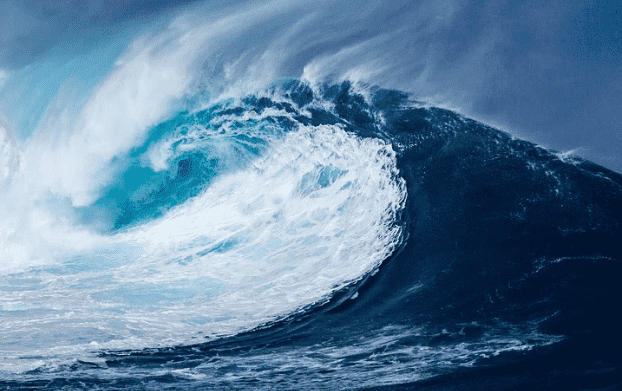
Rabat – A new study shows that Morocco is more exposed to tsunamis than previously thought.
The study from the Higher Council for Scientific Research (CSIC) suggested that the Alboran Sea, located between the Iberian Peninsula and the north of Africa, may trigger tsunamis in greater numbers than previously thought.
Natural disasters such as tsunamis, which cause destruction to major infrastructure and coastal regions, are generated as a result of seafloor deformation due to faults or landslides.
Moroccan coastal areas are vulnerable to tsunami flooding. A number of coastal inundation models have therefore been developed in this region in order to investigate earthquake-induced tsunami hazard. Tsunami vulnerability, however, remains poorly understood compared with other hazards
Scientific Reports has published the study, indicating that directional jump faults in the central Alboran Basin, including Averroes, could trigger 6-meter waves.
According to the study, videos and images are depicted to explain waves movement. The waves could reach the coast in just 20 minutes.
“The former [wave] reaches the Málaga coast with a wave height of up to 2 m and an arrival time of up to 35 min, whereas the latter reaches landfall along the Moroccan coast, in locations such as Ras Tarf cape (wave height 1 m; arrival time 21 min), Punta Negri (wave height 1 m; arrival time 20 min) and the new Nador Harbour (Port Nador West Med) (wave height 1 m; arrival time 27 min),” the study shows.
The Averroes fault could cause a vertical jump of 5.4 meters, which could also generate an earthquake of 7 magnitude.
Researchers have further analyzed historical collections and archives of the 1755 tsunami in detail using the Cornell Multi-grid Coupled Tsunami Model (COMCOT). According to these analyses, the northwest tip of Morocco‘s Atlantic coastline is particularly vulnerable to tsunami impact from the region’s earthquakes.
According to the historical records, the 1755 tsunami had an extreme impact on Asilah, north Morocco with waves surging the fortifications, which suggests that the waves rose at least 15 meters. It also describes waves penetrating up to 2 km inland.
The phenomena, according to the study, “provides a fundamental opportunity to analyze this tsunamigenic mechanism, namely, the vertical offset of the seafloor concentrated at the northern fault tip.”
“The Alboran Sea, whose Iberian coast annually receives the highest number of tourists from all of Europe, has been historically affected by tsunamis. Historical records show the simultaneous occurrence of tsunamis striking the Adra and Malaga coasts at 365 CE. However, little is known about the tsunamigenic potential of the faults in this basin,” the study argued.
Coastal populations in the region are at risk from giant waves, according to the report. The Tangier-Asilah region has an increasingly growing population especially towards its coast, leaving it particularly vulnerable to tsunamis. As well as affecting the economy and the environment, such a phenomenon could also damage marine and land infrastructure.
A possible tsunami’s impact must be mitigated to the greatest extent possible, according to the study.
When an earthquake strikes, early-warning systems need to initiate a rapid response, while minimizing false alarms, based on the magnitude of the event, the focal mechanism, and the potential tsunami trigger, the study further explains.