


 Join on WhatsApp
  Join on Telegram
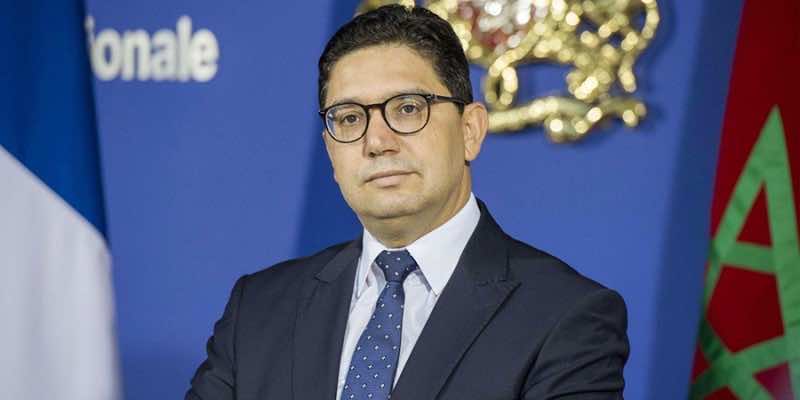
 Fez – Morocco’s Foreign Affairs Minister Nasser Bourita has applauded the latest UN Security Council Resolution, highlighting the pro-Rabat momentum that has marked the UN-led political process in recent years.
Speaking at a press conference on Friday, shortly after the Security Council adopted Resolution 2602, which extended the mandate of the UN’s peacekeeping mission in Western Sahara and reiterated the centrality of a compromise-based political solution, the Moroccan minister said the resolution is yet another vindication of the efforts Morocco has made toward a lasting and feasible political solution in Western Sahara.
13 countries voted in favor of the resolution, while two – Russia and Tunisia – abstained.
“Morocco appreciates this important resolution,” Bourita said. Morocco’s chief diplomat stressed that the adoption of Resolution 2602 “strengthens the success Morocco has made on this topic.”
The Moroccan FM emphasized the significance of the resolution in a time when the North African Kingdom has garnered substantial international support for its Autonomy Plan.
He drew attention to some of the most notable advances Moroccan diplomacy has secured in the past year.
In November of last year, Morocco secured the El Guerguerate border post and restored the free movement of goods in the region.
While pro-Polisario voices were quick to describe this as a “brutal attack on Sahrawi civilians” and a “violation of the UN ceasefire,” most observers – including the UN’s own monitoring mission in the region – dismissed this reading and supported Morocco’s legitimate response to Polisario’s maneuvers.
Read also: US Again Confirms Support For Morocco’s Western Sahara Autonomy Plan
Less than a month after the Guerguerat incidents, the US historically recognized Morocco’s sovereignty over Western Sahara, significantly consolidating the diplomatic progress the North African country had been making on the Western Sahara question.
In the ensuing weeks, several African and Arab countries opened consulates in the cities of Dakhla and Laayoune, irreversibly cementing their support for Morocco’s territorial integrity.
Coupled with the latest UN resolution’s insistence on a compromise-based and realist political solution, all these recent developments point to a notable defeat of the marginal voices still pushing for an obsolete and impractical self-determination referendum, Bourtia suggested.
Also central to Bourtia’s arguments was that Resolution 2602 renewed the UN Secretary General’s call on all parties to the conflict to commit to the round table discussions format as a necessary step to build confidence and revive the fading “new momentum.”
The text of the resolution cited Algeria five times, Bourtia recalled, adding that this amounts to a call on Algeria to shoulder its “historical responsibility” in the decades-long conflict on numerous occasions by committing to the political process a full-fledged party to the conflict.
Bourita also reiterated Morocco’s commitment to working with the UN to achieve a sustainable and mutually agreed upon political solution to the decades-long regional conflict.
He concluded by expressing Morocco’s appreciation for countries that “backed up this resolution, particularly France and the United States,” noting they “have shown strong support for the [Moroccan] autonomy plan as the only means of settling this issue.”


