Rabat – The Moroccan High Commission for Planning (HCP) issued a report examining the status of Moroccan women in the country.
The HCP published the new version of its annual publication “the Moroccan Woman in Figures,” on Friday, October 15.
It is a collection of statistical data describing the evolution of the situation of Moroccan women in several areas, in the form of data, graphs and computer graphics.
The comprehensive report provides insight into the lives, struggles and victories of Moroccan women.
Reviewing an overall positive “20 years of progress” for women’s rights in the country, the report’s most astonishing findings indicate that Moroccan women have achieved profound academic and professional development in a span of 20 years.
The literacy rate among Moroccan women rose to 53.9% in 2019, compared to 39.6% in 2004, according to the report.
The rate stands at an approximate 75% for men for 2019, an increase of 8 points from 2004, while the national literacy rate is around 64% in 2019 against 52.3% in 2004.
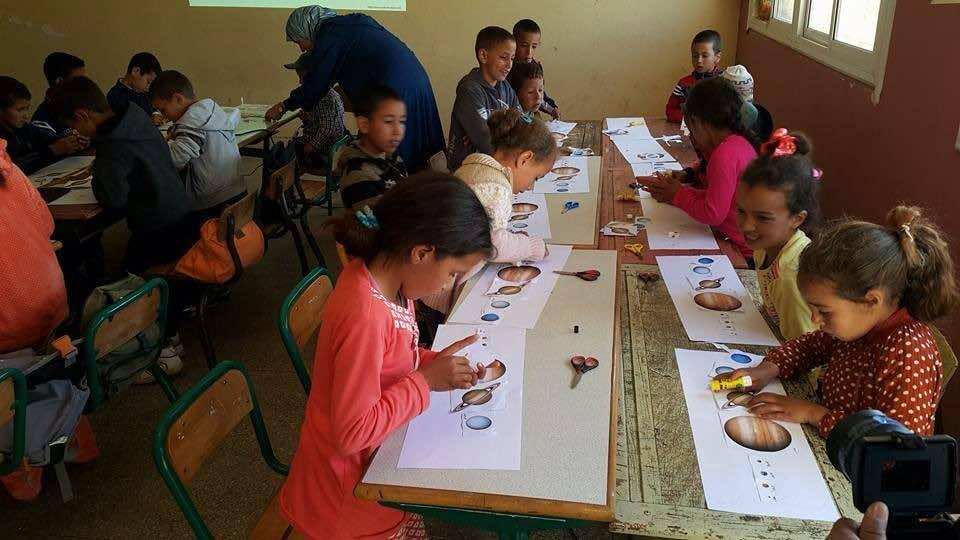
In terms of access to education, the report states that in 2020, 90.5% of girls aged between 15 and 17 attended school in urban areas, while 39.2% attended school in rural areas.
In a stark comparison during the 2000s, 56.3% of girls in urban areas and cities had access to education, while a mere 6.1% of girls from Morocco’s rural villages and provinces were able to successfully enroll in school.
Comparatively, 85.7% of young Moroccan boys in urban areas were enrolled in schools; with 50.5% in rural areas.
Data pertaining to 2004 are in contrast with 70.3% and 14.7% respectively in 2000, the report says, using data provided by the ministerial department in charge.
These positive changes can be accredited to the Moroccan government’s commitment to reform low enrollment rates, especially in rural areas, for both genders.
Part of its efforts has been the Strategic Vision for Education 2015-2030. Thus, the initiative addresses the complexity of the reforms to be undertaken.
Morocco has also adopted a Framework Law back in 2019, addressing both the immediate and deeper underlying causes of the learning crisis.
A $500 million loan from the World Bank (Morocco’s education sector support program) is supporting the authorities’ efforts, with a particular focus on improving learning outcomes and sector governance.
Despite the COVID-19 crisis threatening to undermine Morocco’s progress in education, the country’s swift, decisive and effective containment measures, and successful vaccination campaign, have ensured that progress made over the past two decades can be sustained.