 Join on WhatsApp
 Join on Telegram
Rabat – Morocco’s National Initiative for Human Development (INDH) mobilized a budget of MAD 927 million ($99 million) for the benefit of 2 million inhabitants of the Rabat-Sale-Kenitra region between 2019 and 2021.
The budget allocation is part of INDH’s third phase of operations for the 2019-2023 period. The new phase seeks to learn from previous successes and failures and “contribute to the building of the New Development Model of Morocco … in favor of sustainable economic growth, centered on people and respect of the environment,” INDH reported.
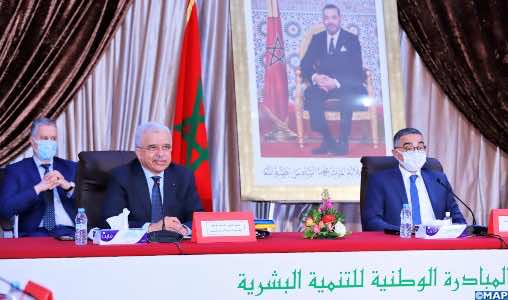
To stimulate sustainable economic growth in Morocco, the national initiative launched four programs in the Rabat-Sale-Kenitra region in the 2019-2021 period, INDH’s national coordinator Mohamed Dardouri stated on Tuesday during a presentation in Rabat.
Mohamed Dardouri has organized seven previous presentations in other Moroccan regions in the past few days. His national tour aims to familiarize newly elected officials with the vision and challenges of INDH’s third phase as well as its achievements in the past three years, MAP added.
Dardouri noted that the national initiative invested a total of MAD 186 million ($19 million) in 116 regional projects, with the goal of reaching 316,000 people in the Rabat-Sale-Kenitra region. The projects aim to improve local infrastructure and provide basic social services in the least developed areas.
As 98% of the targeted population will benefit from these projects, 39.34% of beneficiaries will profit from education projects, 37.32% from health, 13.11% from rural electrification, and 9.8% from drinking water supply (9.8%). Currently, 20 projects are in progress.
The INDH coordinator added that 34,029 individuals in precarious situations have received support through 363 projects and interventions with a cost of MAD 211 million ($22 million) as 66 of the initiatives are in progress.
Read Also: HCP: Morocco Must Diversify Its Economy to Tackle Rising Unemployment
Additionally, INDH initiated two programs on youth inclusion in the Moroccan economy and the development of human capital with respective budgets of MAD 158 million ($17 million) and MAD 371 million ($79 million).
The first program targets 1,930 beneficiaries through 167 projects aiming to support youth entrepreneurship and employment as well as promote a social solidarity-based economy.
The second and last program focuses on developing human capital through the training of future generations. The program consists of 14,435 projects on preschooling (1,146), schooling and development (172), and mother-child health (110), among others. 82 of the initiatives are currently in progress.
Between 2019 and 2021, INDH partnered with the Ministry of education to generalize pre-school education in rural areas, leading to the establishment of 8,000 preschool units, 3,790 of which are currently operating.
Over 71,000 children from rural areas have benefitted from quality supervision and 40,600 students were granted admission to 500 Dar Talib, a boarding school, as part of the program.
To counter school dropout rates, INDH acquired 2,400 vehicles to transport 96,000 students to their schools and allocated MAD 480 million ($51 million) for the “1 Million Schoolbags” project, benefiting 4.7 million children across the country.
The initiatives also created new job opportunities for 4,520 teachers, 68% of whom are women.