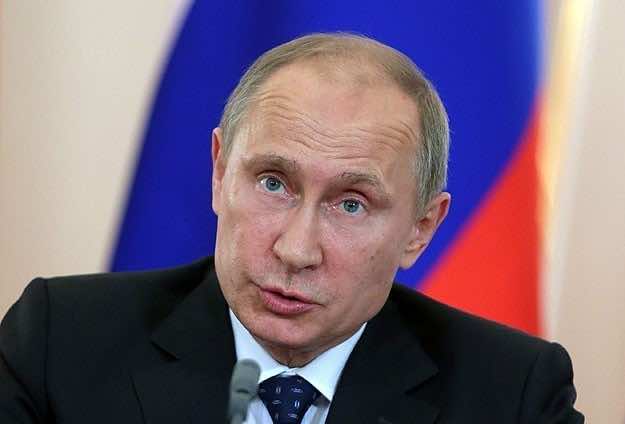
Rabat – Russia’s President, Vladimir Putin, has ordered the country’s military high command to put nuclear deterrence forces on high alert, citing aggressive statements by NATO, as well as sanctions imposed on Russia.
“As you can see, not only do Western countries take unfriendly measures against our country in the economic dimension – illegitimate sanctions that everyone knows about,” the ruler said on state television on Sunday, “but also the highest-ranking officials of leading NATO countries are allowing themselves to make aggressive statements in relation to our country.”
This move by Putin has heightened Western fears that Russia could use nuclear weapons in the ongoing conflict with Ukraine.
Seen by many as highly escalatory, Putin’s threat comes as Russia continues its military operation in Ukraine for the fourth day.
The Russian president had hinted at potential use of nuclear weapons before, warning NATO against intervening in the conflict and threatening “ominous consequences” in such an event.
While some experts have branded the threat as an empty one, it remains notable as the first time in decades that a world leader has brandished nuclear capabilities as a threat.
“As for military affairs, even after the dissolution of the USSR and losing a considerable part of its capabilities, today’s Russia remains one of the most powerful nuclear states,” Putin said in a speech on Thursday, shortly before his troops attacked Ukraine on multiple fronts.
The threat of nuclear weapons had left the forefront of public worries following the dissolution of the Soviet Union, and after occupying a large space of public consciousness during the Cold War.
The resurgence of nuclear threats has also brought the concept of mutually assured destruction (MAD) back into the spotlight, a balance that has nuclear powers avoid nuclear conflict out of fear that it could result in the annihilation of both sides.
No country has used a nuclear weapon since the United States used it to win World War II in 1945.
Putin ordered a military operation in neighboring Ukraine on Thursday, with heavy equipment and ground troops breaching Ukraine and heading into Kyiv, the country’s capital.
The invasion came after weeks-long simmering tensions. Putin has notably cited Ukraine’s desire to join NATO and threats of “genocide” in the Donbass, a majority russophone and pro-Russia region in eastern Ukraine, among the main reasons of his military offensive aganst the Kyiv regime.
Read Also: Moroccans Leaving Ukraine Face Challenges at Borders, Crossing Points