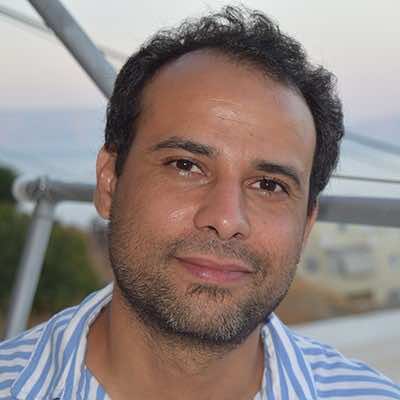
Rabat – Moroccan epidemiologist Youssef Oulhote has received a $3 million “Outstanding New Environmental Scientist” (ONES) grant from the American National Institute of Environmental Health Sciences (NIEHS) for his ongoing research on autism.
Youssef Oulhote is an assistant professor in the School of Public Health and Health Sciences at UMass Amherst University. With his expertise in autism, neuro-epidemiology, child development, and environmental epidemiology, Oulhote was qualified for the competitive ONES program.
The program “responds to the environmental health challenges of tomorrow” through investing “in the next generation of environmental health scientists,” according to the NIEHS website.
The five-year grant will finance Oulhote’s research on “the interplay of early life exposure to environmental pollutants, the folate system during pregnancy and genetic susceptibility in the onset of autistic behaviors,” UMass Amherst University reported on February 14.
Commenting on the occasion, Oulhote said that “we have multiple parts of the puzzle … We want to put them together and add things that we don’t know yet.”
Read Also: Moroccan Startup Freterium Raises $4 Million in Funding
“We want to gain a better understanding of how strongly multiple pollutants and the folate system are associated with autistic traits and how these effects of multiple pollutants differ based on folic acid intake, genetic susceptibility, and the presence of folate autoantibodies,” explained the Moroccan scientist.
The research team includes Oulhote and two professors from UMass Amherst, Professor of Biostatistics Raji Balasubramanian and Professor and Dean Anna Maria Siega-Riz, as well as collaborators from Simon Fraser University, Brown University, and Baylor College of Medicine.
Siega-Riz congratulated Oulhote for winning the “very prestigious award” which reflects “the important contribution [his] research will make to the scientific field and his potential for being a leader in this field.”
“I am delighted to offer my expertise in nutritional epidemiology and am looking forward to working with him and the other investigators on this very important public health topic,” she added.
Through this project, the team hopes to develop better prevention strategies for autism disorder and its associated behaviors.