 Join on WhatsApp
 Join on Telegram
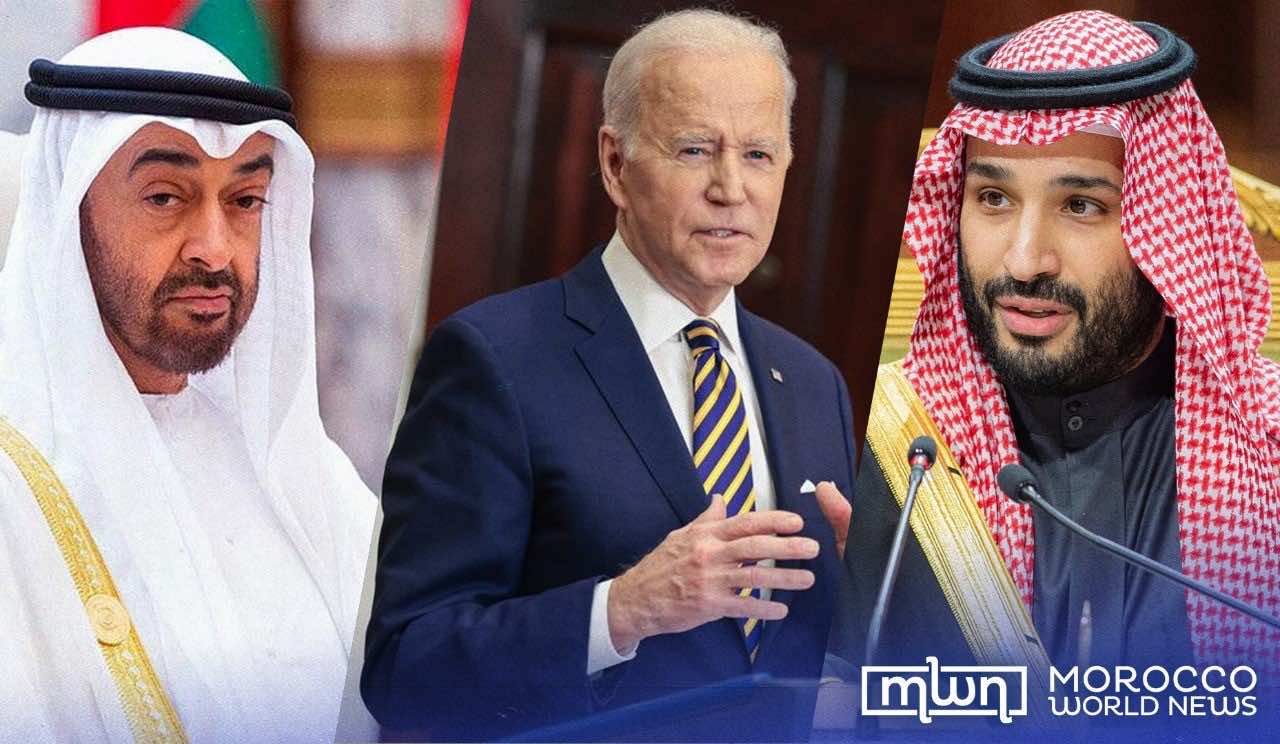
Rabat – Arab Crown Princes Mohammed bin Salman and Mohammed bin Zayed Al Nahyan rejected phone calls from US President Joe Biden last week. The snub comes after “relations between the US and the two Gulf states deteriorated during Biden’s presidency,” reported the Guardian.
“The White House unsuccessfully tried to arrange calls between President Biden and the de facto leaders of Saudi Arabia and the United Arab Emirates as the U.S. was working to build international support for Ukraine and contain a surge in oil prices, said Middle East and U.S. officials,” says the Wall Street Journal.
Both Arab leaders, Mohammed bin Salman and Sheikh Mohammed bin Zayed Al Nahyan, refused to speak with president Biden in recent weeks, officials said, as Saudi and Emirati officials have become more vocal about their critique of US policies in the Gulf region.
“There were some expectations of a phone call but it didn’t happen,” said a US official.
The UAE’s Ministry of Foregin Affairs said that the call between Biden and Sheikh Mohammed will be rescheduled
Saudi and Emirati officials have signaled that the relationship with Washington has deteriorated during the Biden administration and expressed that they want more support for their war in Yemen.
Saudi Arabia and the United Arab Emirates (UAE) are the only two major oil producers capable of rapidly scaling up oil production, which could lower prices in the crude market in America, at a time when gasoline prices are skyrocketing, partly due to the Ukrainian-Russian war.
Both countries, however, have declined to pump more oil, claiming that they will stick to the current production plan approved by OPEC, the Organization of Petroleum Exporting Countries and a group of allies led by Russia.
This response directly contradicts Saudi Arabia’s response when the previous American President asked them to pump more oil in order to reduce the price of oil.
The Organization of the Petroleum Exporting Countries (OPEC), founded on September 14, 1960, is composed of 13 countries that control and ensure the stabilization of oil market prices.
Read also: Global Oil Prices Reach $100 a Barrel, First Since 2014