 Join on WhatsApp
 Join on Telegram
The mistakes and controversial decisions witnessed in some matches of the 2026 FIFA World Cup have once again reignited the debate over the impact of Video Assistant Refereeing (VAR) on modern football. Incidents in matches such as Austria vs. Argentina, Ghana vs. England, Germany vs. Ecuador, and several other games marked by varying degrees of controversy have brought back an old question that resurfaces with every major tournament: Has technology served football, or has it altered its very essence?
When Swiss official Joseph Blatter was President of FIFA, he strongly opposed the introduction of video technology, arguing that “refereeing mistakes are part of the nature of football” and that excessive reliance on technology could deprive the game of some of its charm and spontaneity. He also warned that football might lose part of its soul if decisive decisions were made through screens rather than on the field of play.
Although FIFA later adopted the technology with the aim of reducing refereeing errors and ensuring greater fairness, reality has shown that VAR did not end controversy; it simply created a new kind of it. According to FIFA, the accuracy of VAR decisions exceeded 99.3 percent during the 2018 and 2022 World Cups. Yet its critics argue that increased accuracy has not eliminated debate; it has merely changed its nature and source.
Many observers now feel that some matches are being decided by rulings that come from outside the rectangular pitch, rather than solely by what happens inside it.
Shared control of the match
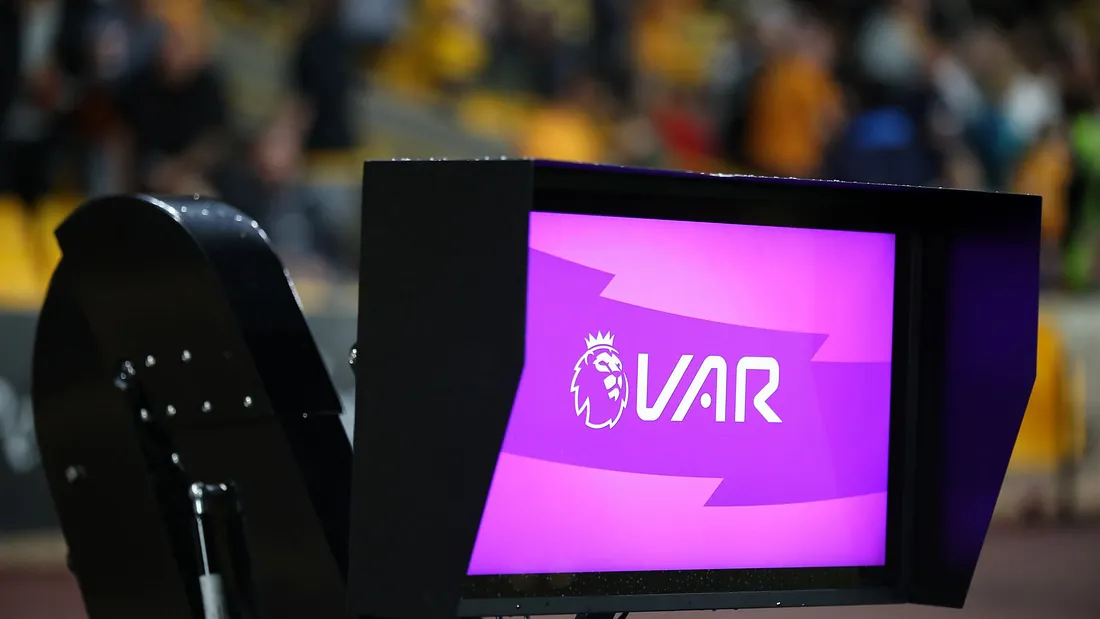
The Video Assistant Referee (VAR) system is defined as a mechanism that reviews certain refereeing decisions through video footage and communicates with the referee via a headset. In practice, however, this means that managing a match is no longer the exclusive responsibility of the referee on the field; it has become a shared leadership between the referee and another team working behind screens.
For the first time in the history of the game, some crucial decisions are being made through a series of interactions between the on-field referee, the video officials, and digital technologies. This has revived a fundamental question about the limits of the referee’s authority on the pitch.
The issue becomes even more complex in international matches, where the main referee and the VAR officials sometimes come from different countries, bringing with them different refereeing backgrounds, football cultures, and interpretations of incidents. Such differences can lead to varying readings of the same footage, helping explain decisions that are considered surprising or unjust by many observers.
The Rhythm of the game under pressure
Football distinguishes itself from many other sports through its continuity and fast pace, driven by constant transitions between attack and defense. Yet one of the strongest criticisms directed at VAR concerns its direct impact on the flow of matches.
Every prolonged stoppage to review an incident kills part of the excitement and disrupts the competitive rhythm. When the verification process takes several minutes, it affects the players’ concentration, alters the balance of momentum and control, and may even provide an indirect advantage to one team over another.
The issue is not merely the time lost, but also the psychological impact of these interruptions. Breaking the competitive rhythm can affect players’ mental focus as well as their physical and emotional intensity.
The celebration of a goal is no longer, as it once was, a moment of complete certainty. It has often become a moment of waiting and anxiety, pending a decision from a distant room that may validate the goal—or cancel it minutes later.
The problem of the ‘distant Referee’
VAR rooms are often located far from the scene of the action, leaving video officials detached from the atmosphere of the match and the emotions of players and supporters.
This distance creates a feeling among fans that crucial decisions are being made in places disconnected from the psychological and sporting context of the contest.
The trend toward centralized refereeing centers has reinforced this impression even further. Some matches are now partially managed from closed rooms that the public cannot see and whose workings remain largely unknown, raising recurring questions about transparency and trust in refereeing decisions.
Technology cannot replace human judgment
One of the deeper issues associated with VAR concerns the nature of the images on which it relies. Television cameras are designed primarily for broadcasting and enhancing the spectacle of the game, not for providing ideal angles for refereeing purposes.
In many situations, particularly penalty incidents, the footage remains open to interpretation and subject to the referee’s discretion. A decision to award or deny a foul may depend on a fraction of a second, while some broadcast angles provide only a limited number of frames per second, making certain incidents appear blurred regardless of image quality.
Technology can help detect facts, but it cannot fully replace human judgment and the context experienced by the referee on the field.
Offside: between video and virtual lines
The use of virtual lines to determine offside situations has become one of the most controversial aspects of VAR. The combination of several technologies in the decision-making process has led many to question the accuracy of certain calls, particularly when goals that appear legitimate are disallowed or when questionable goals are validated.
In many cases, a smartphone image captured from the stands appears clearer to fans than the virtual graphics displayed on television screens.
Although major stadiums use between 20 and 30 cameras to broadcast matches, this number remains limited when compared to the length of a football pitch, which ranges between 100 and 110 meters and can reach 120 meters in some venues. Moreover, cameras are not distributed evenly along the touchlines; most are concentrated around midfield for broadcasting purposes, while large areas—especially those extending beyond the center circle toward the penalty area—receive less coverage from angles parallel to the players’ lines in the most delicate offside situations.
Technology attempts to compensate for this shortcoming through semi-automated offside systems and virtual lines, both of which rely on digitally reconstructing the scene and performing complex geometric calculations. Several experts point out that despite their sophistication, these systems do not entirely eliminate human judgment, as the accuracy of the final decision still depends on the quality of the data collected by cameras and sensors and on the way it is digitally processed.
Yet this has not prevented controversy; instead, it has deepened the doubts of a segment of fans. Some decisions have even become subjects of ridicule on social media after virtual graphics produced bizarre depictions of defenders’ legs or attackers’ shoulders, leading many to believe that certain rulings are far removed from the spirit of the game.
Despite this abundance of integrated technology in football, the human factor remains under scrutiny. Referees come from different educational and cultural backgrounds, and it is doubtful that they all possess the same level of understanding of modern technologies and their intricate details.
Toward greater transparency
The problem is not technology itself, but rather the way it is used within the game. If VAR has become part of modern football, it must also become more open and transparent to the public.
One useful idea would be to create glass VAR rooms inside stadiums, visible to both spectators and the media. Having video officials physically present within the match environment—even if technically isolated—would reduce the widespread impression that decisive decisions are being made behind closed doors and out of sight.
Transparency could also be enhanced by broadcasting conversations between the referee and the VAR room, or by displaying technical explanations of decisions on giant stadium screens so that players and supporters understand the reasons for a decision in real time.
Technology does not derive its legitimacy solely from its accuracy, but also from public trust in how it is used. The more transparent its procedures become, the less people will feel that the fate of matches is being decided in remote places beyond the spectators’ eyes.
On the other hand, defenders of VAR argue that football suffered for decades from major refereeing errors that affected the outcomes of tournaments and prestigious titles, and that technology, despite its imperfections, remains a tool for reducing injustice rather than eliminating it entirely.
VAR has succeeded in reducing some mistakes, but it has not ended the debate over refereeing. Instead, it has transferred the controversy from the pitch to the control rooms and screens.
Between the pursuit of justice and the preservation of the game’s spirit, football today faces an open question: How can technology serve the game without stripping it of its humanity?