 Join on WhatsApp
 Join on Telegram
The Union for the Mediterranean (UfM) and the United Nations’ Food and Agriculture Organization (FAO) are joining forces to promote “intensifying forest and landscape restoration in the Mediterranean,” Morocco’s state media MAP reported on Friday.
As Morocco is part of both organizations, the report recalled, suggesting that the joint efforts will benefit biodiversity and forest maintenance in the North African country.
Promoting the “Intensifying Forest and Landscape Restoration to Restore Biodiversity and Promote Joint Mitigation and Adaptation Approaches” project, the two organizations aim to support the implementation of forest and landscape restoration practices in the region, according to MAP.
The project is aimed at balancing the restoration and production in the forest and biodiversity ecosystem.
The Mediterranean project is a component of a larger global project called “The Paris Agreement in Action: Scaling up Forest and Landscape Restoration to Achieve Nationally Determined Contributions.” With a budget of 1.8 million euros (MAD 19.42 million) and set to be implemented over a 4-year period, the project’s main objective is to restore biodiversity in the Mediterranean by restoring forests and landscapes.
Like many other Mediterranean countries that received UfM’s specialist technical support on land degradation and climate finance instruments, Morocco will benefit from a new participatory management plan for the Maamora Forest and restoration activities in the Ifrane Model Forest.
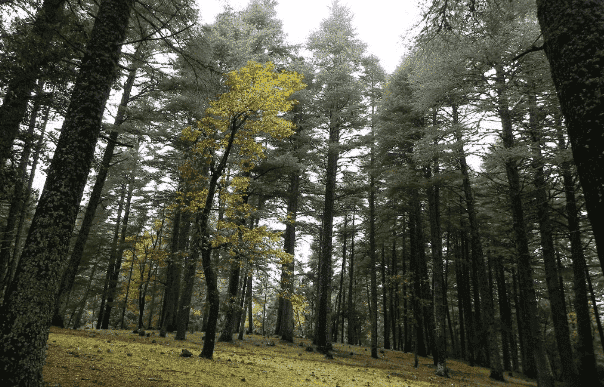
In a statement, the UfM highlighted efforts by Morocco’s Department of Water and Forest to promote forest landscape in the Rabat-Kenitra region, with the Maamoura Forest the largest cork oak forest in the world.
Read also: Climate Change Will Shrink Morocco’s Argan Industry
According to sources cited by MAP, efforts by the Moroccan Department of Water and Forests have failed to prevent a partial degradation of approximately 300,000 hectares of cork oak due to climate change and unsustainable human activities.
The restoration plan includes a pilot test on 3,423 hectares which will involve local stakeholders.
Morocco’s Department of Water and Forests was able to develop a management plan that incorporated participatory capacity-building initiatives and a socio-economic development plan with the help of FAO. The department’s efforts will allow local people to play a key role in the restoration and conservation of the Maamora forest.
Meanwhile, the management plan will compensate locals for temporary grazing stoppage during the implementation of restoration projects, according to the UfM. This has led to the development of new value chains such as truffle harvesting to provide alternative sources of income for local communities that rely on the forests.