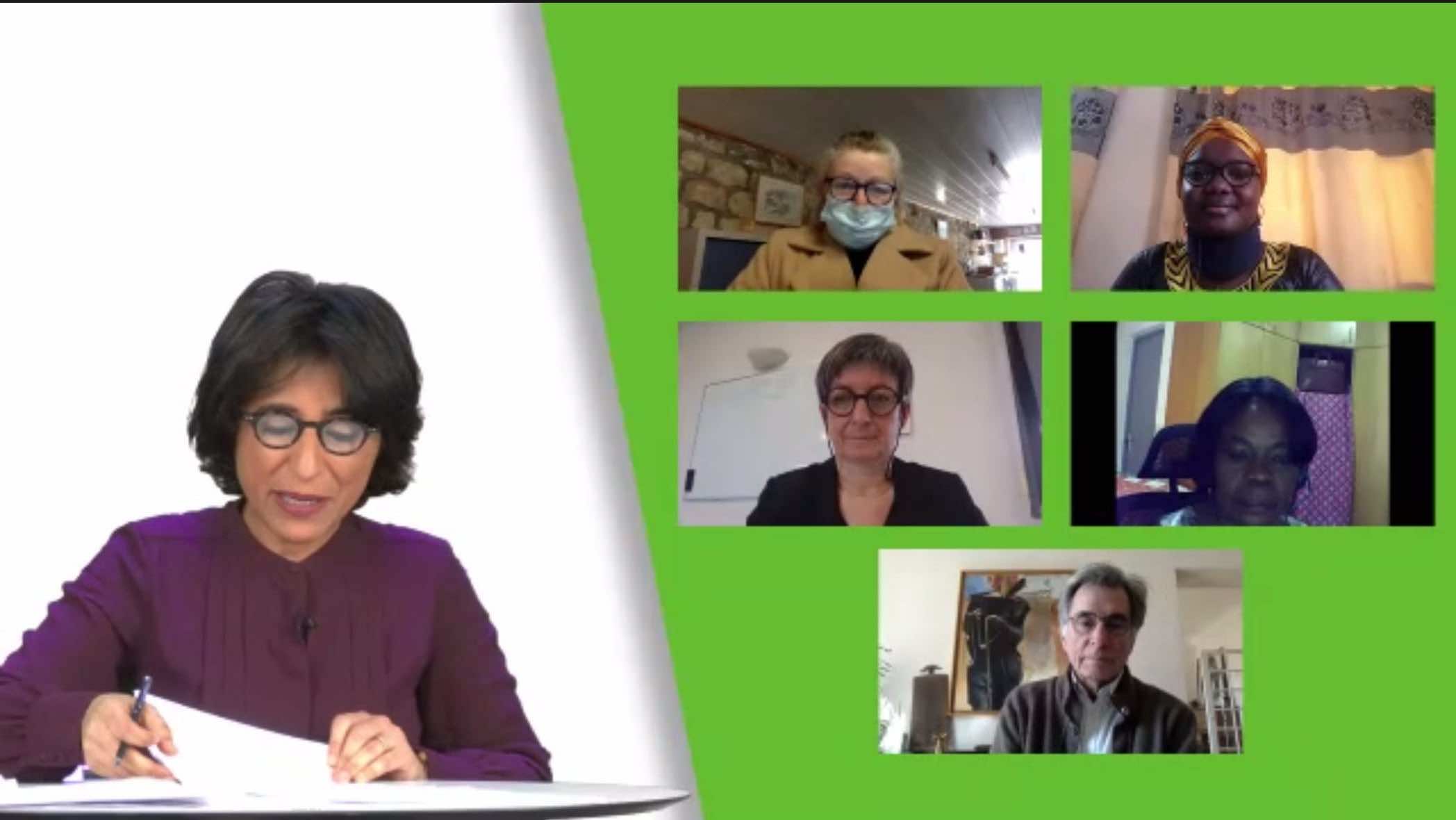
Rabat – Moroccan phosphate and fertilizer giant OCP Group celebrates International Women’s Day through a webinar dedicated to women in agriculture.
Four women panelists attended the webinar to discuss socio-political differences between women farmers in Africa and Europe.
Themed “Perspectives on the situation of women farmers,” the panelists, alongside the economist and former diplomat Pierre Jacquemot, now the chairman of GREY-Professionals for Fair Development, highlighted women’s role in family farming and the gender discrimination faced by capable women on a consistent basis.
On women farmers’ situation in Africa, Sana Wony Tieminta highlighted that despite women’s essential role in ensuring a stable environment in the household, they remain a subject of marginalization in the wider agricultural sector, where they struggle to access resources, technology, and agricultural loans.
In Mali, Tieminta revealed that 90% of agricultural funding for essential equipment and technologies is provided to men, with female farmers representing a tiny minority of beneficiaries.
Although women make up more than half of the agricultural population in Africa, they are generally deprived of factors that can improve their productivity.
The World Bank outlined in a 2014 report striking differences in production rates between men and women farmers in Africa, exposing gender discrimination in issues relating to land ownership and credit.
The French economist Jacquemot highlighted that inequalities are more pronounced in rural areas in Africa, where traditional and pejorative stereotypes are more deeply ingrained..
To change such stereotypes, Jacquemot argued that it is necessary to spread information on women’s rights to empower them and establish parity, adding that it is also important to ensure that they have direct access to loans and other agricultural equipment to solve the current problems of access to agricultural lands.
Access to education: a challenge for African women
Women who are the heads of families tend to farm without an adequate remuneration for their work. According to the Food and Agriculture Organization (FAO), 67% of rural women in the African continent end up in subsistence agriculture, which accounts for 60-90% of food production.
The panelists agreed that lack of access to a proper education remains an alarming issue that could further deteriorate the status of women farmers within societies, underlining that with the necessary support, African women could represent a lever for agricultural development.
FAO reported in a study that African women farmers could increase agricultural yields by 20% to 30% if they had the same access as men to the sources of production.
In Nigeria and Ghana, 25,000 women farmers were able to increase their revenues through the Agribooster program, an initiative launched by OCP Africa to support the agricultural value chain in the continent.
Agribooster also focuses on connecting farmers to financing and insurance, engaging them with local extension agents for training on proper fertilizer use, while also collaborating with other providers to ensure they have the right fertilizer and resources.
In sub-Saharan Africa, women produce up to 80% of food for household consumption and sale in local markets, the panelists noted.
Women farmers in Europe and Africa: a comparative overview
Since the establishment of the limited liability agricultural company (EARL) in 1985, Martine Peytavin, deputy mayor of Allenc commune in France stressed that in terms of revenues, there is an equality between men and women operating in agriculture, same goes for the social contribution and retirement.
While women represent only 27% of farm managers in France, African women are key players in the food security of the whole continent, but are largely excluded from decision-making in their homes and within their communities.
In 2016, Eurostat’s data indicated that 29% of European farms are run by women but this figure masks significant differences between the Member States. Women farm managers are relatively common in Lithuania and Latvia (45% of farms), but represent a tiny 10% of the farming population in Malta, Germany, Denmark and the Netherlands.
The percentage of women farmers in each European country relates to changing generational trends too. According to Eurostat, 4.2% of European women farm managers are under 35, whereas over 42% are over the age of 65.
“Ever since the UN General Assembly in 1967, we have been trying to improve women’s situation and eliminate all forms of discrimination,” Alimata Coulibaly, CEO of “Précuits” enterprise in Ivory Coast added, emphasizing that the results are “far from what we desire.”