 Join on WhatsApp
 Join on Telegram
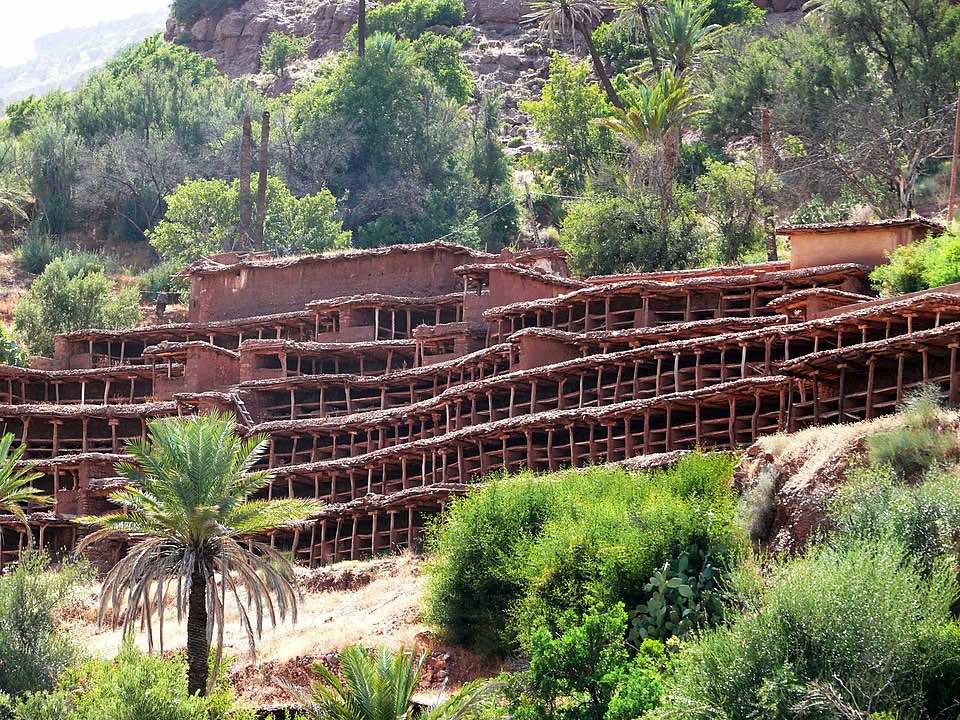
Rabat – The world’s arguably largest and oldest collective beehive in Morocco’s Inzerki is witnessing a decline in its bee populations due to the worst drought in the county in 40 years.
Beekeepers in Inzerki, a province in southern Morocco, are reporting an unprecedented decline in the population of bees, with one farmer telling media he had lost 40 out of 90 beekeeping units in the span of two months.
Other beekeepers reported losing a third of their hives, triggered by a mass die-off of bees known as “colony collapse disorder,” according to the Dubai Week.
In addition to the environmental damage of the declining number of bees, the trend is affecting livelihoods in the region as many families find themselves forced to abandon the trade.
Inzerki is not the only region witnessing a considerable depletion of its natural resources.
In less than a year, Morocco’s Kenifra-Beni Mellal region lost roughly 100,000 honey production units in less than a year, Mohamed Soudani, a member of the Moroccan Beekeepers’ Association told Dubai Week.
This year’s severe drought prompted Morocco to dedicate MAD 130 million ($13 million) to a scheme aimed at supporting farmers.
Following a government-launched investigation, Morocco’s National Food Safety Office described the phenomenon of bee desertion as an unprecedented event in Morocco.
The investigation notably concluded that the damage is due to climate change and dismissed any correlation with the use of pesticides.
In addition to this year’s severe drought, some experts have pointed out the use of modern techniques and pesticides to increase production as likely causes behind the significant drop in the bee population in the Kenifra- Beni Mellal region.
Read Also: Morocco’s Food Safety Office Rules Out Disease as Cause of Bees Disappearance