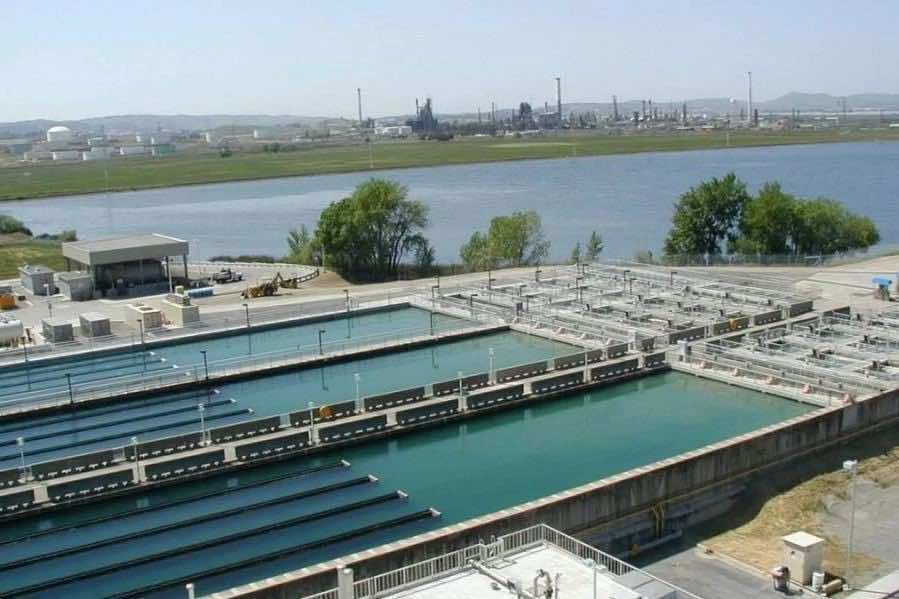
Rabat – The desalination plant in Morocco’s southern city of Laayoune will soon be able to increase its production of drinking water, following construction work to expand the site, according to the Minister of Equipment and Water Nizar Baraka.
Speaking at the House of Councilors’ plenary session on April 12, Baraka said Laayoune’s desalination plant “will be put into service during the ongoing month.”
The investment of the expansion of the plant amounts to approximately MAD 400 million and can supply the region with 26,000 cubic meters of water per day.
The new plant will be added to the existing station, which also supplies 26,000 cubic meters of water daily in addition to 10,000 m3 of underground water, bringing Laayoune’s desalination plant to a total production capacity of 62,000 m3 of water per day.
The seawater desalination plant aims to preserve the agricultural ecosystem and secure water supply in Morocco’s southern provinces.
After months of drought, Morocco experienced heavy rainfall in March and April. Baraka stressed that the latest rains contributed to filling dams across the country, as well as in reducing water scarcity in many regions.
The ministry reported on April 11 that the amount of water in the reservoirs of Morocco’s main dams has now reached more than 5.52 billion cubic meters.
The minister, however, expressed concerns over the emerging challenges of water deficits in summer, especially in the northeastern regions of Morocco.
He said that Africa’s largest desalination plant in Chtouka Aitbaha, near Agadir, has contributed in improving the coverage of drinking water in the Souss-Massa region.
Work began on the Chtouka Aitbaha plant in 2018 under a public-private partnership (PPP), with an investment of approximately MAD 4.48 billion ($478 million). It became operational in March 2022.
The ministry is also working on building the world’s largest seawater desalination plant in Casablanca with a budget estimated at MAD 9.5 billion ($966 million). Planned to be operational by the end of 2027, the plant is set to produce around 300 million cubic meters of water yearly.
Baraka also stressed that a partnership with the OCP Group and the National Office of Electricity and Drinking Water (ONEE) has been signed to increase the production capacity of the seawater desalination plants in Safi and Jorf Lasfar, near El Jadida.
In 2020, ONEE invested MAD 3.6 Billion ($404 million) in drinking water and sanitation projects.