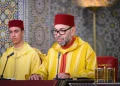
Rabat – King Mohammed VI commemorated on Thursday night Laylat Al Qadr, known in English as the Night of Decree or the Night of Power.
King Mohammed VI performed the Isha and Tarawih prayers, meanwhile, the minister of Endowments and Islamic Affairs Ahmed Toufiq finished “Sahih al-Bukhari” to mark the occasion.
The prayers took place under strict safety measures and limited attendance to abide by the COVID-19 safety rules that are still in effect.
Laylat Al Qadr, known in English by many names such as the night of power, decree, or destiny, is one of the holiest days of the year for Muslims.
In the Islamic tradition, it is also believed that Laylat Al Qadr is the night when God shows great mercy in decreeing the fate of humans.
For Muslims, Laylat Al-Qadr is invaluable as it is closely related to the Quran; it is the night during which God revealed the first verses of the Quran to Prophet Muhammad through his angel Djibril (Gabriel). This aspect holds great symbolism for Muslims, especially as the Quran is the sacred book of Islam.
During Laylat Al-Qadr, angels, blessings, and mercy descend on those who believe. God erases all previous sins and answers all invocations on this night.
Read also: Laylat al-Qadr: Muslims’ Holiest Night
Only on this night, according to Islamic tradition, does God also free as many people from the fire of Hell as He has freed since the beginning of Ramadan.
Muslims stay awake throughout Laylat Al-Qadr as some sort of spiritual retreat with specific practices to say different prayers and connect with God.
Practically, there are several ways to worship during Laylat Al-Qadr, including praying, meditative reading of the Quran, Dhikr (the intimate remembrance of God), and invocation.