


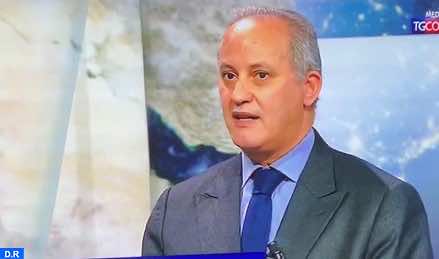
Rabat – Morocco is expected to host this month the anti-Daesh coalition meeting, reflecting the country’s prominent role in maintaining and promoting global security, said Morocco’s Ambassador to Italy, Youssef Balla.
In an interview with the Italian daily Il Giornale, Balla underlined Morocco’s leadership role in promoting “peace and security, particularly in Africa, where extremism, organized crime and separatism are on the rise.”
The Moroccan diplomat highlighted the North African kingdom’s fight against terrorism and extremism and the country’s efforts to consolidate its military security.
Morocco’s hosting of the anti-Daesh coalition meeting comes in vindication of the country’s international reputation as a reliable regional partner in the global fight to dismantle radical and criminal networks, said Il Giornale.
Read Also: Morocco’s Unique Diplomacy Assets Produce Results in Sahel
The coming anti-Daesh coalition meeting will bring together representatives of more than 92 countries, added Balla.
US Secretary of State Antony Blinken is also expected to visit Marrakech on May 11 for the meeting. While the meeting’s official agenda is yet to be announced, current political developments in the Sahel will most likely be one of the major talking points.
Formed in September 2014, the anti-Daesh coalition consists of 84 members committed to weakening Daesh by targeting its financial and economic infrastructures, launching military campaigns in Iraq and Syria, countering the group’s propaganda, and supporting peace restoration in liberated areas.
The coalition initially focused on Iraq and Syria where Daesh was on the rise. Yet the fall of Daesh in the Middle East has shifted the international coalition’s focus to the Sahel.
Defined by structural political and economic weaknesses, the rising flow of arms from Libya, and continuous external interventions, the Sahel is considered a “safe haven” for extremist groups.
Amid alarming reports of increasing insecurity in the already fragile and politically unstable Sahel, Morocco has repeatedly called on regional and global powers to adopt a “shared responsibility” approach to address insecurity in the region.
Habboub Cherkaoui, the head of Morocco’s Central Bureau of Judicial Investigations (BCIJ) said in April that Morocco is mostly worried about the Sahel since it “has become a safe and fertile refuge for terrorist networks.”
Read Also: How Morocco’s Multi-Faceted Diplomatic Approach in Africa is Winning




