 Join on WhatsApp
 Join on Telegram
Rabat – In the wake of the Tunisia-Morocco diplomatic crisis, Guinea Bissau President Umaro Sissoco Embalo landed in Algeria on Tuesday to celebrate the “back to normal” bilateral diplomatic relations with Algiers.
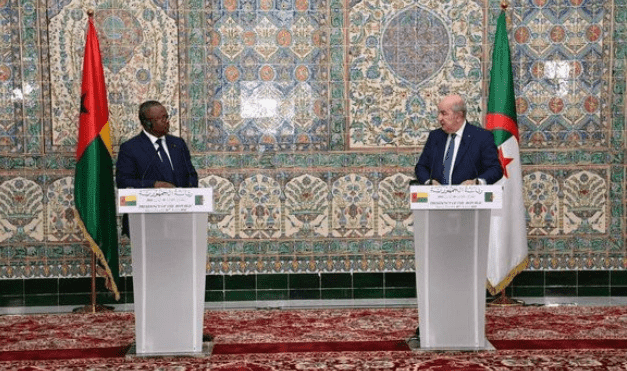
Algeria’s news agency APS said on Tuesday that Algerian President Abdelmadjid Tebboune received his Guinea Bissau counterpart to discuss diplomatic ties.
On the same day, Algeria’s agency quoted Tebboune announcing the opening of an embassy of Guinea Bissau in Algeria.
“Our two countries have gone through a situation that has estranged them, but from this visit, our bilateral relations will return to normal,” said President Tebboune in a joint statement with his counterpart.
Tebboune regretted the absence of an embassy of Guinea Bissau in Algeria, describing the situation as “inconceivable.”
President Embalo’s visit to Algeria came in the wake of diplomatic tension between Tunisia and Morocco over Tunisia’s decision to invite Polisario leader Brahim Ghali to the Tokyo International Conference of African Development (TICAD) in Tunis.
Morocco recalled its ambassador from Tunisia last week on Friday to protest the Tunisian president’s decision to invite Ghali in defiance of TICAD protocols.
Throughout the summit, there were reports of several participating African countries taking issue with the presence of the Polisario leader and expressing support for Morocco’s territorial integrity.
Read also: Japan Denounces Tunisia’s Unilateral Invitation of Polisario to TICAD Summit
Of the reported shows of support to Morocco, that of the Guinea Bissau delegation was perhaps the most telling.
According to converging reports, President Sissoco furiously left the TICAD meeting in protest of the presence of Polisario representatives.
This led many observers to interpret the West African leader’s reaction as a reflection of his country’s long-standing support for Morocco’s Autonomy Plan as the most serious and credible basis to end the dispute over Western Sahara.
In October 2020, Guinea Bissau opened a consulate general in the southern Moroccan city of Dakhla, making the West African nation part of the growing cohort of countries that support Morocco’s stance in the Sahara dispute.
“Guinea-Bissau maintains its consistent position on the issue of the territorial integrity of Morocco,” Guinea-Bissau’s Foreign Affairs Minister, Suzi Carla Barbosa, said on the opening of the Dakhla consulate. She stressed that her country “believes that the only solution to the Sahara issue must be done within the framework of the United Nations.”
Given the timing of Algeria’s announcement of its desire to consolidate ties with Guinea Bissau, it is highly likely that Algiers is seeking to take its pro-Polisario diplomatic assertiveness to new heights by forging new relations with counties that have not traditionally been part of its anti-Morocco axis.
Since Morocco’s return to the African Union in 2017, Algeria has seen its pro-Polisario lobbying efforts fail to rally the AU against Morocco’s territorial integrity and sovereignty over Western Sahara.
Read also: Tunisia Claims ‘Neutrality’ on Western Sahara Dispute, Recalls Ambassador
In the summer of 2018, the AU’s decision to forgo an “alternative solution” to the Sahara dispute to instead support the UN-led political process dealt a huge blow to Algerian diplomacy.
While Morocco has since continued to score significant diplomatic victories, recent developments suggest that Algeria remains committed to identifying any weak links it can to give a new impetus to its long-running ambition of undermining Morocco’s strategic interests.
In quick succession in the past months, Algiers has notably reopened dialogue with Nigeria to revive the Trans-Saharan gas pipeline to counter a similar Nigeria-Morocco initiative, hosted the Ethiopian Prime Minister after Morocco supported Egypt in the Nile dam crisis, and persuaded the Tunisian president to ditch his country’s decades-long neutrality on the Sahara.
While both the UN and AU positions are still overwhelmingly in favor of Morocco, and Algeria’s recent moves are a long way from equalling Morocco’s gains in the past decade, the latest signs indicate that the Western Sahara diplomatic battle has long years ahead.