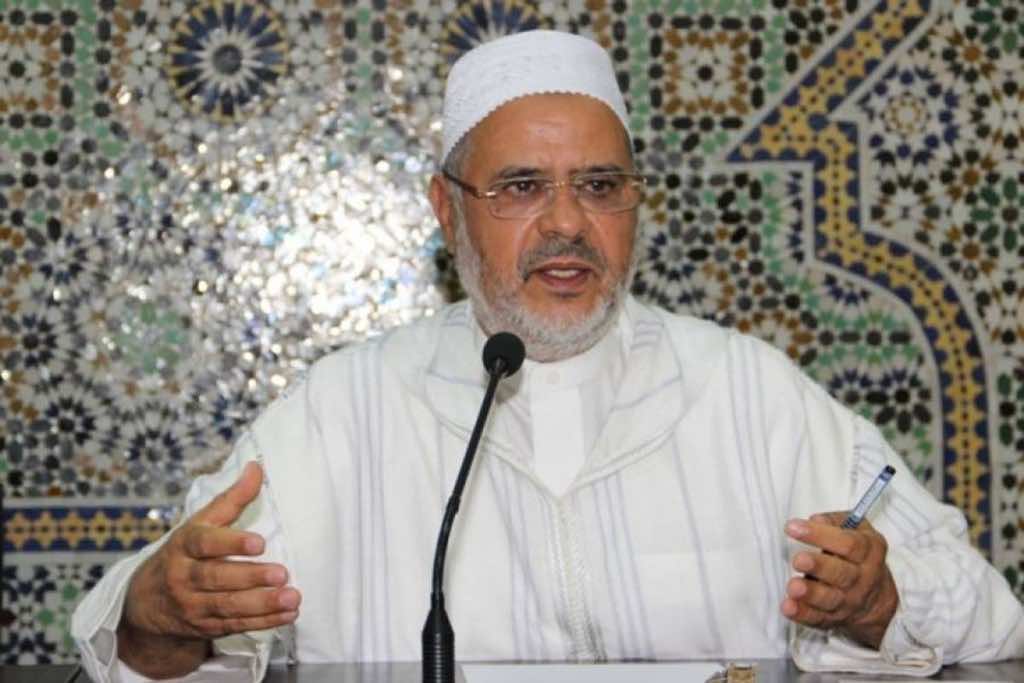
Rabat – Ahmed Raissouni announced today his resignation as head of the International Union of Muslim Scholars.
The Moroccan scholar emphasized that he made the decision to preserve his right to freedom of expression without conditions or pressure, hinting at the controversy that surrounded his recent comments on the “existence of Mauritania.”
“I have decided to submit my resignation from the presidency of the International Union of Mslim Scholars,” Raissouni said, stresing his firm attachment to the views he expressed in his recent interview about Mauritania.
The scholar said he is now in consultations with the union’s secretary general on the implementation of his resignation in accordance with Articles 1-2 of the union’s statutes.
Raissouni made international headlines earlier this month for suggesting in a televised interview that Mauritania should be part of Morocco.
In the interview, the scholar described Mauritania’s existence as a mistake, stressing that Mauritania was an integral part of Morocco before Western occupation and colonization.
Following harsh criticism and condemnation from the Mauritanian government, civil society, and political parties, as well as some other observers from the MENA region, Raissouni insisted that his remarks were grounded in historical facts.
“My remarks were spontaneous,” the scholar said, emphasizing that everyone knew that Morocco had “objected” to Mauritania’s independence for several years for historical reasons before it decided to recognize the country’s independence.
But the scholar added that his comments were not meant to oppose or undermine Mauritania’s sovereignty, as “this is the reality recognised globally and by the countries of the region.”
In his clarifications, Raissouni also emphasized the importance of reviving the Arab Maghreb Union and slammed Algeria for its obsession with challenging Morocco’s territorial integrity and sovereignty over the Western Sahara region.
“I call on our brothers [Algerian officials] to let Morocco tackle this conflict as an internal issue,” the scholar said, warning against the destructive crisis that a war could cause in an already fragile region.
Recalling Algeria’s support for the Polisario Front’s “independence war” to create a new state in southern Morocco, Raissouni stressed: “War will never bring a solution but rather it brings destruction, devastation… and foreign interventions.”