 Join on WhatsApp
 Join on Telegram
Rabat – Amid the ongoing controversy surrounding France’s decision to dramatically cut the number of visas issued to Moroccans, the prominent writer Tahar Ben Jelloun says the French government is making “serious mistakes” that threaten to irreparably damage the longstanding, strategic, and mutually beneficial French-Moroccan relations.
In an opinion article published on Monday by Le Point, a leading French paper, the Moroccan writer lamented the fact that France’s high-level officials have apparently no idea about the far-reaching consequences of the deterioration of relations between France and Morocco.
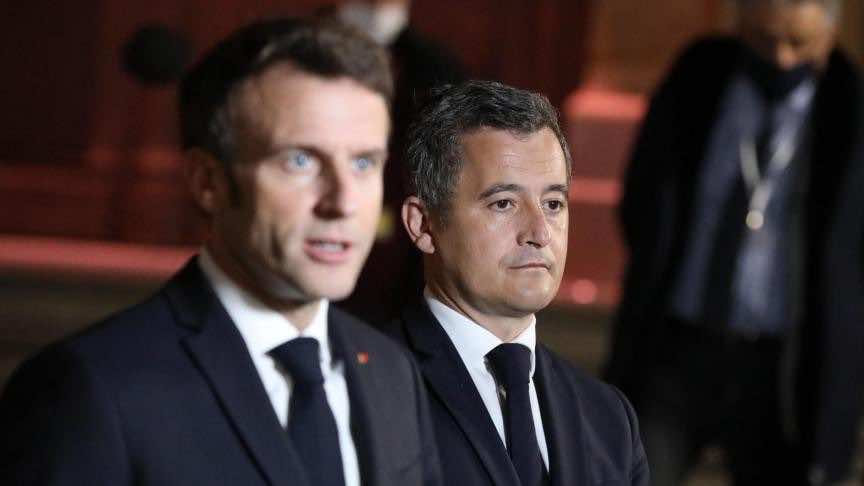
“Apparently, neither President Emmanuel Macron nor his Minister of the Interior, Gerald Darmanin, is aware of the deterioration of relations between France and Morocco,” the writer said, citing the recent developments that followed Paris’s decision to reduce the number of visas granted to Moroccans.
A viral, fierce backlash against France’s “unjustified” visa denials for Moroccans is rapidly spreading among Moroccan netizens, many of whom have vented their frustration with the French move and called on Morocco to respond in kind.
Among the voices questioning France’s decision is Morocco’s National Federation of Consumer Rights (FMDC), which recently wrote a letter to the French embassy in Rabat to urge French consulates to refund applicants whose visa requests were rejected.
Macron’s Misguided Maghreb Diplomacy
For his part, Benjelloun linked the increasingly worsening situation to Macron’s misguided North African policy. “Macron has no Maghrebian sensibility. He is, however, obsessed with Algeria and believes that he will succeed in cleaning up Franco-Algerian relations. We wish him good luck,” he wrote.
Macron has repeatedly spoken of his determination to mend France’s historically uneasy relations with Algeria.
Reconciliation with Algeria, a Macron-commissioned report on the tumultuous French-Algerian history recently concluded, can only happen through an honest reckoning with the legacy of the bloody Algerian war of independence that claimed the lives of over 1.5 million Algerians.
Given recent reports that Macron will soon travel to Algeria to further indicate his desire to forge a Franco-Algerian reconciliation, Benjelloun argued, it is safe to conclude that the French president “is sacrificing the good understanding with Morocco in the hope of obtaining from the Algerian military better dispositions towards his country.”
However, the Moroccan writer went on to argue, Macron is wrong to ditch the historically good and strategically beneficial relations with Morocco in order to be in the good graces of the Algerian regime. “Macron is mistaken. Algeria’s military regime, which holds on to what he himself has called ‘the memorial rent,’ will give him nothing. It will maintain the system of guilt until the end. If he makes this trip, it is because he has not understood the mechanism of a system that makes no concessions.”
For Benjelloun, another factor in the degrading French-Moroccan ties is France’s discernible discomfort with no longer being the center of Morocco’s diplomatic attention.
“Morocco is no longer focused on France. This is a fact observed in several areas. It has begun to diversify its friendships and its political and strategic relations,” he pointed out. “By signing the Abraham Accords, and by succeeding in changing the position of its Spanish neighbor with regard to the Sahara, it is distancing itself from France, whose support remains very measured, for fear of angering Algeria, which maintains an artificial armed conflict in the Sahara.”
Read Also: Sahara: Spain’s Endorsement of Morocco Is a Moment of Truth for EU, France
Still, he acknowledged, relations between Paris and Rabat have been traditionally strong and beneficial for both parties.
France’s leading universities continue to appeal to Morocco’s elite students; Morocco is among the prized holiday destinations for many French citizens; trade between the two countries has remained steadily positive over the past years; and Morocco’s intelligence services have helped in preventing a number of terrorist strikes in France, or dismantling terrorist cells in the European country.
For all these reasons, it is a bad idea to end the positive momentum that has long characterized French-Moroccan rapports. Despite Moroccans’ frustration with the French visa move, Morocco should give a chance to dialogue instead of responding in kind as many enraged Moroccans have suggested, the writer said.
“There is no reason for the current arm wrestling relationship to turn into traditional cooperation without punishment or call to order,” he concluded. “France recognizes the assistance of Moroccan services in the fight against terrorism. There is no question of ceasing this important collaboration because of a few visas refused to Moroccans who need to travel to France.”