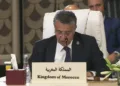
Rabat – The Arab Ministerial Committee in charge of dealing with Iranian interference in Arab countries’ domestic affairs renewed its support for Morocco on Tuesday in Cairo.
The ministerial committee extended its solidarity to Morocco on the sidelines of the 158th session of the Council of the Arab League held in the Egyptian capital on September 6.
The committee warned that the Iranian regime and its proxy Hezbollah are proceeding with the arming and training of separatist groups, threatening the territorial integrity and security of Morocco.
Rabat decided to cut relations with Iran in May 2018, accusing Iran and its proxy of providing military support to the Polisario Front, the separatist group claiming independence in southern Morocco. The North African kingdom also accused Algeria of condoning and assisting the Polisario-Hezbollah collusion.
While both Iran and the Polisario denied what they said were “baseless accusations,” Morocco’s Ministry of Foreign Affairs said that prior to officially severing diplomatic ties with Iran, it had provided the country with a complete file of satellite images and other data documenting links between Hezbollah and the Polisario Front.
Nasser Bourita, Morocco’s Foreign Minister, said in several interviews in 2018 that Rabat had sent Tehran a detailed file providing precise facts on visits by senior officers of Hezbollah in Algeria, dates, and venues of meetings with Polisario members as well as a list of names of agents involved in these contacts.
In an interview with Fox News in May 2018, Bourita went on to stress that Morocco believes Iran’s interference in the internal affairs of Arab and Muslim countries “won’t stop.”
He said, “I think it is clear that the interference of Iran in the internal affairs of the Arab and Muslim countries won’t stop in (the) Middle-East and in the Gulf countries.”
The Arab Ministerial Committee renewed concerns about Iran’s interference in the affairs of sovereign countries in the MENA, stating that the Iranian regime’s acts are “dangerous and unacceptable practices” that reflect the Iranian regime’s “destabilizing approach to regional security and stability.”
The committee includes members from different Arab countries, including Saudi Arabia, the UAE, Bahrain, Egypt, and the Secretary General of the League of Arab States.