


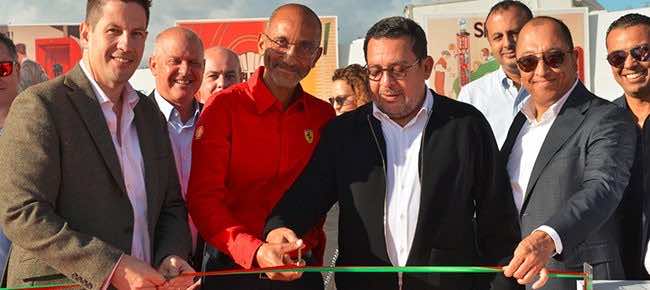
Rabat – A few days after Morocco’s Competition Council blamed the rise in fuel prices on oil and gas giants, Vivo Energy Maroc, the distributor of Shell brands in the North African country, celebrated today the opening of its 400th station in Casablanca.
Benefiting from the energy crisis, fossil fuel companies such as Shell have doubled their profits in the second quarter of 2022 due to the market consequences of the war in Ukraine. Shell, for instance, reported a net income of $5.1 billion in the second quarter of 2022.
Part of Shell’s profit comes from the Moroccan oil market. According to the competition council, the Moroccan oil market is currently dominated by Vivo Energy Maroc, TotalEnergies Marketing Maroc, and SMDC Afriquia, which is owned by current Head of Government Aziz Akhannouch.
The three companies alone control 52% of fuel imports in Morocco and are allegedly behind price-fixing practices that explain the continuous rise in domestic fuel prices while global crude oil prices are dropping.
As Vivo Energy and Shell on Friday celebrated the inauguration of their 400th “eco-responsible” service station in Lissasfa, Casablanca, the British-Dutch multinational is reinforcing its dynamic development policy in Morocco with the objective of asserting its dominance over the domestic market.
Speaking at the inauguration of “La Fleur de Jasmin” (or Jasmin Flower) station, Vivo’s General Manager George Roberts said that the new station commemorates the 100-year anniversary of Shell in Morocco, adding that it is “testimony to the strong anchorage of the brand from Tangier to Lagouira, as well as its positive added value in the national ecosystem.”
Read Also: Predatory Practices ‘Could’ be Driving Fuel Prices Up in Morocco
Echoing Roberts’ statement, Network Director of Vivo Energy Morocco Reda Badawi said: “Our network expands even further today with this 400th service station,” adding that the expansion “aims to provide all Moroccans with an innovative, consistent and high value-added customer experience.”
In addition to branding the Lissasfa service station as a lever for local development, Vivo Energy Maroc said that the new commercial space is set to be equipped with photovoltaic panels to optimize electricity consumption and underscore the company’s green energy strategy as it sells fossil fuels to customers.
As Shell and its operators use the renewables card to greenwash their operations and appeal to growing public demand for a proper energy transition, reports have found that Shell’s operations challenge the company’s carbon-neutral policy that is widely advertised. Last year, for instance, Dutch officials called out the supermajor for greenwashing its “carbon-neutral” fuel.
A Guardian report further noted that Shell invests $11 million per day in fossil fuel projects that could drive global temperatures beyond 2.7 °C.
According to the UN Intergovernmental Panel on Climate Change, such a radical change in global temperatures is expected to cause major heat waves; storms, droughts, and the extinction of one million species.




