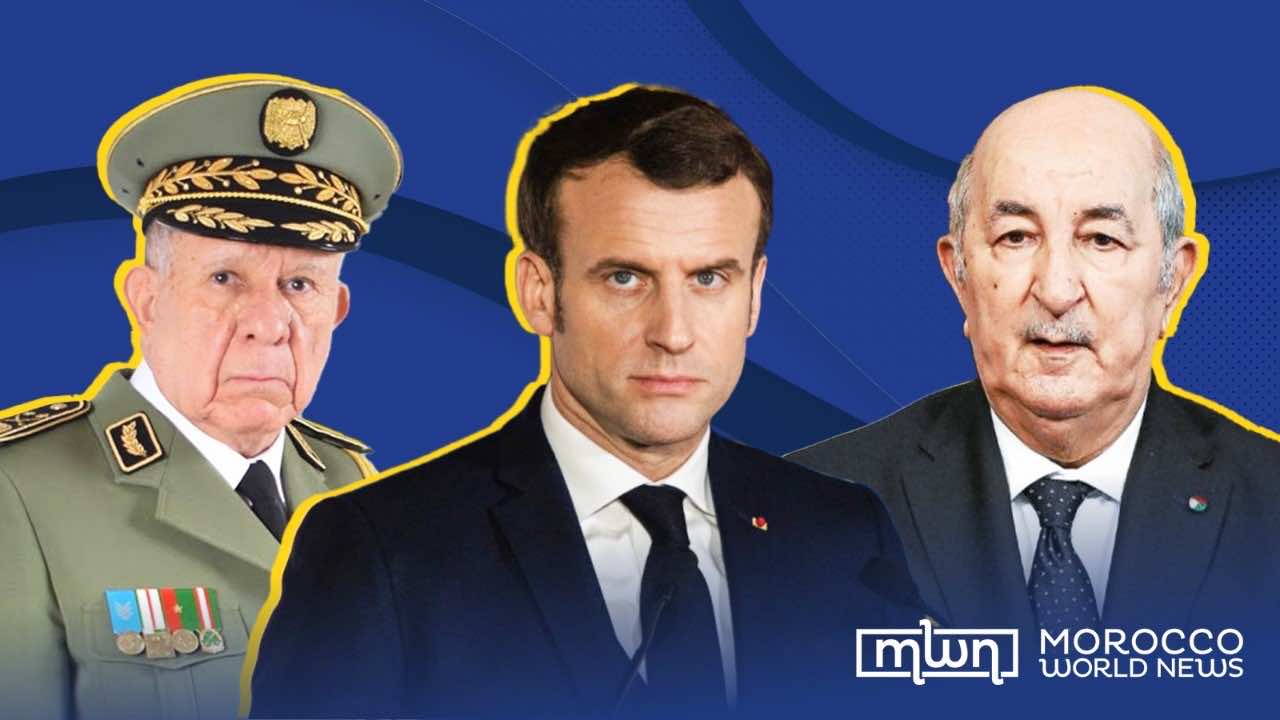
Rabat – It is no secret that relations between Paris and Rabat have plunged to their lowest point in years. Morocco is unhappy with President Macron’s cruel decision to reduce the number of travel visas issued to Moroccans and with his pro-Algeria stand in the Western Sahara conflict.
The level of relations with France is falling rapidly, compounded by the feeling that Macron completely disregards “republican values,” norms, and human rights in Africa and is only concerned with maximum economic and military expansions of French interest.
The stagnation of relations between Rabat and Paris is a result of Macron’s lack of clear goals and a well-thought-out strategy in North Africa. France’s weaponisation of travel visas to chastise Morocco for “economic disloyalty” is offensive and insulting. Paris’ views of Morocco and Africa remain archaic.
There was a period when France seemed to be Morocco’s only friend at the United Nations Security Council. However, the American and Spanish support of Morocco’s autonomy plan for the Western Sahara and Paris’ overtures to Algeria revealed Paris’s hypocrisy and lies.
Macron’s missteps in Morocco have exposed his new diplomatic model of relations with Africa as a sham. He proved unable to break free from France’s postwar neo-colonial diplomatic doctrine. Macron abandoned France’s support for human rights and embraced a foreign policy based on “economic self-interests at any cost.”
French diplomats are following their nativist impulses. They mistakenly believe that cutting the number of visas granted to Moroccans would make Rabat beg for forgiveness and retreat to Paris’ corner.
The opposite is happening. The anti-France forces in Morocco, including the Spanish and English lobbies, have celebrated this French faux pas. Israel, the UK, Spain, China, and the United States are angling for more diplomatic, economic, military, and cultural opportunities in Morocco and Africa.
The reality is that Morocco does not need France at this conjuncture. Paris is absent from Rabat’s current diplomatic map, and Moroccans are happy to move forward with new alliances. Israel, the UK, Spain, and the United States are Rabat’s new allies. Macron’s lapses have weakened Paris’s strategic position in Africa.
Rabat’s open arms policy towards Madrid and the improving relations with Germany seem to pay dividends to all parties at the expense of France. While world diplomacy has evolved, France’s diplomatic outlook remains outdated, neo-colonial, and nostalgic.
By taking Morocco for granted, Macron made costly miscalculations. He imagines himself as a master diplomat, a de Gaulle or a Mitterrand, capable of taming all of France’s former colonies. Meanwhile, events on the ground show French diplomacy as weak and irrelevant. In fact, Africans consider Macron’s France an inconsequential minor power trying too desperately to be heard on the international scene.
During the reign of the late King Hassan II, Moroccans considered France a strategic partner and the French language a “cultural asset.” However, a new nationalist wave rejecting the Francophonie has been gaining ground of late. In Rabat, France and French are out, and the Anglophones and English are in.
Recently, the extent of the symbiosis between France and Morocco’s Francophone socio-political elite has been shrinking fast. Popular and official support for close relations with the UK and adopting the English language to replace French in Morocco is gaining momentum.
Since Morocco’s independence, the Moroccan elite who studied in France established a Francophile lobby that controlled several aspects of the Kingdom’s political and economic landscapes. But that is changing as Moroccan graduates of Anglo-Saxon schools take charge of key government agencies and private companies.
France and the French language retreats in Morocco are reminders of Paris’s diplomatic, economic and political decline under Macron. The French president tried but failed to rebrand his nation’s foreign policy in Africa. Today, France has virtually no power and no global responsibility.
Macron’s lack of understanding of Africa’s new global security needs and his arrogant view of African diplomacy will cost his country dearly in future economic cooperation and development in the developing world.
The French President’s vanity and self-importance are prompting France’s military decline in what was “Paris’s backyard.” A reduction in military cooperation with several African nations, the expulsion of France’s ambassador to Mali, the recent attack on the French embassy in Burkina Faso, and the withdrawal of French soldiers from West Africa are examples of a waning French military outreach around the world.
Macron’s recent embrace of the military-backed regime in Algeria summarizes Paris’s diplomatic duplicity. The French government’s disregard for Algeria’s myriad of human rights abuses proves that Macron is a soulless self-serving politician who continues to push his successors’ France-Afrique neo-colonial agenda.
It is time for Macron and French diplomats to accept that France’s power and influence worldwide are declining sharply. Although Macron attempts to portray the Franco-German duo that has been the engine of European diplomacy as a partnership of equals, Berlin has been the dominant power. France is no match for Germany and no competition for the UK and USA on the world stage.