


 Join on WhatsApp
 Join on Telegram
Casablanca – As fertilizer costs in Africa continue to rise, particularly in the aftermath of the pandemic, coping with unpredictable shocks becomes more difficult, affecting farmers and therefore the continent’s food security.
Already burdened by the disproportionately severe effects of climate change and the fallout from political conflicts, Africa is starting to see food security as one of its biggest threats. Access to fertilizer in an increasingly difficult global market is emerging as one of the main causes of this struggle.
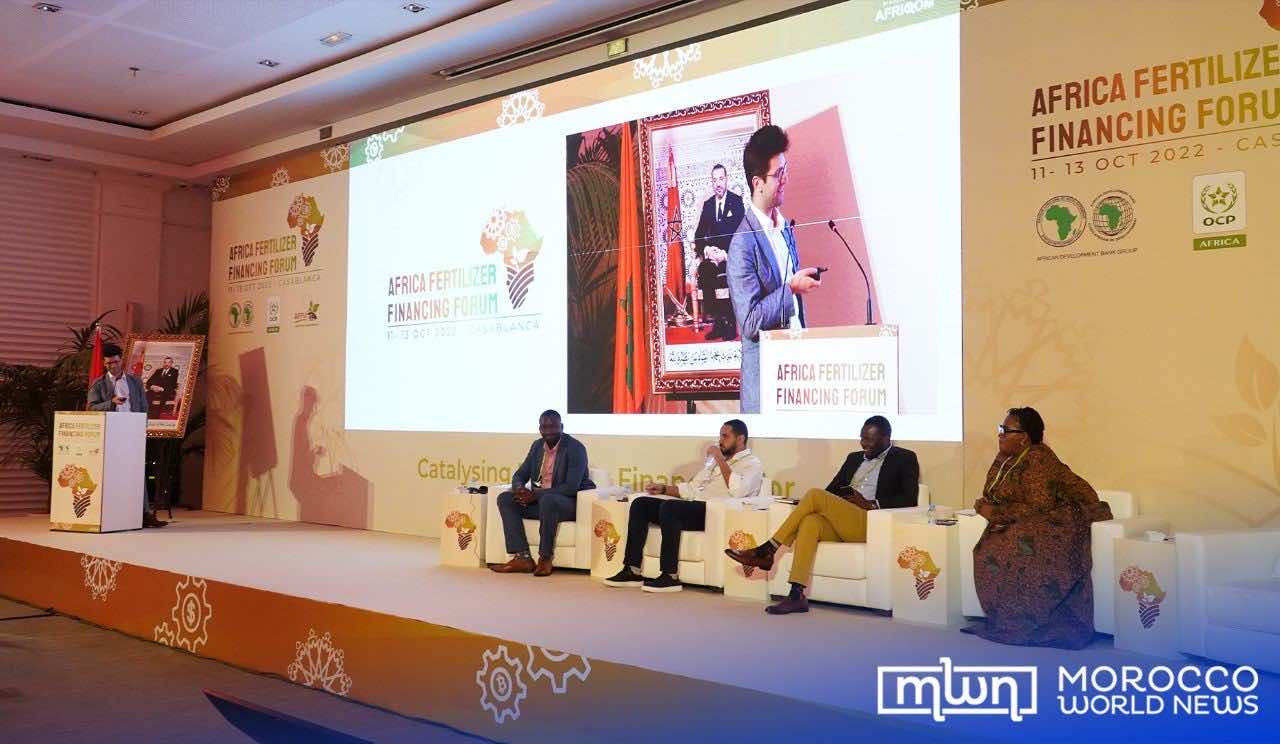
Thus, the last day of the Africa Fertilizer Financing Forum focused on Africa’s failure to deal with shocks in fertilizer markets as well as the results of disturbances.
This forum will serve as preparation for the Africa Fertilizer and Soil Health Summit, where heads of state will discuss new regulations and new measures to support the development of the agricultural sector, attendees of the forum said.
Causes Behind the Crisis
According to Founder & CEO of AFRIQOM Mounir Halim, the rising fertilizer costs in Africa are driven not just by COVID-19, but also by natural disasters, China’s export embargo, and gas price increases, among other factors.
Plant closures, raw material price increases, and “the war amongst the drivers of the price rally” were also cited as factors.
What exacerbates the situation more, Halim continued, is the unavailability of a “warning system” in the African markets, making the fertilizer buyers detached from market activity. This is in addition to the government’s inability to intervene quickly as well as the inadequate financing ecosystem.

Mounir Halim, Founder & CEO of AFRIQOM
In a statement to Morocco World News, the CEO underlined that “finance is one of the major elements that defines the troubles and challenges that we have in the African continent.”
Explaining the difficulties farmers face in accessing financing, Halim said that central banks are not offering favorable terms, limiting the number of actors who can access financing and putting a big hurdle in the face of potential growth in the continent.
Read also: Africa Fertilizer Financing Forum Calls For Future-Proof Agriculture

Marie Claire, Coordinator of the Africa Fertilizer Financing Mechanism (AFFM)
Marie Claire, Coordinator of the Africa Fertilizer Financing Mechanism (AFFM), told MWN that Africa is facing unavailability of fertilizers as a result of the war between Russia and Ukraine, adding that the 2021-2022 agricultural season saw a four million tonne fertilizer gap for imports in the continent.
“During the 2021-2022 period, fertilizer prices have [risen] by three-fourths, making fertilizers unavailable and unaffordable for farmers,” the AFFM coordinator added, emphasizing that the situation could grow more difficult if not addressed right now.
Despite its massive amount of arable lands and growing young labor force, Africa at large remains a net importer of food. With Ukraine and Russia having previously contributed to the continent’s grain imports, the war between the two has had a great impact on food prices and supply.
But the availability of fertilizers has been the greatest hurdle in the face of the continent developing its own agricultural industry and achieving food security, especially as smallholder farmers who are responsible for most of the output continue to struggle financially.
Potential Solutions
Director of the Africa Development Bank in the Ivory Coast Martin Fregene discussed potential interventions to address food security-related challenges, suggesting an “African Emergency Food Production Plan” in order to facilitate fertilizer supply and financing.
The proposal advocates for government interventions such as large-scale country procurement, financing for input providers, commodities exchanges, and lowering farmer costs with fertilizer subsidies or supplier credits.

Habiba Mouttaki, VP of Sales & Marketing at OCP Africa in Morocco
In a similar vein, VP of Sales & Marketing at OCP Africa in Morocco Habiba Mouttaki believed that partnership is the only way to succeed in dealing with Africa’s agricultural challenges.
In her presentation, Mouttaki emphasized the importance of active engagement in downstream productivity efforts, particularly from government entities participating in farmer-centric programs.
Read also: Mostafa Terrab: Africa Could Be The Solution to Global Food Crisis
Sady Abdul Mwang’onda, an agro-input dealer in Tanzania, suggested that the AFFM should raise the number of guarantees for reliable agriculture hubs and fertilizer-importing enterprises, as well as extend financing to other supply chain services such as storage and transportation.
He also proposed that those dealing in agriculture receive business management training in order to keep the fertilizer company running.

Sady Abdul Mwang’onda, an agro-input dealer in Tanzania
Speaking to MWN, AFFM Coordinator Marie Claire said the mechanism is about “concrete solutions” and what various parties are bringing to the table, not talks.
“We really thank the government of Morocco to have really put in place this initiative,” Claire noted, adding that AFFM will continue collaborating with OCP Africa through its relief program.
Through its OCP Africa subsidiary and fertilizer relief programs carried out during this year, Morocco’s phosphate giant has made agriculture and smallholder farmer support in the continent one of its main focuses.

Panduleni Elago, Senior CAADP Advisor – African Union Commission, Ethiopia
AFFM is a special fund housed and managed by the African Development Bank. It aims to propose solutions that have an influence on the entirety of the agricultural value chain.
The fund’s mechanism leverages capital investment through hybrid financing and co-financing. It also fosters partnerships to maximize possibilities and provide sustainable solutions that have the potential to transform agriculture in Africa.
The AFFM plan for 2022-2028 focuses on small and medium-sized firms that will provide 16 million smallholder farmers in 15 African countries with access to at least 2 million metric tons of fertilizer and other agricultural inputs.
By the end of 2028, the increased fertilizer input in addition to using suitable seeds should help targeted farmers boost output by at least 35%.




