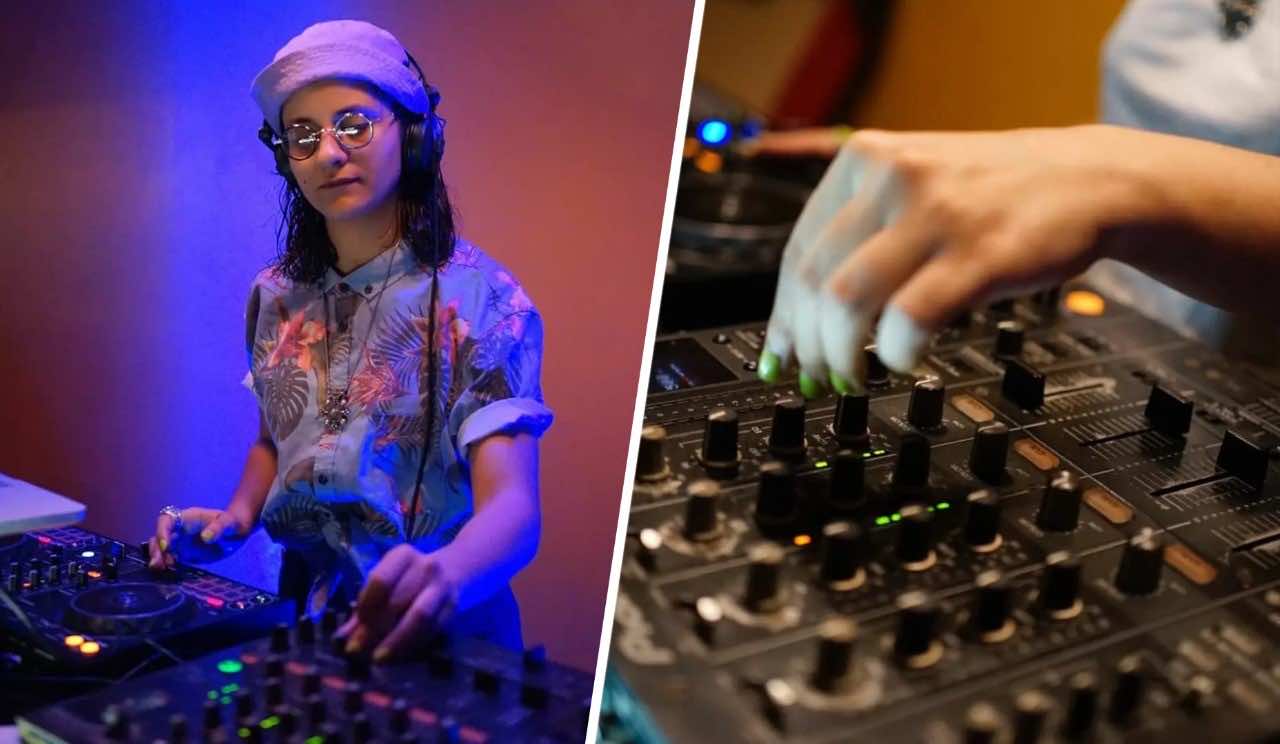
Rabat- There are more women in the music industry today than ever before, and more of them are becoming producers and songwriters. An increase in female producers in the music industry means more and more women are getting opportunities to stand behind the mixing board and bring the songs they hear in their heads to life for everyone to enjoy.
Morocco World News (MWN) recently had the chance to speak with one of these brave women and learn about her journey as she broke through the barriers in the music industry to become successful not just as a producer, but also as a songwriter, DJ, and singer in her own right!
In our interview, Fadoua Rasmouki shared how she got started in the music industry and what challenges she faced along the way.
From Passion to Profession
Born in Meknes and raised in the northern Moroccan town of Taounate, Fadoua Rasmouki studied computer science engineering in Rabat. She is also a dual-degree master’s holder with an Industrial Computing master’s and a Computer Science and Engineering master’s.
Fadoua Rasmouki developed a love and enthusiasm for music at a young age and spent 4 years studying music theory at the Music Conservatory in Meknes. She started creating songs and singing around 2016, joined numerous local bands with her friends, and taught herself how to play the guitar.

In the same year, the music enthusiast started a duo with a Sufi musician from Senegal, and they performed at La Villa des Arts in Rabat, a UN Women-organized event during Women’s day. Their one-time cooperation for an UN event turned out to be a beguiling union of Senegalese and Moroccan music that is
defined by its musical richness and diversity.
Fadoua struggled along the way to get her music produced and heard as she began to sing and write songs. The transition from writing a song to recording it in a studio to the proper mixing and mastering of the song so that it’s a final product suitable for digital platforms is a difficult procedure to achieve. Even more so if the musician is unable to sign with a record label.
“I didn’t actually meet any people in the industry whether it’s managers or producers or record labels owners; I didn’t stumble upon anyone who was willing to offer me a spot,’’ Fadoua told MWN.
But Fadoua persevered in the face of the challenges she encountered. She decided to self-produce her songs and upload projects on Soundcloud. Having studied computer science, she began experimenting with various software programs and DAWs (digital audio workstations), which are electronic devices or application software used for recording, editing, and producing audio files. The DAWS she experimented with include FL Studio, Logic Pro X, and Ableton Live.
Last year, Fadoua was selected for the FeMENA artist residency along with ten women from Morocco. The residency lived up to Fadoua’s expectations, providing a rich and creativity-stimulating platform where she met amazing, talented female artists and had to self-produce her own tracks on vinyl.
Read Also: Meet Maria Malasangre: the DJ and Producer of Taghazout’s Female-Only DJ Classes
Making Music that Blends, Educates, and Enlightens
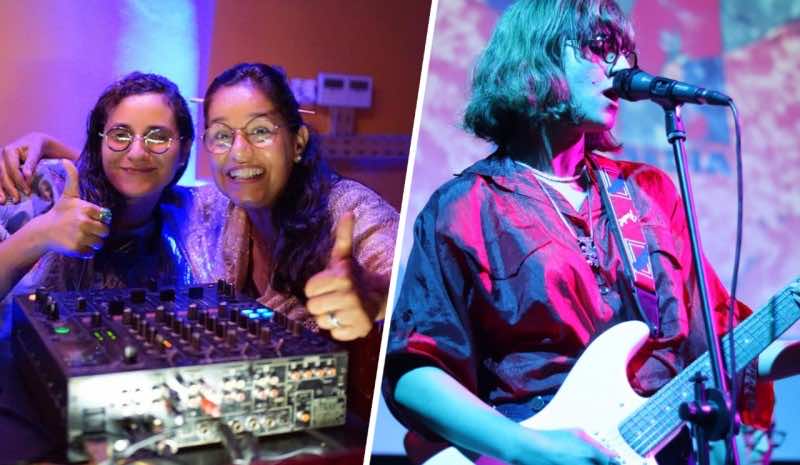
The first Moroccan Female DJ- Producer in Morocco, Fadoua performs under the stage name DramaDrama in Sotto Sopra, an Italian restaurant bar in Rabat.
Every week, she performs and prepares a new set of music to mix and play in an attempt to create an engaging experience for her audience. As well as adding performance elements to each of her shows, such as themes and particular attire, Fadoua makes posters and visuals with 3D elements specifically for the sets.
She blends Western and African musical styles, and she maintained throughout our interview that her aim is to educate and enlighten her audience on the vast array of musical genres in North Africa and Morocco.
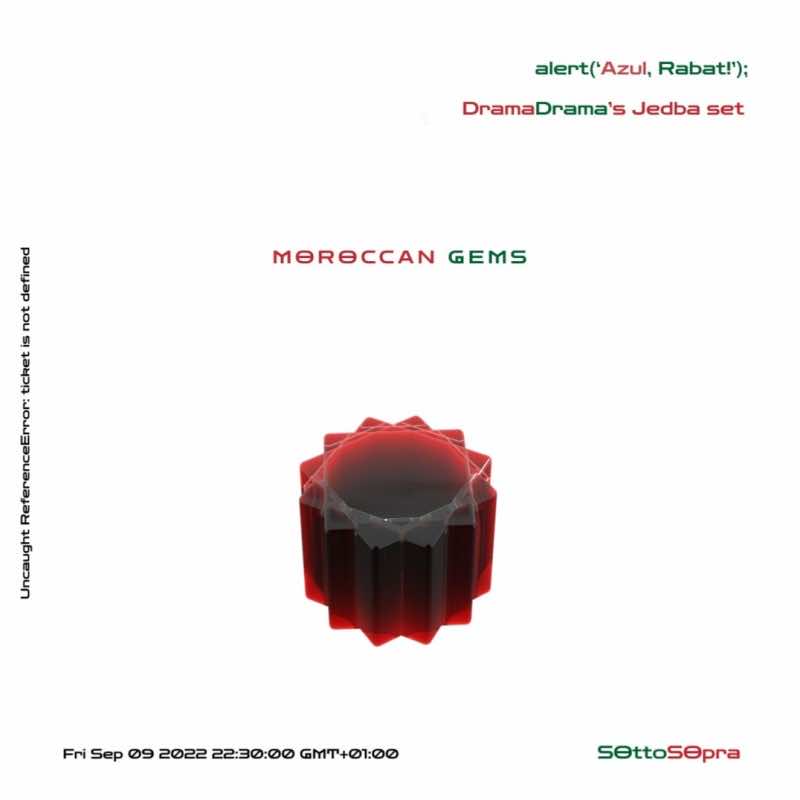
3D poster for one of Fadoua’s gigs
The DJ-producer mixes Amapiano, a South African electronic music genre, with Afro music in some of her performances. She also includes a whole set of North African and Moroccan electronic music in other sets.
“There are more than twenty electronic music genres that are specific to this continent but they don’t get that much attention, people just hear about house music or techno,’’ Fadoua explained. “I need to put emphasize on the fact that we have a rich repertoire of music and we need to use it, so I try my best to bring the identity and local aspect, Moroccan rhythms, Amazigh rhythms into my works.’’
Hopes for the Future
Having surmounted many difficulties to be where she is now, Fadoua is full of hope for the future. At the same time, however, her many travails in the music industry have poignantly brought home to her that the road to go — while not as long and bumpy as the distance she has already traveled — will not be an easy ride.
This means her hopefulness is not passive hoping. At heart, Fadoua’s sense of hope is the proactive attitude of a self-made and boundlessly passionate person who is ready to put forth the work and efforts required. As a trailblazer in a male-dominated branch of the music industry, another hope of hers is to make it easier for those young women who, inspired by her example, will want to follow in her footsteps.
Fadoua said that when she has the necessary resources, skills, and confidence to know that she won’t fall short of other people’s hopes and expectations, she aspires to produce for other women and individuals who are like her.
She is now working on a self-produced Extended Play with three to five songs. She is also preparing a series of workshops to teach women how to play and produce music.